









VC Survey 2027
"Israel’s competitive edge is not disappearing, but it is evolving."
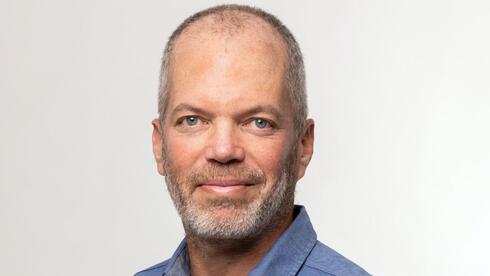
Yaniv Shnieder, CEO at Elron Ventures, joined CTech for its 2027 VC Survey.
"The concentration of capital in AI is exceptional, and we see overheating, especially in Israeli cyber, where seed rounds of tens of millions of dollars, until recently a Series A, are priced on team and narrative rather than on retention and margins. Our core activity is early-growth investing, so we meet these companies exactly when they must justify that valuation. We invest when there is early evidence of customers, retention and healthy economics, not in rounds priced ahead of the fundamentals," said Yaniv Shnieder, CEO at Elron Ventures, when asked how AI is changing the fund's investment strategy.

With AI reshaping how startups are built and funded, and Israel's tech ecosystem adjusting to a new economic and geopolitical reality, investors are rethinking their playbooks. Shnieder joined CTech to share insights for its VC Survey 2027, which invites prominent investors to discuss the trends, challenges and opportunities expected in the year ahead.
You can read the entire interview below.
ID CARD
Fund Name: Elron Ventures
Total Assets Under Management: $181.7M (as of August 31, 2026)
Partners/Managers: Yaniv Shnieder, CEO, Elron Ventures; Co-CEO, Rafael Development Corporation; Dan Hoz, Interim Chairman, Elron Ventures; Rony Gur Arie, CFO, Elron Ventures
Notable Portfolio Companies: RAVEN.IO, Red Access, Addionics, CyberRidge, Axonius, Nitinotes, Wonder Robotics
Notable Exits: IRONSCALES, CyberSixgill, CartiHeal, Prompt Security, and Cynerio
How is AI changing the way you evaluate companies, from business models and capital needs to valuations and competitive advantage? Is this a fundamental shift in how companies are built and scaled, and are parts of the market overheating?
AI is a genuine platform shift, but six decades of investing in Israeli technology have taught us at Elron that every wave comes back to one principle: value goes to companies that solve hard problems for customers who cannot afford failure. That principle connects our sectors, cyber, deep tech and defense, and AI now runs across all of them. As models become more widely accessible, the advantage moves to companies that are embedded in critical workflows, hold proprietary data and prove themselves in real-world conditions. Increasingly, competitive advantage depends less on the size or cost of a development team and more on access to differentiated data, which can determine both time to market and which competing products ultimately win.
AI is also fundamentally changing how companies allocate capital and resources. Smaller teams can now build products faster and with fewer developers, a shift that is likely to extend to other functions over time. Companies can use these efficiencies either to raise less capital or to accelerate development significantly. At the same time, value is shifting from selling tools to delivering completed work, and the cost structure is changing: less spending on headcount, and more on tokens, computing infrastructure, storage and licensing or usage fees paid to AI model and data providers. This creates new dependencies on the AI ecosystem, where changes in pricing, technology or market dynamics can directly affect a company's economics and competitive position. We therefore assess the economics of the entire workflow: willingness to pay, implementation and ongoing AI costs, access to data, and reliability.
In cyber, AI creates new security risks and investment opportunities, as demonstrated by the acquisition of Prompt Security, backed by our micro fund Cyber Future, by SentinelOne. In deep tech and defense, AI can accelerate development, but building deployable systems still requires significant resources. Our portfolio company Wonder Robotics demonstrates the growing demand for dual-use technologies, while our partnership with Rafael gives us access to defense technologies and the expertise to commercialize them. The concentration of capital in AI is exceptional, and we see overheating, especially in Israeli cyber, where seed rounds of tens of millions of dollars, until recently a Series A, are priced on team and narrative rather than on retention and margins. Our core activity is early-growth investing, so we meet these companies exactly when they must justify that valuation. We invest when there is early evidence of customers, retention and healthy economics, not in rounds priced ahead of the fundamentals. The technology is real, but the test is whether a company keeps creating value as models improve and become accessible to everyone, and in times like these, discipline is the advantage.
Related articles:
- "Israel has always won on deep technical moats, but in enterprise AI, vertical AI, and fintech, the real moat is now distribution."
- "Being an Israeli company in the current atmosphere is not helping and in many cases decreases the valuation."
- Beyond the AI hype: what investors are looking for in startups today
Does Israel's mix of AI, cybersecurity, defense tech and deep tech give it a new competitive edge, or is its traditional advantage eroding? How will foreign investors' appetite, early-stage fundraising and the election results affect its ability to build global companies?
I am optimistic about Israel’s tech ecosystem, but for different reasons than a decade ago. Our competitive advantage is no longer measured simply by the number of startups we produce. It increasingly lies in the depth of our technological expertise, the quality of our engineering talent and our ability to turn complex challenges into global businesses.
AI makes standalone software features easier to copy anywhere in the world, so the advantage shifts to complex systems that must perform reliably in real-world conditions. This creates a significant opportunity for Israel, particularly where AI meets cyber, defense and deep tech. Since October 7, Israeli technology has been tested under real conditions, while global demand for advanced solutions has grown, from enterprises facing AI-driven threats to a rearming Europe.
The acquisitions of Wiz and CyberArk demonstrate that global strategic buyers continue to see Israel as a source of category-defining companies. This is exactly what we invest in at Elron. Through our partnership with Rafael via RDC, we turn defense-grade technology into global businesses, while our core early-growth investments focus on companies that combine Israeli technological depth with global commercial ambition.
There are also real challenges. Capital is increasingly concentrated in larger rounds and established founders, while younger companies and first-time founders find it harder to raise early. A healthy ecosystem needs a broad pipeline, not only mega-rounds and headline exits. Through Cyber Future, our micro fund, we see this gap firsthand and invest at the earliest stage to help close it.
Foreign investors remain a major force in Israeli tech, demonstrating continued confidence in the ecosystem. However, they have become more selective, with capital increasingly concentrated in larger rounds and more established companies, while fewer investors are participating overall. Geopolitical risk and operational continuity remain important considerations, and in defense, the political sensitivities of certain European markets add another layer of complexity.
As for the elections, the immediate question for investors is not simply who forms the next government, but whether the outcome brings greater predictability, stable institutions, consistent economic policy and strong relationships with global partners.
Just as Israel became a cyber powerhouse, there is no reason it cannot become one in applied AI. But cyber did not happen by chance. It was built on a national effort that combined government leadership, the military and education from a young age.
AI needs the same approach. From computing infrastructure to access to data, the government must play an active role in building the foundations for growth, while the education system must develop the relevant skills from an early age.
Israel’s competitive edge is not disappearing, but it is evolving. The companies that will succeed will be those that build on Israel’s strengths while targeting global markets from day one.
How will the VC industry in Israel and globally evolve over the next three to five years? How will changes in fundraising, fund structures, secondary transactions and exits reshape it, and what will funds need to do to stay competitive?
Over the next three to five years, venture capital will not abandon its core model, but it will become far more differentiated. Capital is concentrating in a small number of mega-platforms at one end and in specialized funds with deep sector expertise at the other, and generalist mid-sized funds will be squeezed in between. Company needs are diverging too. AI lets some software companies reach meaningful revenue with little capital, while deep tech and defense require longer development cycles, physical infrastructure and patient funding. Capital structures should follow a company’s risk profile and time horizon, not force every business into the same ten-year template. This is where Elron’s structure matters. As a publicly traded company with permanent capital, we are not bound by a fund’s life cycle, so we can stay with companies through the long timelines of deep tech and defense. Through our partnership with Rafael via RDC, and together with Cyber Future, our micro fund, we invest from the earliest stages through early growth, combining technological know-how with access to strategic partners that few funds can match.
Liquidity is becoming a discipline in its own right. LPs are focused on distributions, not paper markups, and the funds that remain competitive will be the ones that return real cash. Strategic M&A will remain the main exit route, especially in cyber, while secondaries, continuation vehicles and structured liquidity will play a growing role alongside a selective IPO market. These tools are useful, but they do not replace building genuine value. In Israel the challenge goes further. We excel at R&D and early exits, but long-term competitiveness depends on scaling more companies into global leaders and on deeper participation by local institutional investors. For funds, the edge will lie in technical judgment, sector specialization, access to customers and strategic partners, and the ability to help companies turn technology into deployable products. As a public company, we are accountable to our shareholders for realized results, and that discipline is exactly what the industry will need in the coming years.
Finally, name 2-3 startups that, in your opinion, are worth watching this year.
Tenzai - The company is developing agentic AI for continuous penetration testing. Its reported $75 million seed financing and backing from Greylock, Battery Ventures and Lux Capital show strong investor interest. The investment thesis is the potential to transform a labor-intensive, periodic cybersecurity service into a continuously delivered product. The open question is whether this can be delivered reliably, with demonstrable security outcomes and sustainable unit economics. This is a company to watch, not a claim that a breakthrough is certain.
Wonder Robotics (an Elron portfolio company) - The Israeli company works on vision-based autonomy for drones. Its 2026 collaboration with infiniDome on navigation in GNSS-denied environments addresses a concrete operational constraint for autonomous platforms. Physical AI, resilient navigation and systems that can function in contested environments create potential relevance in both commercial and defense applications. Adoption, integration and real-world reliability remain the tests.
CyberRidge - An Israeli dual-use deep-tech company in Elron’s portfolio, developing Post-Quantum Optical Security for Data-in-Transit. Its proprietary technology transforms data transmitted over existing fiber-optic infrastructure into optical noise, rather than relying on conventional encryption, making it designed to withstand interception and future quantum-computing threats. The solution works with existing fiber infrastructure, without requiring major infrastructure replacement, and the company reports engagement with leading telecom and defense organizations. CyberRidge is a compelling example of how Israeli deep tech can address critical global security challenges, with significant long-term potential as demand for quantum-safe communications grows.



