










‘Forever Chemicals’ found in Israeli crops as explosive fallout from Gaza war comes under scrutiny
Researchers detected PFAS compounds in potatoes grown in the Gaza Envelope and say contaminants released during explosions may have been carried to nearby fields through the air.
They are causing severe contamination of water wells, delaying development work in Sde Dov after being detected in the soil, and now, for the first time in Israel, they are being found in agricultural produce: PFAS chemicals, which are linked to a long list of health problems, have been detected in potatoes sampled from fields in the Gaza Envelope. Researchers estimate that they are carried by wind to the fields after being released during the prolonged fighting, including from explosives.
The study, conducted by researchers from the Hebrew University, the Ministry of Health, the Volcani Institute, and the Southern Research and Development Institute, led by Dr. Nitzan Shy, Prof. Benny Chefetz, Dr. Shira Rosencwaig, and Dr. Evyatar Ben Mordechay, examined for the first time how active warfare may affect the dispersion of PFAS contaminants in agricultural systems adjacent to war zones. The researchers found PFAS compounds in all potato leaves sampled in the Gaza Envelope, and in the vast majority of potato tubers (at lower concentrations). Global regulation is still evolving: in Europe and the United States, these contaminants are routinely monitored in eggs, fish, and meat. Israel does not yet have a systematic sampling policy for PFAS in food products, although local regulation generally follows European standards.
PFAS are a family of tens of thousands of compounds containing extremely strong carbon-fluorine bonds, which resist degradation in both the environment and the human body. Their properties lead to accumulation in ecosystems and in humans. Some compounds (such as PFOA and PFOS) have been shown to be linked to cancer and other diseases. The main sources of PFAS include everyday products such as packaging, water-repellent materials, Teflon-coated cookware, cosmetics, and plastics. PFAS are also active ingredients in some firefighting foams, making them common at airports, refineries, fuel storage facilities, and military bases. The use of these foams, whether in real incidents or training exercises, can release PFAS into the environment, contaminating soil and water sources and eventually entering the human body.
Their distribution in the environment is now widespread after decades of uncontrolled use. In Israel, 15% of drinking water wells and 70% of agricultural water sources tested contained PFAS residues above regulatory thresholds, leading to the closure of major water wells. PFAS compounds have also been detected in all tested wastewater and sewage sludge samples, similar to findings reported in Europe and the United States since the early 2000s. Since about 50% of Israel’s agricultural water is based on treated wastewater, and sludge is often used as fertilizer (compost), these findings are particularly concerning.
These chemicals, known as “forever chemicals” due to their persistence, are resistant to high temperatures and typically account for 1%-3% of total explosive weight. They are present in about 20% of common ammunition manufactured in the United States. During explosions and extreme heat, these substances are released into the atmosphere and become airborne.
Falling from the sky
The dominance of certain compounds in plant leaves provides evidence that contamination is absorbed from the air.
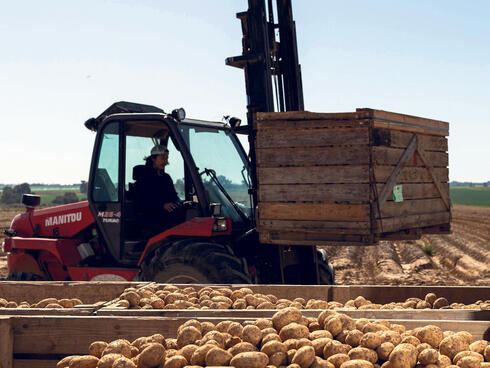
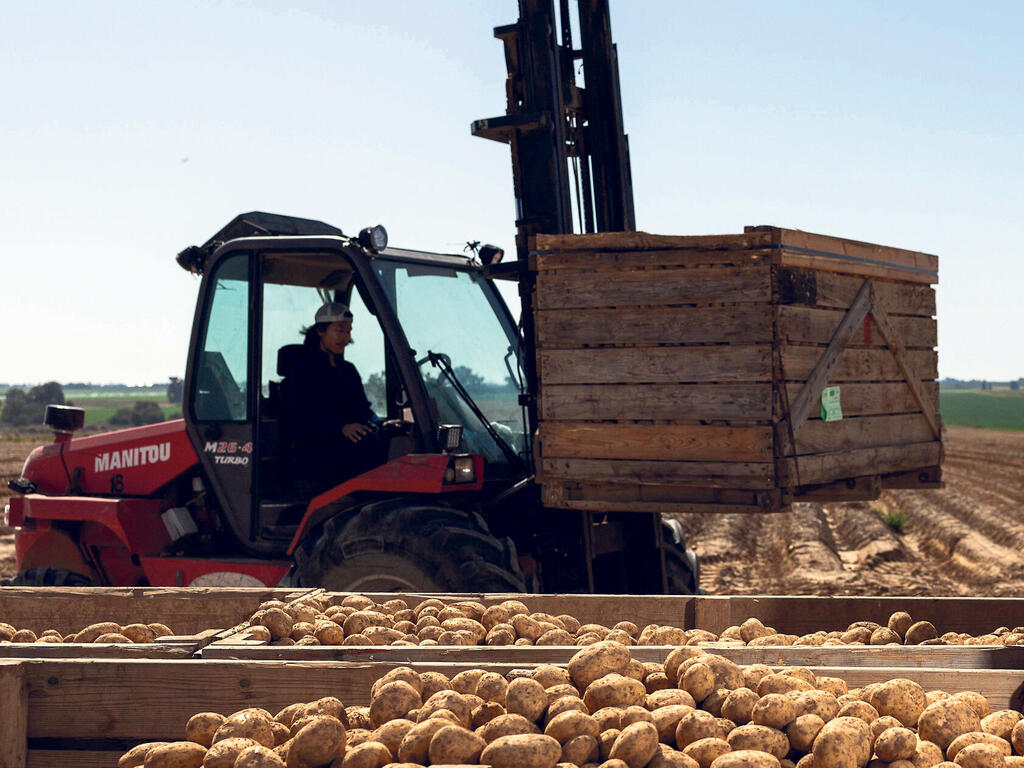
Researchers analyzed potato samples collected from agricultural fields near border and combat zones. Samples were taken from 34 fields in the Gaza Envelope and three fields in the Ra’anana area. The findings show that potato leaves in the Gaza Envelope contained concentrations of short-chain, volatile PFAS compounds (mainly PFBA, which is not classified as carcinogenic, but has been associated in studies with thyroid disease) that were 10 times higher than those measured in Ra’anana. In addition, the ratio between PFAS concentrations in leaves and in surrounding soils was exceptionally high (hundreds of times higher), suggesting that the primary source of contamination is atmospheric deposition rather than root uptake from soil.
Although average PFBA concentrations in potato tubers were lower than in leaves, about 0.15 nanograms per gram, it is difficult to define safe exposure levels without further toxicological research. Exposure is also likely present in other food products, particularly leafy vegetables, where concentrations are expected to be higher.
Various PFAS compounds were detected in all agricultural soils tested up to 19 km from the border. While overall concentrations in soil were low, they included known carcinogens such as PFOS and PFOA. Researchers estimate these originate from leachate and compost used in agricultural fields. Lower levels were detected in control soils in Ra’anana.
“PFAS contaminants are among the most studied chemical groups today,” says Dr. Evyatar Mordechay. “Exposure is widespread and comes from many sources in daily life, from food packaging, cookware, and clothing, through drinking water and food, and sometimes even from the air. Their persistence, broad distribution, and ability to accumulate require special attention. The most effective way to address PFAS contamination today is to reduce the use of products containing them and limit exposure.”
These “forever chemicals” are repeatedly detected in agricultural produce worldwide, highlighting regulatory gaps. According to a March publication by the Environmental Working Group (EWG), about 40% of non-organic fruits and vegetables grown in California contain PFAS residues.
Regulatory gaps
The European Union does not set maximum allowable PFAS levels for plant-based agricultural products, and neither does Israel. While some European countries monitor environmental levels, Israel does not conduct routine testing of PFAS in agricultural produce. Regulation is primarily focused on water and soil: the Ministry of Health and the Water Authority close wells where contamination is detected, thereby reducing exposure.
Calcalist has learned that the Bactochem laboratory, one of Israel’s leading testing facilities, is in advanced stages of certification to test food products for PFAS, in order to support monitoring and enforcement in line with regulatory requirements. During internal validation tests, PFAS residues were detected in some of the products examined.
The Ministry of Health said that, similar to the European Union, Israel has maximum PFAS levels for certain animal-based foods, based on current scientific knowledge and risk assessments. The EU does not define maximum levels for PFAS in plant-based products, and neither does Israel. Accordingly, global focus is currently on monitoring, data collection, and exposure assessment to guide future policy, rather than on enforcement thresholds for agricultural products.
The Ministry of Health added: “The Ministry conducted an initial survey to examine the presence of PFAS in vegetables, including samples from agricultural fields and markets, as well as wastewater and reservoir testing. A comparison was made between crops irrigated with fresh water and those irrigated with wastewater and floodwater from suspected PFAS-contaminated areas. These initial findings indicate the need for further study. A final report will be published on the Ministry of Health website.”



