








“My goal is to crash Russia’s economy - because I am a Russian patriot”
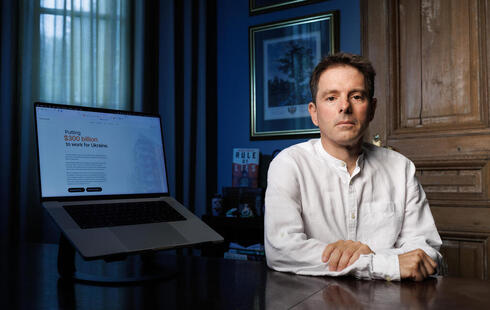
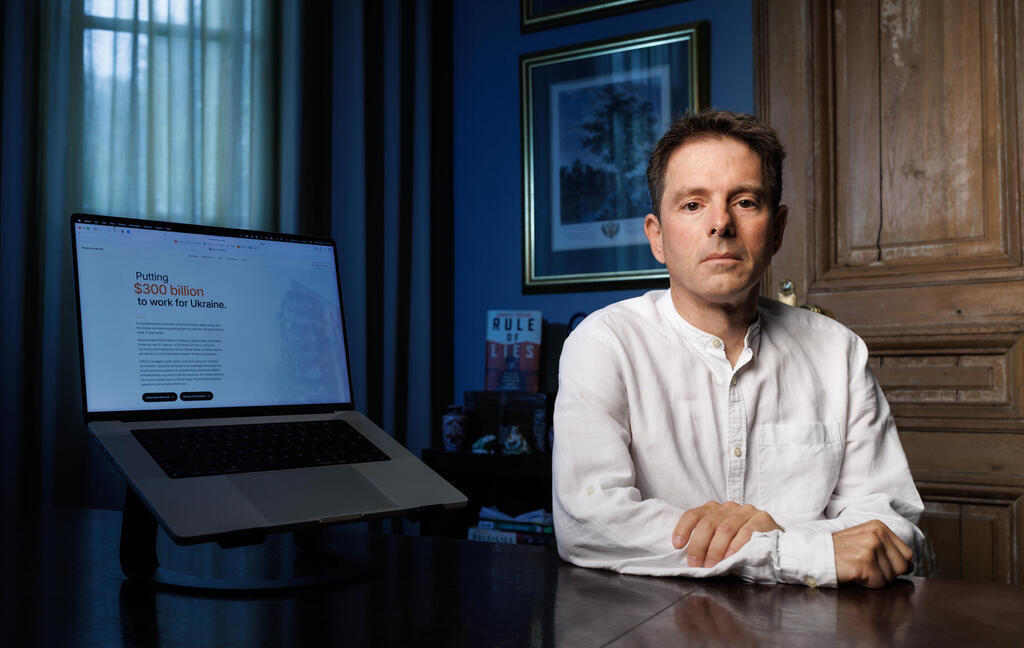
The American-born lawyer Jamison Firestone who spent 18 years in Russia helped create the Magnitsky sanctions regime. Now he is campaigning to seize $300 billion in frozen Russian assets and use them to fund Ukraine.
"I am a Russian patriot," Jamison Firestone declares. It is a surprising statement coming from a man born and raised in the United States, and who is currently sitting across from me in a London café, having lived in the city for nearly two decades. And yet, he explains, "Russia was my home for 18 years. It is the country I love, for which my friends died, where many of my friends still live, and from which many of my friends live in exile because they tried to improve it. And as Americans have long understood, being a patriot does not mean always being a supporter of the American government. There are great American patriots out there fighting Donald Trump with all their might. And that is why I fight for Russia."
Firestone is a lawyer and human rights activist who lived in Russia from 1991 to 2009, spanning the period from the dawn of the post-communist era until President Vladimir Putin began persecuting his critics. Among these critics were Firestone’s associates, whistleblowers Sergei Magnitsky and Alexei Navalny, who were killed by the regime. These years, and the events that followed, lie at the heart of Firestone’s much-discussed new memoir, Rule of Lies: My Wild Ride Through Chaos, Corruption and Murder in Putin's Russia. Published by HarperCollins in June, the book is currently being translated into Russian by One Book Publishing, a house founded by Yulia Navalnaya, Alexei’s widow.
Since the outbreak of the war with Ukraine, Firestone has dedicated his life to a particularly ambitious mission: bringing down Russia from within. Now, as European intelligence officials warn of a potential Russian attack on Western Europe, his mission has become more relevant than ever. "My role is to make Putin break his contract with the Russian people," he says in an exclusive interview with Calcalist Magazine. "I want to crash the economy. I want to reach the point where banks fail. I want Putin to do what the Ukrainians did and close the borders to anyone aged 20-45. That way, he’ll ruin those people's vacations. And for all my love for my friends in Moscow, I also want their children to be conscripted and sent to the front, so that they take to the streets. That’s the only way it will happen, if they fear their children might die."
I doubt that will work. Israel has been at war for three years now; we’ve suffered massive loss of life, not to mention the loss of normalcy and vacations, yet people aren't taking to the streets to protest anymore. They’re exhausted.
"True, but Israel is also accustomed to universal military service. Russia, on the other hand, is used to not having real wars; when things blow up, Moscow keeps on celebrating."
Okay, so how do you do it?
"The path involves three main elements: starving Russia of money, starving it of technology, and supporting Ukraine, and doing all of this until the war ends on terms set by Ukraine and the European Union."
How much power can a single lawyer really wield? It turns out, a great deal. For starters, Firestone isn't alone in this campaign. His partner in this ambitious mission is Sir William (Bill) Browder, an American businessman who was once the largest foreign investor in Russia (at its peak, his Hermitage Fund managed $4.5 billion). He was targeted by Putin, fled to the UK, and has since waged a years-long battle against corruption in Russia. Firestone calls him "the closest real-life equivalent to Bruce Wayne."
The two were instrumental in the Magnitsky Act, a law enabling the imposition of sanctions on anyone responsible for human rights violations and corruption. The legislation was widely adopted around the globe, became the standard model for applying targeted personal sanctions, provoked Putin’s ire, and sparked a series of diplomatic incidents with the United States, the UK, and the European Union (more on that later).
Now, the two are focusing their efforts on a far greater objective: the seizure of Russia’s frozen assets in Europe. This involves $300 billion, the majority of which was invested in short-term Russian government bonds. Most of these bonds have since matured and been converted into cash held in accounts at the Belgian financial services firm Euroclear, where they are accruing interest. In March 2024, G7 nations utilized approximately $50 billion of the accrued interest to provide economic and military aid to Ukraine. Now, through the "Make Putin Pay" campaign, Firestone aims to take this initiative a giant leap forward, removing the legal and political obstacles to seizing the assets and transferring them to Ukraine to fund the ongoing war effort.
"International law allows us to take Russia's money and transfer it to its victim," he explains. "This can be defined as an advance payment by Russia against the reparations it owes, given the UN General Assembly resolution from November 2022, which demands that Russia cease its attacks on Ukraine, withdraw from occupied territories, and pay reparations. We also have a ruling from the International Court of Justice to the same effect. Furthermore, international law permits us to suspend standard rules in order to restore order when one state occupies another's territory.
"Right now, my work consists mainly of explaining the legal arguments that make this possible to politicians, and showing them just how toothless Russia's objections are. The more we explain this to politicians, pointing them to the law and demonstrating how action can be taken, the more of them say: 'We can help.'"
Do you believe the heat will eventually reach Putin himself?
"Look, many Russians already realize that it isn't Putin out there shaking hands. He is simply an old man in his bunker, afraid to meet his own people. That is the truth, and eventually, it will come to light. At some point, he will become 'Putin the Coward', the old man in the bunker who got us into this situation where we can no longer travel to Thailand because Dad isn't allowed to leave the country, while the son is serving in the war or facing conscription, and we’re left asking, 'Why the hell are we in this war?' That is the point we will reach. When we get there, Putin will stop, or he will be stopped."
But the person who stops him might be worse than he is.
"True, the next guy might not be any better for the Russians, but right now my priority is simply having a next guy, the main thing is avoiding war. In any case, I think Putin has created such an economic mess in Russia that no matter who succeeds him, the country will be so thoroughly broken that things will eventually fall apart, and the Russians will end up with some form of democracy. It might be messy, but it will be a democracy."
What consequences do you foresee if Putin is not stopped?
"I recently participated in 'Germany Week' at the London School of Economics and met about 100 young Germans. They aren't exactly enthusiastic about the idea of military service, and one of them asked me, 'Why are you so sure that people like us have to fight Russia?' I replied, 'You are German. You come from a democracy, an economic powerhouse, where everyone cares about human rights. Do you think any of you would have that mindset if Hitler had won World War II? Your ancestors were thugs who committed atrocities, yet you look back on them with horror, unable to comprehend how they could have acted that way. You are the product of that history. Had Hitler won that war, everything he did would have been vindicated. That is what is going to happen to the Russians if they aren't stopped.
"Their goal was, and remains, to seize control of both coasts (the Sea of Azov coast in the east and the Black Sea coast in the south) and replace the Ukrainian government with a puppet regime. And if you think that once Putin reaches Transnistria, he won't take it over, along with Moldova, and then move on to seize the Baltic states, then you’re out of your minds.'"
6 View gallery
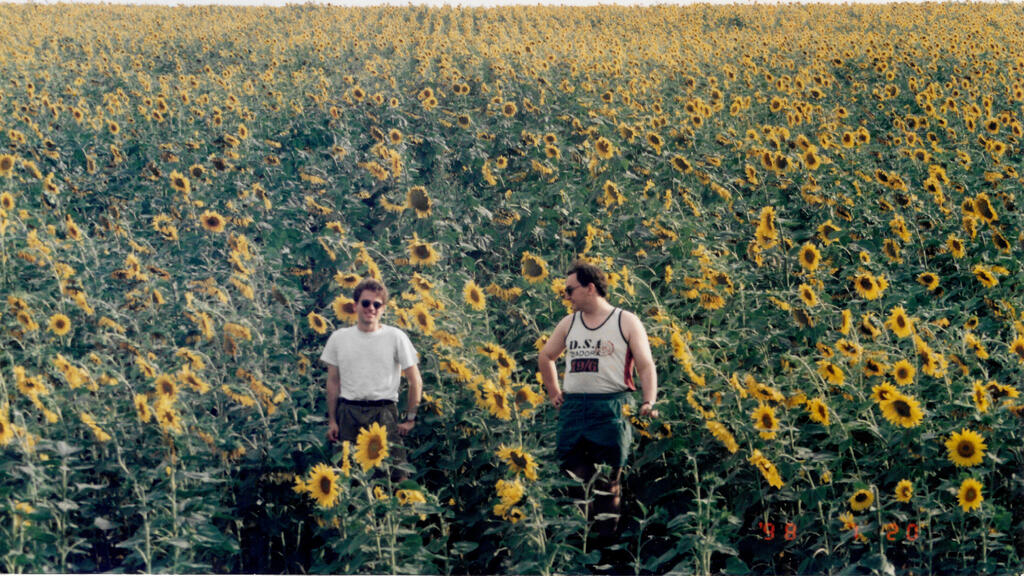
Firestrone & Magnitsky in a field in Bashkortostan
(Photo: Courtesy of the interviewee)
The criminal's son becomes a lawyer
Firestone (60) is a colorful character. During our meeting at a London café, he comes across as a restless, at times intense individual who likes to jump out of his seat to act out the scenes he is recounting. A passion for action is evident in everything he says, as is his anger.
He was born into an affluent Jewish family in New York, and at age 16, his life took a jarring turn: his father, Richard, was convicted of defrauding investors in a $40 million coal-mining venture. It emerged that he was also addicted to crack cocaine and ran a brothel out of the family home, using his son's bedroom as one of the rooms. When I ask Firestone how it was possible that social services didn't intervene, he replies dryly: "When you're rich, social services don't bother you. Only the poor have to deal with them." Yet his father did do at least one good thing during that period: he encouraged his son to study Russian in high school, assuming it would benefit him in the future.
Jamison studied law at Tulane University in New Orleans, and upon graduating in 1991, he decided to move to Moscow. "Russia was a land of immense opportunity, taking many promising steps," he says. It was a time when the Communist bloc was in its death throes, and "it was clear to me that a huge market was about to open up there, because the Russians would need everything, so I wanted to be part of it," he explains. Indeed, within four months, Mikhail Gorbachev resigned and the Soviet Union collapsed.
Firestone founded the first independent foreign law firm in Russia alongside his friend from his student days, Terry Duncan. However, the political upheaval that had created business opportunities for them soon brought disaster as well. In 1993, Russia’s fledgling democracy was plunged into a fierce conflict between President Boris Yeltsin and the parliament over the limits of their respective powers. That September, parliamentary supporters seized Moscow’s City Hall and attempted to capture the Ostankino television station. Firestone and ten friends went out into the streets to witness the events. Duncan, who was trained as a medic, ran to aid the wounded but was caught in the line of fire and killed.
A devastated Firestone returned to the United States to bury his friend. "It was a terrible experience," he says now. "The planes were packed with wealthy Western executives fleeing Russia, while I just wanted to be on the same flight as my friend’s body."
Given those harrowing experiences, why didn't you stay in the United States?
"I didn't have any money. I took out loans to travel to the funeral. My clients at the firm had paid me for services that were still in progress, so I was obliged to finish the work. Besides, where exactly would I have gone? My father had just been released from prison, and at the time, I wanted nothing to do with him. My mother and siblings had their hand full. On the other hand, there was no ongoing danger in Russia, and it was clearly still the place to be."
Firestone decided to move forward with a new partner, and their firm gradually gained momentum thanks to a steady stream of Western clients seeking to do business in Russia and needing help navigating the intricacies of local regulations and law. At its peak, the Firestone Duncan firm employed over thirty people and boasted a roster of major clients, foremost among them, Bill Browder.
Putin's favorite becomes his enemy
Browder (62) grew up in New Jersey. His father was a mathematics professor, and his grandfather was Earl Browder, head of the American Communist Party in the 1930s and 1940s. In 1989, he earned a master's degree in economics from Stanford; like Firestone, he recognized that the collapse of the Communist bloc presented a rare business opportunity. He moved to London and worked for firms and investment houses that focused on identifying promising state-owned companies, then being privatized at ridiculously low prices. Then, in 1996, he founded the Hermitage Fund with the Lebanese-born Jewish billionaire Edmond Safra to do the same thing, only in Russia. For instance, one of Hermitage’s first investments was the purchase of a stake in the oil company Sidanco for $11 million; within a year, it was sold to the British energy giant BP at a 600% profit.
Two years later, Russia fell into an economic crisis, and Russian oligarchs exploited the situation to seize control of companies, strip them of their assets, and dilute the holdings of other shareholders. To protect his stake in these companies and continue unlocking their true value, Browder underwent a significant transformation, becoming an activist investor who exposed oligarch corruption and the mismanagement of the companies they controlled.
However, the rise of Hermitage coincided with the rise of Putin; upon becoming president in 1999, Putin began targeting the oligarchs, making it clear that they could retain their wealth only by submitting to the Kremlin. As long as Browder was fighting them, he was useful to Putin. But once he began exposing corruption within state-controlled companies as well, he was branded a threat.
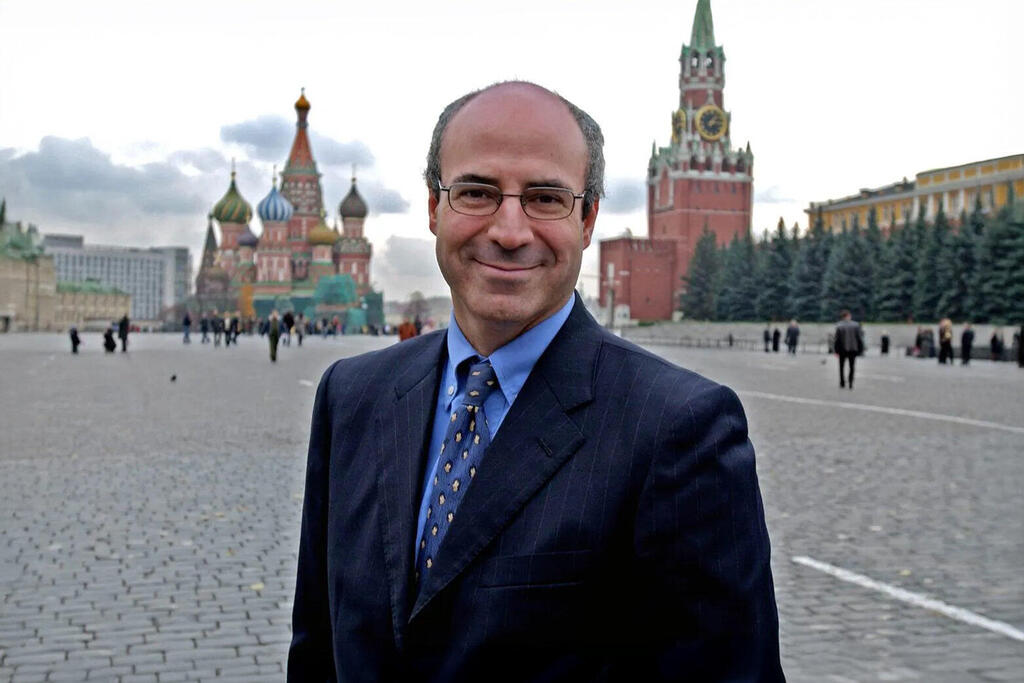
In November 2005, Browder landed at Moscow’s Sheremetyevo Airport but was denied entry and designated a "threat to national security." This occurred just four days before a lawsuit filed by Hermitage against the state-owned gas company Surgutneftegas was scheduled to be heard in court. Browder settled in London and began selling off his Russian holdings, but before he could close his offices, Russian police raided them, as well as the offices of Firestone Duncan, and seized documents, computers, and the corporate seals of three dormant companies owned by Hermitage, companies that had sold their assets and paid their taxes in full. Shortly thereafter, the companies were re-registered, and ownership was transferred to a group of convicted criminals that included senior police and tax officials. The criminals used the information they had obtained to fraudulently claim $230 million in tax refunds from the Russian treasury. But then, the third, and most tragic, protagonist of the affair entered the picture: Sergei Magnitsky.
The man who refused to lie to save himself
Magnitsky grew up in Nalchik, a city in the Caucasus region, and showed signs of being a prodigy from a young age. His outstanding grades paved the way for a bachelor’s degree from the prestigious Plekhanov University of Economics in Moscow. He began his career at the local branch of the consulting and accounting firm Ernst & Young, and in 1995, he joined the firm Firestone Duncan.
"Sergei was quietly brilliant," says Firestone. "He possessed a very specific kind of kindness: he would sit in a room with highly paid consultants who were discussing things they knew nothing about, and he would correct them without embarrassing them. There is a stereotype that people from the Caucasus are loud and emotional. Sergei wasn't like that, except at parties. Everyone held him in high regard and liked him. Yet, no one expected him to be particularly brave or to become an activist."
Why?
"For he truly believed in the system. He thought Russia was moving in the right direction, and the proof, as far as he was concerned, was that we always won in court. People used to say, 'In Russia, everyone has to cheat or steal, because if you pay all your taxes, you can't make money.' And Sergei would reply: 'No, that’s not true. You can pay all your taxes and still make a lot of money.'"
Magnitsky was the man handling Hermitage’s cases; when Browder was expelled from Russia and discovered that his assets had been seized, he enlisted Magnitsky to track down evidence of the fraud and expose it. Magnitsky quickly did so and presented his findings to senior Interior Ministry officials in 2008, but a month later, he was arrested in Moscow on the orders of those very officials, accused of helping Browder evade taxes ("It is one thing to be the victim of a crime, and something else entirely to be accused of the crime you were victimized by," Browder said in a video produced in October 2009).
At the same time, Firestone was dealing with a drama of his own: he discovered that a second bank account had been opened for one of Browder’s frozen companies, even though he was the only person with the power of attorney to do so. A quick check revealed that his American passport had been forged to secure yet another tax refund, leading him to realize that Putin’s associates were trying to frame him as well. Within hours, he and several of his employees were on a plane, heading into exile in London.
Magnitsky, meanwhile, was under immense pressure. Time and again, his interrogators tried to persuade him to alter his testimony to implicate Browder, but he adamantly refused.
"Sergei was placed in a terrible position," Firestone says painfully. "He wasn't willing to lie. He thought that one day there would be a major trial where he could explain things just as he had in the commercial courts, and then these guys would look like the morons, idiots, and thieves they truly are. He genuinely believed that right up until his final hearing."
What happened at that hearing?
"He wasn't allowed to present his arguments at all, and at a certain point, he realized: there would be no real day in court. It was going to be precisely that kind of legal farce, where the judge is corrupt, the prosecutor is corrupt, and the whole thing is scripted. That was when he could no longer keep up the pretense for his family; he could no longer go on smiling and assuring them that everything was fine."
Magnitsky was held in Moscow detention centers for 358 days under unimaginable conditions. "In winter, they put him in freezing-cold cells," Firestone describes. "In summer, they put him in sweltering ones. The cells were filthy, too; they were flooded with sewage. They wouldn't let him shower or even boil water for himself, so he was forced to drink contaminated water. His health had been fine when he was arrested, but eventually, it collapsed."
Magnitsky suffered from pancreatitis and a urinary tract infection, and lost a great deal of weight. Even then, he was denied medical treatment. He was transferred to a detention facility near a hospital, but "instead of being operated on, he was handcuffed," says Firestone. "Then eight men arrived with rubber batons and beat him. Afterward, they removed his handcuffs and left him lying there, writhing in pain on the concrete floor for an hour and 18 minutes, until he died. Only then did they open the door and tell the medical staff, 'Here is your patient.' There is a word for this. It’s called murder."
How do you know about everything that happened there?
"In the same way we know about everyone Stalin had shot. The Russians have this absurd habit of documenting every interrogation and inquiry. We have the signed orders. As they were beating him, Sergei said, 'Now you’re going to kill me.' And they even had the audacity to write in the record: 'delusions of persecution.'"
It happened on November 16, 2009. The official cause of death was heart failure; the family was denied permission to conduct an independent autopsy, and the funeral took place under police supervision to prevent any examination of the body.
This event changed Firestone’s life.
"Throughout the time Sergei was in custody awaiting trial, the question was: How do we get him out? How do we fix this situation? But after they killed him, it all shifted to: How do we screw you over? How do we take everything you have? How do we throw you in a cell and let you die poor inside it, just like Sergei? How do we strip you of every last penny? How do we make your friends and family ashamed to even know you?
"People ask me, 'How did you and Browder decide to go after the people who arrested Sergei? What did that discussion look like?' There was no discussion; we never had a conversation like that."
"We simply knew, and it simply got done."
"Navalny was just as furious as I was."
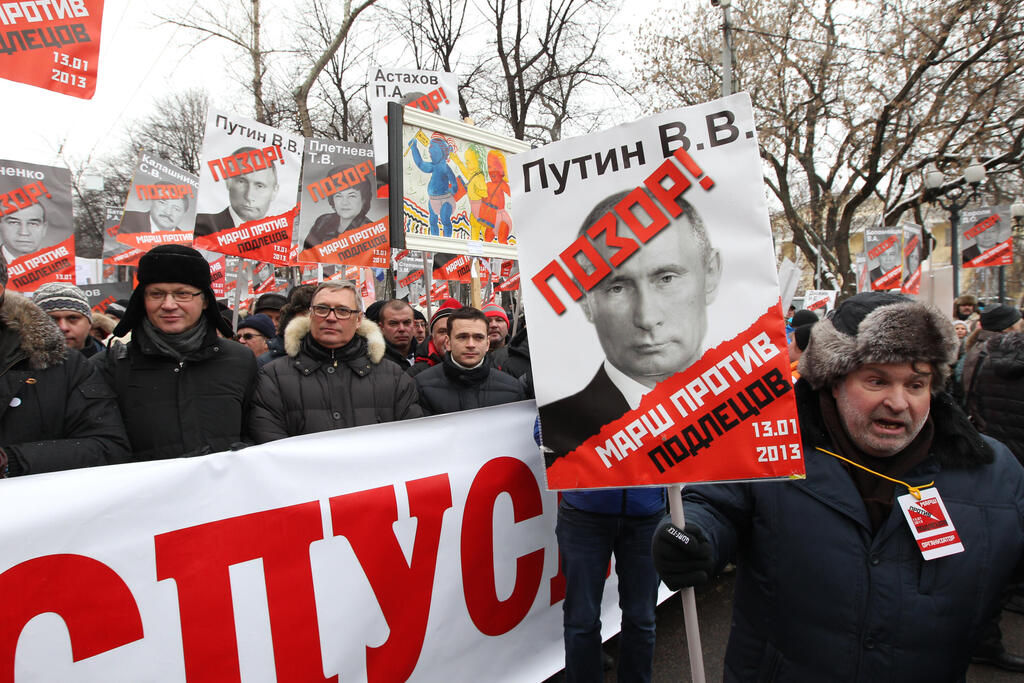
Firestone and Browder got to work immediately. They assembled a team, conducted investigations, cultivated sources, and produced the video series "The Russian Untouchables," with each episode dedicated to a different member of the criminal group that had arrested Magnitsky. The videos were uploaded to YouTube in 2010 and garnered millions of views. They also won the support of the rising opposition figure Alexei Navalny, who shared them on his blog.
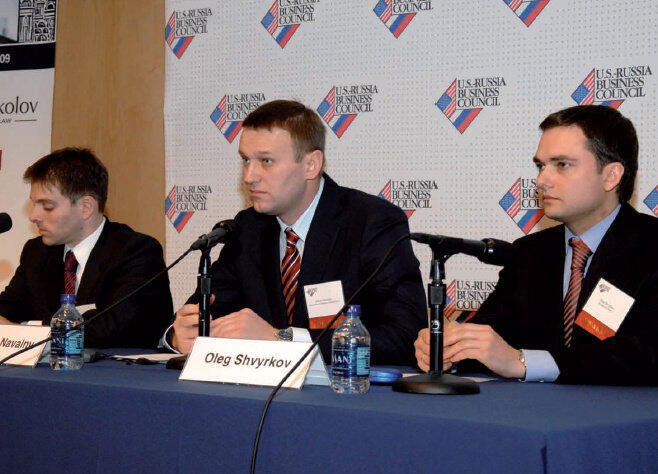
"I met Navalny in early 2009 at a conference on Russia in Philadelphia, of all places," Firestone recounts. "He was just so much like me, so furious and eager to take action. We spent time together in New York after the conference and became friends. So, when I was preparing the videos, I called to ask if he’d be willing to share them; he immediately agreed with enthusiasm, saying, 'We’re going to catch those bastards! I’m going to get so sued!'"
Although the videos sparked a wave of media coverage in Russia and resonated with the public, they didn't actually manage to change anything, no action was taken against those responsible for Magnitsky’s death.
"We failed," Firestone admits. "All of Russia said 'Wow,' and I became a minor media star, but we couldn't bring about any action. Then Bill said, 'Let's try to take the West away from them.'"
This marked the opening salvo of the second phase, the Magnitsky Act, designed to impose personal sanctions on everyone involved in the affair. Firestone and Browder devised a mechanism to penalize the corrupt officials who had detained Magnitsky, as well as their families: in any country that ratified the act, they would be barred from entry, their local assets frozen, and banks and companies prohibited from doing business with them; in some cases, they would face broader exclusion from the financial system.
In 2012, after more than two years of intensive lobbying, the act reached the desk of then-U.S. President Barack Obama and was approved, despite the White House’s official stance favoring a "reset" of relations with Moscow. The Kremlin was furious, immediately retaliating with a ban on the adoption of Russian children by Americans and a counter-blacklist. Putin described this response as "emotional, but appropriate." Russia subsequently pressured the United States to repeal the act, and the issue was raised several times during meetings between Putin and Trump. In 2018, Putin even asked Trump for access to Browder as part of a reciprocal investigation exchange deal.
Despite all this, the Magnitsky Act remains in effect. Moreover, it has been widely adopted around the world, by the European Union, the United Kingdom, Canada, Australia, and numerous other nations, evolving into the "Global Magnitsky Act." This has become a standard sanctions model targeting individuals suspected of human rights violations and corruption anywhere in the world, regardless of any connection to the original Magnitsky affair. For instance, the European Union imposed sanctions on settler movement leaders Daniella Weiss and Meir Deutsch, while the United States sanctioned Israeli billionaire Dan Gertler, who is accused of involvement in corruption and bribery in the Congo.
Despite the success, Firestone makes it clear that the Magnitsky Act is not enough.
"The law is great, but far from amazing. That’s because sanctions are always a political decision. Governments say, 'Right now we’re angry at the Democratic Republic of the Congo, so we’ll happily impose sanctions on its people', until they need rare metals, at which point they lift the sanctions. Today, you’re more likely to be struck by lightning than to face Magnitsky sanctions. And that has to change."
And yet, the sanctions infuriated Putin. Why?
"Because back then, Putin and his inner circle were untouchable. Magnitsky sanctions were the only thing that made people like him realize they weren't immune. Furthermore, Russia has a lousy education system, so people want to educate their children abroad. It’s also very dangerous to keep your money in Russia, which drives Russians to move it overseas. Bill stripped them of that security, and that is what truly turned him into an enemy of the state."
"Russia can still be redeemed"
Firestone currently lives in London with Robert, his partner of nearly 40 years. He makes his living providing legal counsel on matters involving sanctions, extradition, asset tracing and recovery, and complex disputes. After Russian authorities imprisoned Navalny in 2021, Firestone spearheaded an initiative to push for sanctions against 35 corrupt Russian officials he had identified (the "Navalny 35"). He carries out his current work on behalf of Ukraine pro bono.
Over the years, the Russians have not let up on Firestone.
"More than once, I was offered a way to preserve the life I had built there, 18 years of life, friends, a business," he says. "All I had to do was accept the version of events put forward by the people who killed Sergei. And that was something I couldn't do."
Not all his colleagues withstood the pressure.
"One of our team members got fed up with being stuck in London, far from his family, so he struck a deal with the Russians: he would badmouth Browder, and in return, he’d be allowed to go back. Today, he travels freely between the West and Moscow. I understand why he did it, but it’s painful. And even though he didn't harm anyone, it still feels like a terrible betrayal."
The publication of your book in Russian by Navalnaya will surely fuel Russian interest in you. Aren't you afraid for your life?
"No. I just turned 60, and it’s been a really good ride. I’d like another 20 or 30 years, but I don’t live my life out of fear; I live according to what I need to do: go after the people who killed Sergei and Navalny, go after the regime that is bombing Ukraine and killing people, and go after the regime that turns people I love into thugs."
What do you mean?
"Not long ago, a dear Russian friend said to me: 'You must be very proud of Trump. He’s taken over Venezuela, and he’s about to take over Panama, Canada, and Greenland.' It hurts me deeply, because that isn't how America became great. It became great by liberating Europe from the Nazis. But there are leaders who take the worst in people and amplify it. Hitler was like that. Germany didn't have to go down that path, but at a time when it was easy to stoke racism and nationalism, a bad man came along and did it. There is a man in America doing that now, and Putin is doing it too. I see people I love following that path, and that is what I am fighting against.
"So, I’m not afraid. If I die at 61 because I get thrown out a window or poisoned, well, that would suck."
"But everyone who loves me will say: 'Jamison couldn't have acted any other way.' This is what I’m doing to fight this shit."
Your love for Russia is evident in the way you speak. Yet, in the same breath, you say you want to bring it crashing down and break its people. Isn't there a conflict there? After all, you still have many friends there.
"Those two positions coexist because there is the country Terry Duncan and I thought we were building. There is the country Sergei Magnitsky and I thought we were building. There is the country Alexei Navalny died trying to build. That is the country Vladimir Kara-Murza sat in prison trying to build. And that country still exists. If Germany could be redeemed, Russia can be redeemed too, and that is my country."



