








The renewable energy entrepreneur now betting on gas, AI and nuclear power
Ofer Yannay built Nofar around solar and energy storage but is now expanding into traditional energy as artificial intelligence drives demand for reliable electricity. He says Nofar will remain predominantly renewable while building a separate AI-focused energy business.
This year, the name Ofer Yannay has rarely been out of the headlines, whether because of the turmoil surrounding Nofar Energy, the company he controls, or his increasingly intense battles with fans of Hapoel Tel Aviv, the basketball team he owns. The capital market has grown accustomed to Yannay making plenty of noise. But the energy company he steers has also delivered: Nofar, which went public six years ago at a valuation of NIS 2 billion, is now worth about NIS 7 billion.
Yannay has set Nofar an ambitious target of reaching a valuation of NIS 16 billion by the end of 2028. If the company hits that target, he stands to receive an extraordinary compensation package worth hundreds of millions of shekels, potentially making him one of Israel’s highest-paid executives.
But Yannay is now steering Nofar in a new direction. A company founded on renewable energy infrastructure is taking significant steps into traditional energy, and Yannay is speaking in terms that suggest a major shift not only for Nofar but for the energy industry as a whole.
“We bought the Reindeer power plant as our first acquisition to signal a new direction, that we are also a fossil energy player,” he tells Calcalist in a special holiday interview. “There is no other way today to enter the world of AI. It requires building expertise in the field. Reindeer is the first stop, but not the last. There is a major revolution here and we need to integrate into it.”
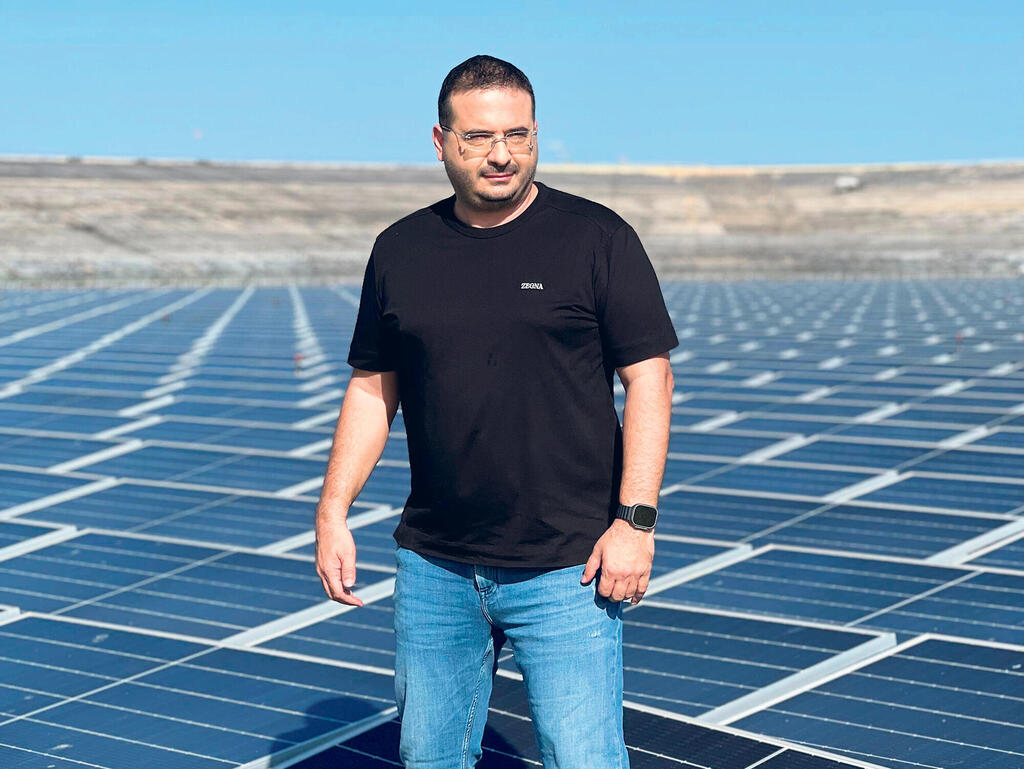
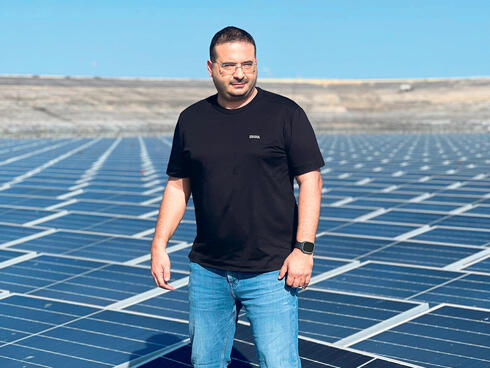
The first clear sign of the change Yannay is describing came last July, with Nofar’s acquisition of a stake in Reindeer, a project to establish a large private power plant in the Sharon region. Nofar paid NIS 855 million for a 47.5% stake alongside Phoenix and its partners. The deal gave Nofar its first foothold in the traditional energy industry. Natural gas is considered the least polluting fossil fuel, but it is still not a renewable resource.
The AI revolution cannot rely entirely on green electricity? Is it unrealistic for renewable energy to provide the power needed for it?
“No, among other things because it does not provide a solution for electricity at night. There is also seasonality. Solar panels in the winter produce less than panels in the summer: 2 kWh per day compared with 7 kWh. Data centers need energy 24/7. When you are dealing with something that fluctuates so much, I need a number of storage facilities that would make it clearly uneconomical.”
So has AI taken us backward? Is the technology revolution bringing us back to traditional energy?
“It’s a paradox, right? The previous revolution remains. At Nofar, the majority will be renewable energy, and fossil energy will be concentrated in Nofar’s AI arm. It will require raising capital and also separate debt. Europe wants to reach a situation in 2050 where it relies only on renewable energy, Net Zero, with zero fossil energy, but that’s not realistic. AI requires fossil energy. We won’t go back to 100% fossil energy, but AI guarantees that fossil energy will be here for many, many years.”
Nofar was floated as a green energy company. Doesn’t that undermine the whole concept behind its establishment?
“I don’t know. Why did I choose the name Nofar? In my university seminar, I was dealing with renewable energy. It occurred to me that when you take the traditional energy world and introduce renewable energy into it, it is like the advancement of chips, which are constantly evolving. The same is true of green energy: technology improves energy efficiency, and the price of electricity goes down.
“I saw that green energy was going to create constant chaos in the market. When I founded the company, I wanted to build a company that thrives in chaos. So I thought Nofar, the Hebrew word for water lily, was a good name. All plants need stable soil, but Nofar knows how to grow on turbulent waters. The company’s strategy must be updated so that it adapts to the major change the AI revolution is creating.”
How attractive and economically viable is this opportunity?
“Hungry players like Nvidia, Oracle and Microsoft, companies with the best credit ratings, want to deploy data centers quickly, everywhere, and are willing to pay well. They can take a platform like ours, with broad deployment and expertise, and use it to accelerate. We will derive value from this if we know how to be a player that also provides energy to data centers.
“We are also moving forward with establishing our own data center in Shoham. This will create a new perception of what Nofar is. We are already involved in significant business processes in the field.”
So when we look at the green Nofar today, are we also looking at fossil-fuel and traditional energy activity?
“Pragmatically, if it complements our strategy, then why not? I don’t say no to anything I haven’t examined and don’t know the economic data for. I didn’t enter renewable energy out of religious or ideological belief, but out of pragmatism. Because it is cheap, efficient and unlimited. Humanity is moving into an era in which it needs more and more of it.
“But if there is a situation that specifically justifies the use of fossil energy, we have no problem buying a power plant if we think it is necessary.”
Are Trump’s tariff policies and his executive orders hurting renewable energy?
“The cancellation of the federal tax credit is a major event. There was a deadline for qualifying for the benefit by a certain date, and after that you had four years to build the project so that the benefit would not be lost. Those two dates created a boost in activity. When you have a backlog of projects, you need to complete them quickly.
“We saw this with Enlight, our competitor, which experienced a major acceleration in activity. We also built up a pipeline of projects that we acquired and then had to complete before the benefit expired.”
How are relations with Enlight, your competitor?
“We are supportive. There are also people from Enlight on my management team. It’s a good company. In our industry, if a company comes up with a good idea very quickly, the others try to implement it. They have done a good job in recent years, and we have done good things in the past year and will do so in the years to come.
“Enlight CEO Gilad Yavetz is a Maccabi Tel Aviv fan, and after one of our Hapoel Tel Aviv games he texted me, ‘Well done.’”
The Electricity Authority has halted the establishment of server farms to examine the issue. It fears that Israel cannot meet the volume of requests to establish them.
“It is clear that Israel cannot meet this volume of requests, which would triple Israel’s electricity consumption. The gas reserves that would otherwise last another 20 years could be depleted in seven years, and then where will we get the energy from?
“Server farms are creating a huge boost in demand, highlighting the enormous pressure that AI is creating on energy systems around the world, but also the enormous opportunity for companies like us.
“AI must not consume national energy reserves. At the national level, the solution could be small nuclear reactors.”
Will Nofar enter the nuclear energy sector?
“Nuclear energy, which can be considered a clean resource, is something that entrepreneurs have not wanted to touch until now because the technology was insufficiently developed and bureaucracy had made it economically unviable. Today, it is something we are looking at and studying.
“The change created by the AI revolution is enormous. If we don’t understand it, we cannot remain relevant.”
Israel’s official energy target for 2030 is to produce 30% of the country’s electricity from renewable sources. What needs to be done to meet it?
“We have excellent renewable energy entrepreneurs who can meet even aggressive targets. The problem is the licensing procedures for solar fields, which can be shortened.
“We are asking the Israel Electric Corporation to allow us to build the transmission and distribution infrastructure ourselves in order to shorten the timeline. We are already doing this elsewhere in the world.
“And we need creative solutions that are unique to Israel. Building a transmission line from the south to the center all at once could close gaps, because it would be possible to transfer 10 gigawatts to the center at once.”
You reached an unconventional compensation arrangement with institutional investors under which, if you double the company’s value to NIS 16 billion, you will be able to exercise options worth hundreds of millions of shekels.
“This has never been done before in Israel. It is an all-or-nothing compensation arrangement. If Nofar reaches a very high valuation, I will receive it, and if not, I will receive nothing. Those who choose blocked shares are assured that they will receive something in any case.
“Ambitious CEOs who believe in themselves will embrace this. We are close to reaching it, but we will not stop there. Nofar should not be worth only NIS 16 billion.”
This is a challenge that could be considered a problematic incentive for an entrepreneur. Will it require a huge merger?
“Not problematic, because Nofar’s value will be determined by financial parameters. The stock has almost tripled and has fallen a bit since then. But as it continues to rise, it can happen without a merger, through the right business moves that will be reflected in the financial statements.”
Will Nofar five years from now no longer be just a renewable energy company?
“That’s right. It will be an energy company in the broadest sense.”
“Challenging the status quo”
Yannay, 51, is not a typical business figure. In many ways, he represents a different breed of wealthy Israeli entrepreneur, far removed from conventional business passivity. He is right-wing, religious, colorful, sharp-tongued and highly visible in the media, and he has never shied away from clashes with sporting rivals.
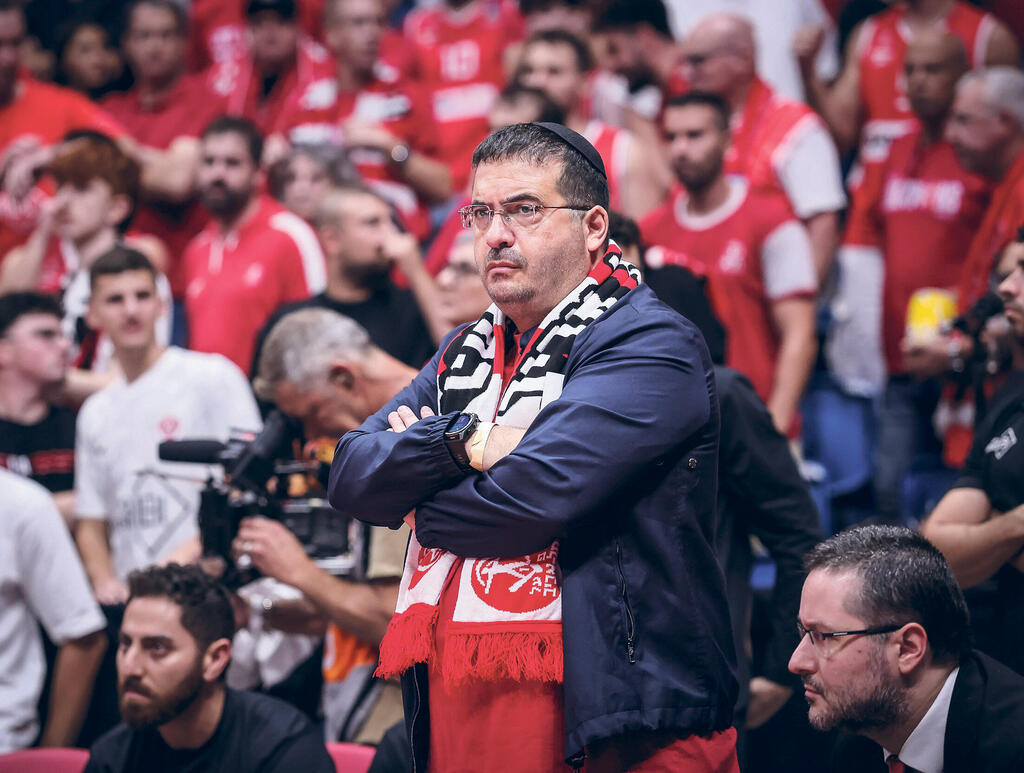
Since becoming the owner of Hapoel Tel Aviv’s basketball team in 2023, Yannay has not shied away from combative late-night posts that have provoked the Israeli sports scene. Among fans, attitudes toward him range from those who view him as the savior of a team he has helped take to unprecedented heights to those who see his presence as a provocation to everything the red club from Tel Aviv represents.
What is certain is that the massive influx of money has transformed the club and brought it closer to the top tier of European basketball.
Nofar’s breakthrough came in 2012, when it cracked the business and regulatory model for working with kibbutzim after failing to make the same model work with moshavim. The model was based on a joint corporation in which Nofar assumed most of the responsibility while the kibbutz received most of the revenue. The company covered the roofs of chicken coops, barns and warehouses in 130 kibbutzim with solar panels, becoming one of the early drivers of Israel’s renewable energy revolution.
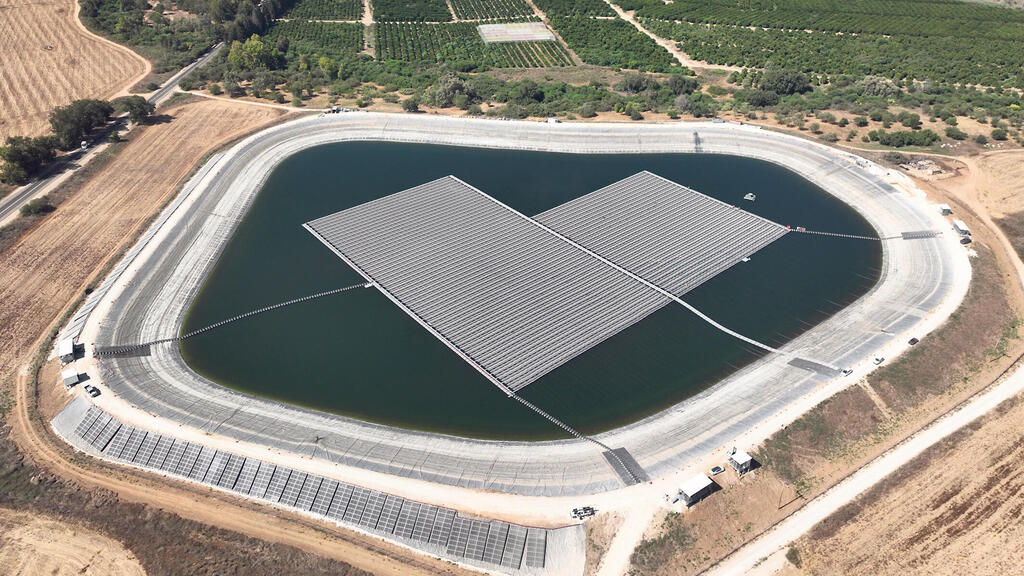
In 2015, Nofar was a pioneer in entering the floating solar market, installing panels on water reservoirs. In 2020, it established Israel’s first energy storage system, a critical link in making use of surplus electricity. In December 2020, the company went public on the Tel Aviv Stock Exchange.
Until a year and a half ago, Yannay served as Nofar’s chairman. Then Nofar’s two joint CEOs, Nadav Tene and Shahar Gershon, resigned amid turmoil. A clash with institutional investors over the compensation package he sought for Ami Landau, his candidate for CEO, led Yannay to take the position himself.
He explains the decision in part through his reduced involvement in Hapoel Tel Aviv, after selling a portion of his stake last August and moving from an 81% stake in the basketball team to 40%.
Regarding his decision to step into the CEO role, he says: “There was an option to look for another CEO and lose another six months, or jump into the water. I’m pleased that it turned out that way. In a situation where quick decisions need to be made, it’s easier to do that when you know the company well and know the controlling shareholder as well.
“Speaking the language of AI and data centers is a decision I made in the first days of my role as CEO. Becoming significant for players like Nvidia, Oracle and Microsoft will create a new perception of what Nofar is. We’ll need dedicated capital for that, and we’ll work toward that in the coming quarter.”
A right-wing, religious man becomes the owner of a team identified with the secular left. That’s not easy to swallow.
“Remember, with Nofar, I started on kibbutzim. The fact that a right-wing, religious man can be with left-wing people, and have meaningful friendships with them, I know it’s possible.
“Sympathy for the team outweighs political considerations. In the end, we have to work together. When I talk to the left-wing part of the family, I ask, who is the leader you accept? Great. We’ve reached 30 seats. How do we lead the country with that?
“We all need to practice embracing people who are different from us. I’ve specialized in that in recent years. Hapoel is ultimately an underdog story, a team that came from the bottom. That’s what connected me to the idea of Hapoel.”
What do owning a basketball team and an energy company have in common?
“In both, it’s about challenging the status quo, but you have to understand the situation. Former U.S. Secretary of State Henry Kissinger said that this is the duty of a leader: He who walks within the existing envelope is not a leader because he changes nothing. A leader who tears the envelope and forces changes that cannot be contained is a failed leader. The wisdom is to expand the envelope according to the opportunities that exist.
“My perception is always rooted in the future, to see in which direction things are moving. I was privileged to be, to some extent, a forerunner of renewable energy in the Israeli market, and today Nofar is already a global company.”
And in basketball?
“There is a tectonic shift, once in a generation. I hope I can accelerate it. To take a club on the fringes of the Israeli league, which finished fourth or fifth in the 16 years before me, and turn it into a good club on a European scale.
“Here too, through the story of Hapoel Tel Aviv, we gave the establishment a small kick, to break Maccabi’s monopoly, to show that there can be other strong, successful teams.
“I met player agents and team owners in Athens who told me, ‘Today everyone is trying to be like Hapoel.’ This transformation is also an inspiration in Europe: to win the Eurocup and then reach the Euroleague.
“Last year we finished in sixth place, Maccabi finished in 16th place. It is not an easy experience for Maccabi, and they and their fans are very competitive and are affected by this pressure.
“In the coming month we will know if we receive a license to establish a permanent place for us in the Euroleague. The team’s value has also increased accordingly.”
What does this mean?
“When I joined, the value of the operation was estimated by Deloitte at NIS 12 million. The last deal, in which I sold a percentage of ownership to the other partners, was made at a valuation of NIS 250 million. The changes in European basketball will take Hapoel further north from there. The best is yet to come.”
When asked why he diluted his ownership stake, Yannay says that as CEO of Nofar he will not be able to devote as much time to managing the team as he did in the past, and that his partners, venture capitalist Gili Raanan, Micky Malka, Alan Howard and the Ussishkin Fans Association, will have to take on more responsibility.
“That’s why I increased their percentages. When I told the partners this, I also said, ‘I’m happy to be at the table where I’m the least rich.’ One of the partners, Micky Malka, answered me: ‘Temporary situation.’”
According to your statements in the media, you enjoy stinging your great nemesis, Maccabi Tel Aviv.
“Less right now. The stings have been exhausted. As a child in Yavne, I had a Maccabi subscription. I have nothing against it or against Maccabi fans.
“I would like to see sport run professionally, where the best wins, without favoritism toward one side or another. To me, sport is symbolic of the economy. Economies that rely on favoritism rather than talent and effort are failures.”
Yannay also has a vision: “The dream would be to see an Israeli Euroleague final between Hapoel and Maccabi. I’m working on it from Hapoel’s side; someone needs to get Maccabi there too. Maccabi hasn’t been to the Final Four since 2014. My entry was a catalyst for Maccabi to also become more competitive. We still see ourselves as the underdog.”
You proposed building a stadium with an investment of NIS 250 million on your part in exchange for receiving the commercial rights to the hall. That didn’t happen. Will there be a new, modern stadium for Hapoel Tel Aviv?
“We need a modern arena, also for performances by artists. When my daughter dragged me to an Olivia Rodrigo concert in Bologna, I asked myself why she was coming there and not to Israel. The answer is that there is a basketball arena with 20,000 seats. Where in Israel will she perform, in Hayarkon Park? Yad Eliyahu Stadium is irrelevant in this context. It is small, outdated and also very busy with performances.
“Right now in Lod we have good backing from the municipality, while the Tel Aviv municipality is moving slowly. It does not want to invest the money, and on the other hand it is not willing to make an arrangement with a developer who would build the arena, receive the land for 49 years and then return it to the municipality, as is done elsewhere in the world.
“As far as I’m concerned, they should build it and we will pay usage fees. I assume that when they see a shift in Lod, they will start running forward because they do not want to lose their hegemony. It is a pity that it does not work another way.”
“Politics? Maybe in five years”
Yannay, a widower and father of a daughter, lives in Ra’anana. He grew up in Yavne, the second of eight siblings, including lawyer Pninat Yannay, now Israel’s ambassador to Greece.
“I was a child with an unusual curiosity, with a huge appetite for reading, spending a lot of time in the municipal library. I didn’t grow up with people like me, so I developed the ability to communicate with many types of people. I saw that I had unusual abilities, and I hoped to do significant things with them.”
He grew up in a religious-national family with a father who immigrated from Tunisia and was a school principal, and a mother who immigrated from Libya and worked as a kindergarten teacher. He studied at the Bnei Akiva Nechalim yeshiva. He has a bachelor’s degree in physics, mathematics and computer science from the Hebrew University’s outstanding program, and an MBA from Ben-Gurion University.
Will the combination of money and a desire for influence eventually lead you into politics? At some point, a succession battle will develop for the leadership of the Likud.
“I know myself to be a very total person. When I have a task, I am 100% engaged in it. Right now, the task is to raise Nofar to great heights, and I haven’t finished it.
“Entering politics means abandoning all other commitments, and in the foreseeable future I don’t think it will happen. It also has a heavy personal price, which is another consideration. I need time to expand my family before I enter something more demanding.
“Right now, I am serving the Zionist project not from a political position. Maybe in five years things will change. I do try to understand the world in a broader way, beyond the scope of an ordinary businessman.”
It sounds like you are flirting significantly with the subject.
“I don’t know if this is flirting. I have a Zionist worldview. The State of Israel is a miracle. My parents came to Israel and built it with nothing. The role of my generation is to pass on to the next generation a country in a stronger state.
“Today, most politicians contribute less to the economy than businessmen. Maybe later on the political thing will make sense, but not in the coming years.”
You are a single father. Is it your life mission today to expand your family?
“Right, and therefore any other plan should be postponed. If I am close to achieving it? I maintain the right to remain silent.
“My life story had a tragic dimension on a personal level. My wife, Tali, was diagnosed with cancer in the 18th week of pregnancy with our second child. She had to have a termination of pregnancy, and two years later, in 2018, she passed away.
“This left me with an 8-year-old girl whom I am raising alone while I build Nofar. After my wife’s illness, no challenge seems too big for me. It is an experience that you can come out of. But I maintain a muscle of optimism, otherwise you sink. This is important for the family around you, and also for my daughter.”



