







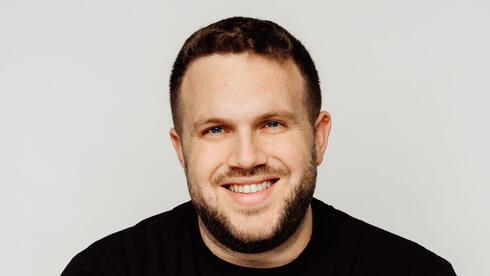



Turpaz CEO: “We will be one of the world’s top ten in flavor and fragrance”
Karen Cohen Khazon turned Turpaz, once a small fragrance factory in Holon, into a $1.5 billion company acquiring businesses worldwide. “We will cross the billion-dollar revenue mark.”
"We will be one of the ten largest companies in the world for flavor, fragrance and unique raw materials," declares Karen Cohen Khazon, Chairperson and CEO of Turpaz Industries and the company’s largest shareholder (44%). "Whether it takes eight years or twelve, we will eventually get there."
In the meantime, the market seems to believe her: the company, which began as a small fragrance factory in Holon, has become, under Cohen Khazon’s leadership, a global player traded at a valuation of 5.2 billion shekels (approximately $1.58B) and included in the Tel Aviv-125 index.

In the first half of 2025, the company’s sales jumped by 44% compared to the same period last year, though the vast majority of the growth stemmed from acquisitions. Since 2018, Turpaz has acquired 25 companies, five of them this year alone in England, Belgium, Poland, France and India - “for the purpose of synergies and expanding the product portfolio,” as she puts it. “And there will be many more acquisitions, we have a large pipeline.”
But not everything is positive. The company’s name recently made headlines as one of the Israeli holdings divested by Norway’s sovereign wealth fund in protest of the war in Gaza. As the conflict drags on, fears are growing that Turpaz, like many local companies, could be further harmed.
Cohen Khazon, however, insists on business as usual. “Complaining that the whole world is against you is not interesting, and I won’t do that,” she says. “I have no idea what or how much the Norwegians sold, because they had no obligation to report the move, they held less than 5% of the company. And others bought the shares from them anyway. We are a company that does 90% of its business outside of Israel, and I have never experienced anti-Israeli behavior from anyone we work with.”
Until now. The Norwegians’ divestment suggests that you too are being hurt by anti-Israel sentiment.
“Business is business. It’s not like children in kindergarten saying, ‘I’m not your friend.’ Those who bought my shares didn’t do it out of love, but because my company is interesting and growing. The day before the hearing at the International Court of Justice in The Hague on South Africa’s lawsuit against Israel, we acquired control of two factories from major South African funds. I asked them: ‘But what about the lawsuit?’ They told me: ‘These are political matters. It has nothing to do with business.’”
Still, the last few months have made it clear how much politics affects business in Israel.
“War in general is not good for business. Some are affected more, some less. Sometimes funds are managed not only for economic reasons, but also to please a certain sector. For example, if they manage government pension funds, and there is a political decision in that country, they will follow it. Two weeks ago there were elections in Norway. I don’t know whether the fund’s choice to sell Israeli holdings was related to that, but I suspect it wasn’t 100% pure. It’s a shame when you mix politics and business. But you’ll see they will come back, when the anti-Israel wave passes, because one thing is certain about the people running the Norwegian Wealth Fund: they are not stupid.”
“Let them call me Frutarom 2, I have no problem”
In the industry, Turpaz is often referred to as “Frutarom 2,” and it is indeed difficult to ignore the similarities in the paths taken by the two companies. Frutarom, led by Ori Yehudai, was also known for its aggressive acquisition strategy, which culminated in a massive exit: in 2018, it was sold to the American company IFF for $7 billion.
“Let them call me ‘Frutarom 2,’ I have no problem,” says Cohen Khazon. “Ori built a great company, and part of the resemblance comes from the fact that some of Frutarom’s team is now part of Turpaz’s management. I took things from Frutarom that worked wonderfully, like how to conduct due diligence and make acquisitions, but at the core we are very different companies. I built Turpaz from scratch on three pillars: developing and producing fragrance extracts, flavor extracts, and unique raw materials for pharma and fine chemicals. Frutarom, in contrast, started out solely as a flavor extracts company and only later expanded into other fields.”
Why is this important?
“Because each pillar reinforces the others in terms of access to raw materials at better prices. Everyone sells to and buys from one another. And when you have all three pillars, there’s a balance of power, no one can raise prices too much for the others.”
But it is also possible to become Frutarom in a negative sense: after the acquisition, its Israeli operations were weakened and largely dismantled.
“First of all, we’re not preparing for a sale right now, so I’m not even thinking about a scenario where an acquisition would dismantle us. Second, I’d like to believe no one would buy a company just to destroy it or eliminate competition. But once you sell, you lose control, there’s nothing you can do to prevent that.”
You make many acquisitions. Aren’t you worried about stumbling with one of them, as Teva did with the Mexican company Rimsa?
“I don’t buy cats in a sack. We follow all the legal and accounting due diligence rules, and before closing, we prepare a detailed post-integration plan. We map out exactly how the businesses will be combined, what steps will be taken, who’s responsible for what, and what the timelines are. There’s a systematic plan for what happens the moment the deal is signed. You also have to remember most acquisitions globally fail because of cultural gaps. Management needs to operate like an orchestra, everyone has to know when to come in and when to leave. Our team is experienced in making that work.”

Can you become one of the world’s top ten companies through relatively small acquisitions? IFF, at the top, is worth $16.5 billion, ten times more than Turpaz.
“We acquire what creates value for the company: geographic expansion, stronger capabilities in existing markets, new technologies, customers, or products. We can achieve this with deals in the $30-100 million range. We don’t need one massive acquisition. Five deals in six months is a lot already, and we’ll continue at this pace. That’s why we came together in the first place, otherwise, I would have retired.”
The ties between Turpaz and Frutarom go beyond business similarities. Cohen Khazon and Yehudai were once partners in several startups and were considered friends. In 2017, Frutarom acquired 51% of Turpaz. But it later emerged that Frutarom was already in talks to be sold to IFF. Just eight months after Frutarom’s acquisition, Turpaz was sold back to Cohen Khazon and her partners. The episode left the impression of a rift between her and Yehudai.
You once said in an interview with Calcalist: “I trusted Ori because we were good friends. I believe in people.” Were you angry with him?
“I understand he couldn’t tell us. When we make acquisitions, too, we sign confidentiality agreements and don’t share information. But the moment I read online that Frutarom was negotiating with IFF, I told Reli [Attorney Israel Reli Leshem, Turpaz Group partner]: We’re buying back our shares. It made no sense for us to become part of IFF.”
Why not?
“It’s not the same culture. The DNA is different. We don’t speak the same language. IFF had no controlling shareholder and carried the culture of an American corporation, where everyone is afraid to make decisions, and you can’t run a business like that. If I had wanted to stay inside a corporation, I would have. After all, I sold Aromor [a chemicals company for the detergent industry] to IFF in 2013 and worked there for two years. That culture doesn’t bring out the best in me.”
“We’re still on the runway”
Cohen Khazon entered the Israeli business world both young and unexpectedly. Her father, Moshe (Musa) Cohen, an electrical engineer and industrialist who was a partner of the Salkind family in Elco, died suddenly at the age of 58. At just 22, while still pursuing a bachelor’s degree in medicinal chemistry, Cohen Khazon was thrust into her first business negotiations when she was forced to sell his shares in Elco.
The next stage of her career was at Agan (later Makhteshim Agan), then managed by Ilan Levita, who would later become one of Turpaz’s investors before eventually selling his stake. Cohen Khazon advanced quickly, becoming head of the company’s fragrance division before the age of 30. In 2000, she left Agan to establish a consulting firm. One of her most notable clients was Aromor, then owned by Kibbutz Givat Oz. In 2002, she became its CEO, and in 2005 she led a group of investors to purchase 50% of the company for less than $5 million. Eight years later, Aromor was sold to IFF for $100 million.
As early as 2011, Cohen Khazon and her longtime partners, Yisrael Leshem, Ilan Levita, and Alon Granot, former deputy CEO of Frutarom, made their first investment in Turpaz. But it was only in 2016 that Cohen Khazon took over management of the small factory, which at the time had annual sales of just $2.5 million. Since then, under her leadership, Turpaz has grown into a group controlling 25 factories worldwide (four in Israel), employing 960 people (300 in Israel), and supplying products to the food, beverage, cosmetics, toiletries, and chemical industries.
What are your plans for the future?
“We aimed to double our turnover every four years, and in fact, we’ve done it even faster. In August, we entered the important MSEU index, which tracks the 50 largest and leading stocks in the European market. This exposes us to foreign investors who are beginning to learn about the company and take an interest. It’s a very positive development.”
Is the ultimate goal an exit?
“We’re not thinking about that right now. Our focus is on building the company, not selling it. There have been acquisition offers in the past, and we turned them down. We’re still on the runway, and our goal is to surpass the billion-dollar revenue mark. Right now, taking into account all the companies we acquired this year, we’re already above $300 million.”
You previously said you would build another factory in Nir Yitzhak in the Negev. Why hasn’t that happened?
“There simply aren’t enough workers to build another factory.”
Only workers?
“In a few years, everyone will realize, as Trump has already emphasized, that industry is a strategic asset. A country must rely on local production and not depend on others. The pandemic and the war showed us how critical this is. But industry needs support from the state, not only from capital market investors. Take environmental services, for example: costs must be reasonable. Wastewater treatment alone comes with unreasonable expenses, and that’s just one of the challenges industry faces. Outside Israel, businesses can get loans on preferential terms to help them get started. Here, the attitude is simply: ‘Good luck to you.’”



