








“We say no to more than 90%”: How secondary funds pick through private tech
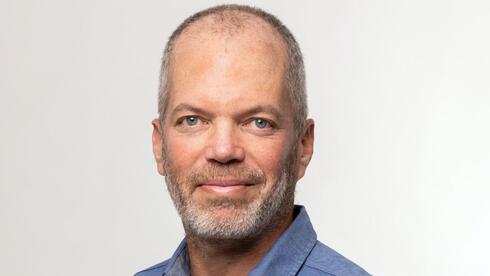
Hamilton Lane’s Keith Brittain describes a market that has expanded dramatically as investors seek liquidity, but says a discount alone is not enough to make a deal attractive.
“Secondary” has become a buzzword in Israel’s high-tech industry. Employees, founders and investors no longer have to wait for a company to be sold or go public to cash out. A growing market of specialized investment funds is offering another route to liquidity, buying shares in private companies and stakes in venture capital funds.
The rise of these funds comes as the traditional exit market has slowed. Taking a technology company public is increasingly seen by founders as a costly and demanding process, while many private companies are choosing to remain private for longer. The result is a growing pool of employees, founders and investors seeking ways to sell their holdings without waiting for an acquisition or an initial public offering.
Secondary funds have stepped into that gap. They specialize in buying shares on the private secondary market, where ownership changes hands between investors rather than through a stock exchange. Their sellers can include employees, founders, early-stage investors and limited partners (LPs) in venture capital funds.
These transactions are typically conducted at a discount to a company’s latest funding-round valuation or the value at which a fund carries its investments. The buyers, in turn, hold the shares until a future liquidity event or another sale, often over a period of several years. Some funds expect to realize their investments within five years, although the timing depends on the companies and assets involved.
There are two main reasons investors turn to the secondary market. In some cases, venture capital funds sell stakes in portfolio companies to return capital to their own investors or extend the life of their remaining holdings. This can give companies that are not necessarily the strongest performers in a fund’s portfolio more time to develop. In other transactions, funds buy shares directly from employees or founders, often seeking to benefit from the discount to the company’s latest valuation.
Several international secondary-market investors are active in Israel, including StepStone, alongside local players such as Sunvest, founded by Fiona Darmon and Merav Weinryb. One of the largest global participants is Hamilton Lane, an investment manager overseeing approximately $1 trillion in assets.
Hamilton Lane recently raised about $5 billion for its sixth secondary fund. The fund is part of a broader platform managing approximately $20 billion, and the firm is now looking to expand its activity in Israel.
“When I joined Hamilton Lane in 2010, the secondary market was very small, with a transaction volume of about $10 billion. Today, it is a market of approximately $240 billion, a 24-fold increase over about 16 years. The market has simply exploded,” says Keith Brittain, Co-Head of the firm’s Secondary Investment team, in an interview with Calcalist.
Hamilton Lane’s activity extends well beyond technology. The firm also buys stakes held by investment funds in companies operating in sectors such as real estate and infrastructure. Brittain’s visit to Israel has two objectives: “To meet with local high-tech companies and venture capital funds, in which Hamilton Lane is considering investments, as well as to meet with the institutional investors from whom we raise capital for our platform,” he says.
In Israel, you are primarily known among institutional investors. What kind of deals have you executed here?
“We have been active in Israel for over 20 years and have long-standing clients here. Over the past three years, since October 7, we have invested approximately $470 million in Israel. In total, since we began our operations here, our investments have reached about $1.5 billion.”
Brittain says the figures cover all of Hamilton Lane’s investment channels. In the secondary market, the firm invested in Vgames, a venture capital fund, providing liquidity to some of its investors. It has also completed transactions led by fund managers that gave it exposure to Israeli companies including Wiz, Pentera and CyberArk, including before their public listings.
What are you currently looking for in Israel?
“Our approach is to examine as many deals as possible. We look for funds in need of liquidity, shareholders in companies who wish to sell, and venture capital fund managers looking to move one or two portfolio companies into a new investment vehicle. Sometimes, a company requires additional capital to expand, grow its R&D team, build out a sales organization, or make acquisitions. In such cases, we can provide fresh capital alongside a liquidity solution. We aren’t limited to a single type of transaction.”
Can you also purchase shares from founders?
“Yes. In terms of deal size, we can execute transactions ranging from approximately $5 million to over $100 million.”
How do you determine the valuation of a private company, especially when some are still carried on funds’ books at their 2021 peak valuations?
“We don’t simply accept every valuation. We examine the business model, the company’s financial metrics, and the size of its target market. We also take into account the most recent funding round and potential future rounds. We possess a wealth of information about these companies, supported by proprietary technological tools we’ve developed in-house. We can benchmark the company under review against similar peers and analyze the data to arrive at our own independent valuation.”
At what discount to the value recorded on a fund’s books do you acquire these holdings?
“This varies depending on the current market climate and the age of the fund. In transactions where we acquire investor stakes in venture capital funds, the average discount currently ranges from 20% to 25%. When it comes to the direct purchase of shares in a company, the range of discounts is much broader.
“A low price alone doesn't always solve the problem; sometimes, the price simply cannot be low enough to generate a solid return. Some investors focus primarily on the discount, willing, for instance, to buy a company at 40 or 50 cents on the dollar relative to a given valuation. We, however, look for companies that we believe will increase in value over time. We evaluate both the quality of the company itself and the quality of the fund manager.”
How many deals do you turn down out of all those you evaluate?
“We say ‘no’ to more than 90% of them, sometimes as much as 98%. We see a vast number of deals; venture capital funds approach us constantly. For instance, last year, while there were $240 billion worth of transactions in the secondary market, we evaluated a volume double that size.”
So, is it a buyer’s market?
“Yes. If you compare the capital available for investment in the secondary market against the opportunities, there are more opportunities than buyers have the capacity to fund. From our perspective as buyers, this is an excellent situation, as we can handpick the deals we want to pursue. However, for the market as a whole, more capital is needed to provide liquidity to a larger number of investors.”
The imbalance is particularly pronounced in technology. According to figures from research firm PitchBook, the potential supply of shares in the technology sector alone is estimated at $10 trillion. That compares with annual secondary-market transaction volume of approximately $240 billion in 2025.
Is the large supply of shares, coming primarily from venture capital funds, linked to their struggle to generate high returns in recent years, amid the upheaval caused by the AI boom, which has rendered parts of their portfolios nearly irrelevant? Would you say the industry has entered a crisis, compounded by the fact that the IPO market on Wall Street is effectively closed?
“Yes. 2024 and 2025 have been peak years for activity in the secondary market, and 2026 is set to be near that peak, or perhaps even surpass it. There is a liquidity problem in the private markets. While company valuations may be rising rapidly, the distribution of capital back to investors, that is, the money returned to fund investors following exits, has slowed down.
“Looking back at the last 25 years, an average of about 22% of the net asset value was returned to investors annually. Over the past three or four years, that figure has dropped to 10%-15%. At the same time, venture capital fund managers are holding onto companies for longer periods. This has created a large backlog of assets, investors want to cash out, but the funds are not yet ready to sell. The secondary market offers one solution to this problem.”
Is the entire venture capital model in crisis?
“I believe the venture capital industry will continue to exist. However, when looking at returns in the private markets, the venture capital sector is characterized by significant disparities between the best managers and the weakest ones. This gap makes the selection of a manager particularly critical.”
For years, there has been talk that the IPO market would reopen. Even following the IPOs of major companies like SpaceX, some anticipated a wave of new offerings, yet the window remains far from wide open. Why is that?
“When there is stability, in interest rates, inflation, the geopolitical landscape, and economic growth, it is easier for companies to go public. We saw this in 2020 and 2021. Since then, there has been considerable volatility, causing the IPO window to open and close repeatedly.
“But there is also a deeper shift: many private companies no longer wish to go public. Today, there is ample capital flowing into the private markets, and the secondary market allows investors and employees to achieve liquidity without the company needing to list on a stock exchange. Public companies face reporting obligations, regulatory requirements, and other pressures, and not every entrepreneur is interested in that.”
Is this a permanent cultural shift, or a cycle that will reverse once conditions change?
“I believe this is a long-term shift. The number of public companies has shrunk over the years, and the dream of going public is no longer shared by everyone.”
If companies remain private, how do you realize your investments? You, too, must eventually sell your shares to someone else.
“It’s important to understand that IPOs represent only a small fraction of exit strategies. Even during the boom years of 2020 and 2021, IPOs accounted for a low percentage of total exits; most companies are sold [via M&A].”
Will the upcoming IPO of AI giant Anthropic, expected in the coming weeks, open up the IPO market?
“It will be a significant milestone for the venture capital industry. A successful IPO would demonstrate that there is an exit path even for very large private companies. This would encourage further IPOs and bring fresh capital into the industry. More capital fosters greater innovation and entrepreneurship, creating a self-reinforcing cycle.”
The AI revolution is also reshaping the secondary market. We’ve seen many employees from OpenAI and Anthropic grow wealthy by selling their shares to funds like yours. Fund managers want to hold onto promising AI companies while selling off their older portfolios, the ‘pre-AI’ companies. Isn’t there a risk that you might end up primarily with companies that are no longer suited for this new era?
“Some companies will need additional capital to pivot their business models; others will need funds for acquisitions, while some may not survive at all. Then there are those that will be highly successful. Ultimately, as with any major technological shift, the outcomes will vary from one company to another.
“When we evaluate a company, we look at the quality of the business, the fund manager’s outlook on its future, and the specific purpose for which the capital is required. We also assess whether the fund manager intends to remain invested in the company or is simply looking to offload it to someone else.”



