










Boarding Pass
“Finance doesn’t need more software, it needs protectiveness”: Octopus AI wants to give the finance department an active presence in business
Created from a refusal to accept how finance traditionally works, Israeli fintech startup Octopus AI is looking to revolutionize conventional enterprise operations with AI financial workers.
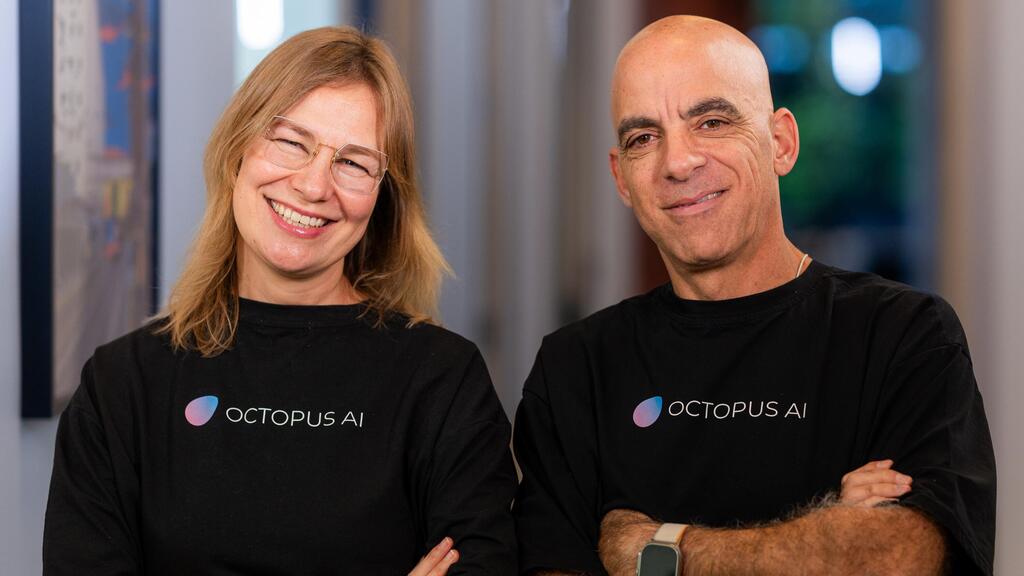
“The idea was born out of pain and frustration, and a refusal to accept ‘that’s just how finance works’,” said Lena Levin, founder and CEO at financial intelligence platform Octopus AI. “We realized the problem wasn't data or dashboards, it was that finance had no active presence in the business and rarely knew the context around anomalies.”
Founded in 2023 alongside co-CEO Eran Raichel, the Israeli fintech startup is looking to transform the enterprise environment and help companies hit their financial targets with a platform that deploys proactive AI financial workers to automate financial planning tasks.
You can learn more about the company below.
Company Name: Octopus AI
Sector: Fintech, AI
Product/Service description:
We build Financial Digital Workers that serve as your co-worker and do complex financial workflows.
Since inception our mission has been to help enterprises unlock the full potential of their profitability using AI. We build digital finance workers that do "inhuman" workflows.
Founder Bios:
Lena Levin is the CEO and co-founder of Octopus AI, a financial intelligence platform that develops AI-driven “financial angels” for large organizations and financial institutions. A CPA and MBA, Lena is a serial entrepreneur with two successful exits, bringing deep expertise in finance, enterprise software, and AI to her role as CEO. She is responsible for the company’s vision, go-to-market, and strategic partnerships.
Eran Raichel, co-founder and CTO, brings over a decade of experience in advanced data engineering and AI development. Before co-founding Octopus AI, he served as VP of R&D at Amplio, where he led teams building technology to process unstructured data, including innovative applications supporting children with dyslexia.
Lena and Eran have worked together, combining complementary expertise in product innovation, enterprise technology, and applied AI.
Year of Founding: 2023
Last Investment Round: $550,000
Last Investment Stage: Pre-Seed
Date of Last Investment: 12/01/2025
Total investment to date: $550,000
Investors: HiCenter Ventures, Founder (Lena Levin)
Current number of employees: 3
Open positions: AI Engineer, Full-Stack Engineer, and Early GTM/BD
Website: https://myoctopus.ai
Social Media: LinkedIn
How was the idea born?
The idea was born out of pain and frustration, and a refusal to accept “that’s just how finance works.”
Every company had the same pattern: world-class data, expensive tools, smart people, etc. And still decisions were late, budget missed, political coups, and a disconnection from reality. Finance teams were drowning in analysis while the business had already moved on. Forecasts were built after decisions, not before them. And zero risk mitigation.
We realized the problem wasn’t data or dashboards, it was that finance had no active presence in the business and rarely knew the context around anomalies. Everything was passive. You ask. You wait. You interpret. And you miss again. So we flipped it.
Octopus was born from a simple but radical question: What if finance had the ability to proactively think, analyze, argue, and push back in real time? Not copilots. Not chatbots.
AI financial workers that own workflows end-to-end, live inside the business conversation, and surface insights before humans even know what to ask. That’s when Octopus clicked:
Finance doesn’t need more software, it needs protectiveness. And that’s what we built.
What is the need for the product?
The core problem isn’t bad data. It’s the illusion that there is one single financial truth.
In every enterprise, multiple truths coexist: accounting says ‘we’re over budget,’ FP&A says ‘we’re under budget,’ and Budget Owners say ‘we hit the target.’
And the uncomfortable reality is all of them may be right. Each function looks at the business through a different lens: timing, accruals, allocations, commitments, cash versus P&L, accountability versus controllability. The problem is not disagreement, it’s that these truths don’t talk to each other.
Today, enterprises try to “force alignment” through reports, meetings, and spreadsheets. That doesn’t resolve truth, it delays decisions and erodes trust.
The real need is a system that holds multiple financial truths simultaneously, explains why they differ in real business terms, translates one truth into another in real time, and brings Accounting, FP&A, and Budget Owners into a shared decision space.
Octopus was built for exactly this gap.
Our AI financial workers don’t just calculate numbers, they mediate realities. They surface the differences, explain the drivers, and connect decisions to consequences before the close, not after it.
Because in modern enterprises, alignment doesn’t come from forcing one truth. It comes from understanding all of them fast enough to act.
How is it changing the market?
AI shifts capital allocation from rule-of-thumb BI and static spreadsheets toward dynamic, scenario-based models that respond to real-time operational and market data.
A recent study published on ScienceDirect on “Artificial Intelligence and corporate investment efficiency” finds that firms adopting AI tools improve investment efficiency, mainly via better information transparency and stronger internal controls.
A separate study on “Artificial Intelligence and corporate financialization” shows AI adoption is associated with larger financial asset holdings, driven by profitability gains that free up internal funds.
So the change is not something theoretical, it is happening now. This is changing the market from: “Can AI work here?” to “Why would we run finance without it?”
How big is the market for the product and who are its main customers?
Grand View Research states that the global AI market “could exceed 1.8 trillion USD by 2030.”
MarketsandMarkets estimates the AI in finance market at 38.36 billion USD in 2024, growing to about 190.33 billion USD by 2030 (30.6% CAGR)
Does the product exist already? If not - at what stage is it and when is it expected to hit the market?
Octopus already exists in the market today, with two AI digital employees actively deployed inside enterprise environments. These financial workers operate in real workflows, not demos, supporting live decision-making across complex organizations. They are currently used by design partners and enterprise customers in production-like settings, handling end-to-end financial workflows rather than isolated tasks. Octopus is therefore past the prototype and pilot stage and entering early commercial scale, with additional digital employees planned and broader market rollout progressing through 2026 as deployments expand from design partners to repeatable enterprise adoption.
Who are the main competitors in this sector and how big are they?
We don’t view the large enterprise platforms as competitors, we view them as partners. Companies like IBM, SAP, and Oracle are foundational systems of record, deeply embedded in global enterprises and operating at massive scale, with revenues in the tens of billions. They own the data, the processes, and the infrastructure but they were never designed to actively operate financial decisions.
Most traditional SaaS tools solve narrow finance problems but at the cost of adding layers of complexity. For example, Anaplan or Workday Adaptive Planning improve forecasting and budgeting, but introduce separate models, assumptions, and reconciliation cycles. Datarails or Vena streamline Excel-based FP&A, yet still require humans to interpret, align, and communicate outcomes across teams. Each tool is valuable on its own, but together they multiply systems, definitions, and conversations. Instead of reducing complexity, enterprises end up managing it. Octopus AI addresses this gap by operating across these tools, using AI financial workers to connect insights, reconcile truths, and drive decisions without adding yet another silo.
What is the added value that the founders bring to the company and the product?
Octopus is driven by a "dual-engine" founding team that uniquely bridges the gap between enterprise financial complexity and advanced AI architecture. Lena Levin (CPA, MBA), a serial entrepreneur with two exits, provides the domain authority; her deep history with US enterprise CFOs allows her to map "multiple financial truths" from first principles, ensuring the product solves structural failures rather than just symptoms. Eran Raichel provides the technical backbone with over a decade of AI expertise, having previously scaled R&D from $0 to $7M ARR for high-stakes enterprise systems.
Together, they have built Octopus as a recursive, AI-native organization where every internal efficiency is encoded directly into Emily, our proactive digital financial worker. By combining Lena’s first-hand knowledge of where workflows break with Eran’s ability to build autonomous agents, the team has enabled Emily to do more than just report data. She builds financial workflows on the fly, transforming Octopus AI from another static co-pilot into a self-evolving operational layer.
What will the money coming in from the round be used for?
The capital from this round is being poured almost exclusively into compute density and algorithmic efficiency. We’re not building a 'chatbot’. We’re building a multi-tentacled neural architecture designed to interface with every layer of the digital stack.
85% of the funds go toward securing the H100/B200 clusters needed to train our 'Central Nervous System' model and hiring the six smartest kernel engineers. We have zero budget for 'marketing' because if Octopus can automate 90% of a company's cognitive load, the word-of-mouth coefficient becomes infinite.
We’re compressing the path to Level 5 Autonomy for Digital Work , solving the 'hand-eye coordination' of AI so it can actually act, not just talk. Every cent is focused on increasing our FLOP-to-value ratio and ensuring Octopus AI becomes the fundamental substrate of the new economy
In the "Startup Boarding Pass" section, CTech will cover the (relatively) small investments made in companies during the early stages of their existence - and the entrepreneurs and startups who have not yet had the opportunity to reveal their stories to the world. Please use the linked form and fill it out according to the guidelines. This form is intended for startups raising between $500,000 and $3 million from venture capital funds, angels, or official grants from Israeli and foreign institutions. If relevant, someone at CTech will be in touch for follow-up questions.



