










Israeli cyber startup Daylight raises $80 million Series B at estimated $400 million valuation
Founded in 2025 by former Torq executives, the Israeli company combines AI agents with human security experts to detect and respond to cyber threats. Daylight says revenue has grown more than 40-fold over the past year.
Israeli cybersecurity company Daylight has raised $80 million in a Series B funding round led by Growth Equity at Goldman Sachs Alternatives, bringing its total funding to $120 million. The company combines AI agents with human security experts to detect, investigate and respond to cyber threats. The round also included Okta Ventures, the investment arm of Okta, as a new investor, alongside existing backers Bain Capital, Craft Ventures, Vintage Partners and Maple Capital. Although the company did not disclose its valuation, it is estimated to be approximately $400 million.
Daylight said its revenue has grown more than 40-fold over the past year, driven by demand from large enterprises and AI-native companies. It expects to generate tens of millions of dollars in revenue by the end of 2027. In a conversation with Calcalist, CEO and co-founder Hagai Shapira said the latest funding round would help the company sustain its rapid growth. "We are seeing very substantial revenue growth right from the start, and we want to maintain that momentum. Most of the capital will be used to expand our sales team," he said.
The company's customers include Fortune 500 companies and fast-growing AI businesses such as Lovable, LastPass, Rogo, dLocal and Miro.
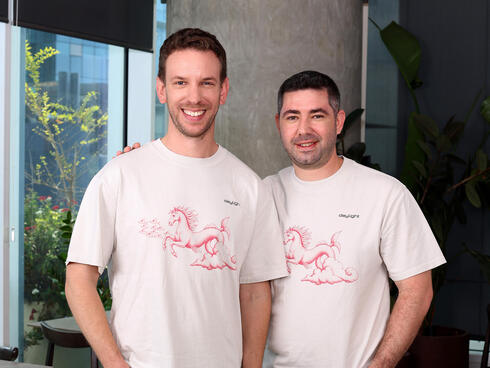
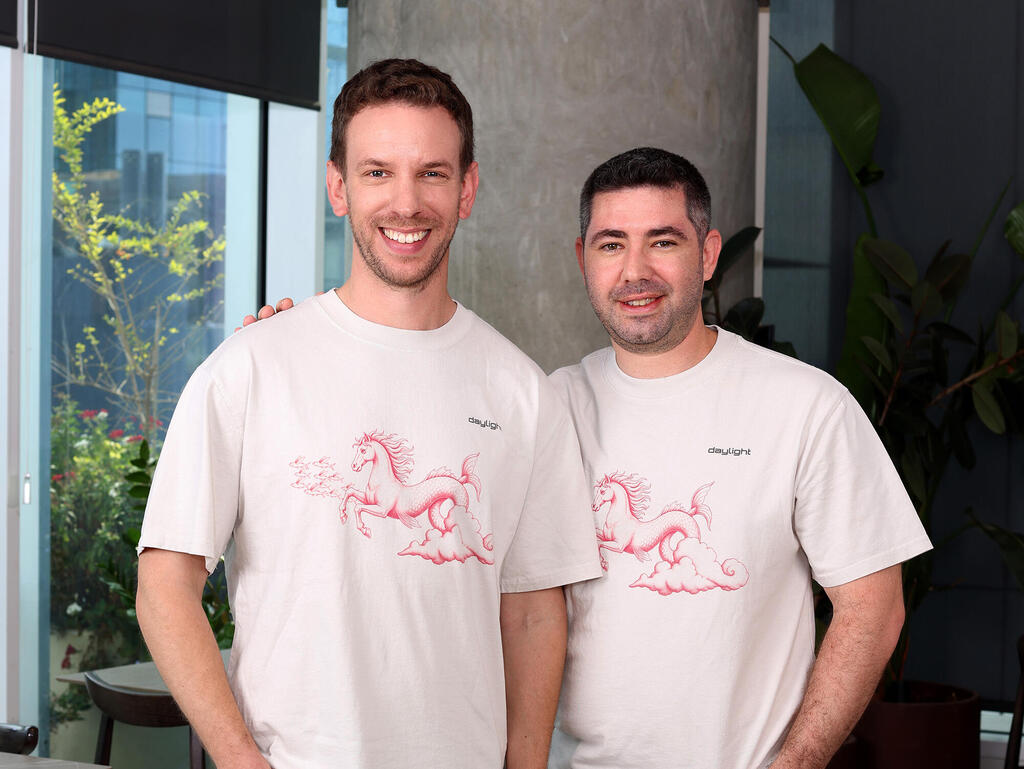
Founded in early 2025 by Shapira and CTO Eldad Rudich, Daylight employs 80 people, 43 of them in Israel. The two founders met while serving in an elite unit of the IDF Intelligence Corps. Before founding Daylight, Shapira was an early product leader at cybersecurity company Torq, while Rudich was its first employee and served as vice president of research and development, helping build its platform and engineering organization.
The new funding will support Daylight's expansion in the U.S. and its entry into additional markets across Europe, the Middle East, Africa and the Asia-Pacific region. The company also plans to expand its cybersecurity engineering and technology teams and accelerate development of its AI platform.
Daylight's model combines AI agents with information security engineers, who develop and customize the agents to match each client's systems, workflows, risk profile and security requirements. The agents handle much of the day-to-day work involved in identifying, investigating and responding to threats, while human specialists focus on decisions requiring judgment and expertise.
The company offers several service models, ranging from fully managed security operations to collaboration with customers' in-house teams and the integration of Daylight engineers directly into their operations. The approach is designed to accommodate organizations with different needs, including those that want to outsource security operations entirely and those that prefer to retain control over their internal security teams and processes.
According to Daylight, its technology can identify threats within seconds and respond to and contain them within minutes, making its response times up to 10 times faster than those of traditional managed security service providers. Its Aura platform allows customers to investigate security incidents using natural-language queries, access security information through a centralized data lake and manage security operations from a single interface.
The company is also expanding its technology to address security risks associated with the use of AI platforms within enterprises. These include prompt injection attacks, risks involving Model Context Protocol (MCP) integrations, and unusual activity generated by AI systems. Daylight says it incorporates these signals into its broader threat detection and response process, analyzing AI-related activity alongside identity, endpoint, cloud and software-as-a-service security data. The capability is already being used by enterprise customers, including Miro.



