











Figma CEO Dylan Field: “I like the investors, but what keeps me up at night is thinking about product, not share price”
From childhood acting to leading a $20 billion IPO, Field discusses Figma’s growth, the Adobe breakup, AI integration, and why he is betting on Israeli startup Weavy as the company’s next growth engine.
Dylan Field’s earliest training for the unforgiving world of high tech took place in childhood, and on the theater stage.
“As a child, I participated in the play Peter Pan and appeared in about 20 productions that involved flying and stunts,” he says in an interview with Calcalist. “Because of that experience, I was later cast in a Microsoft commercial for Windows XP, where I also had to ‘fly.’ After the commercial, which is still available on YouTube, aired, I started receiving residual payments. But over time, the payments stopped coming, and I wanted to understand why and what had happened. I began reading the business sections of newspapers and asking adults, who explained to me that the dot-com bubble had burst, stocks were falling, and technology companies were cutting back on advertising.”
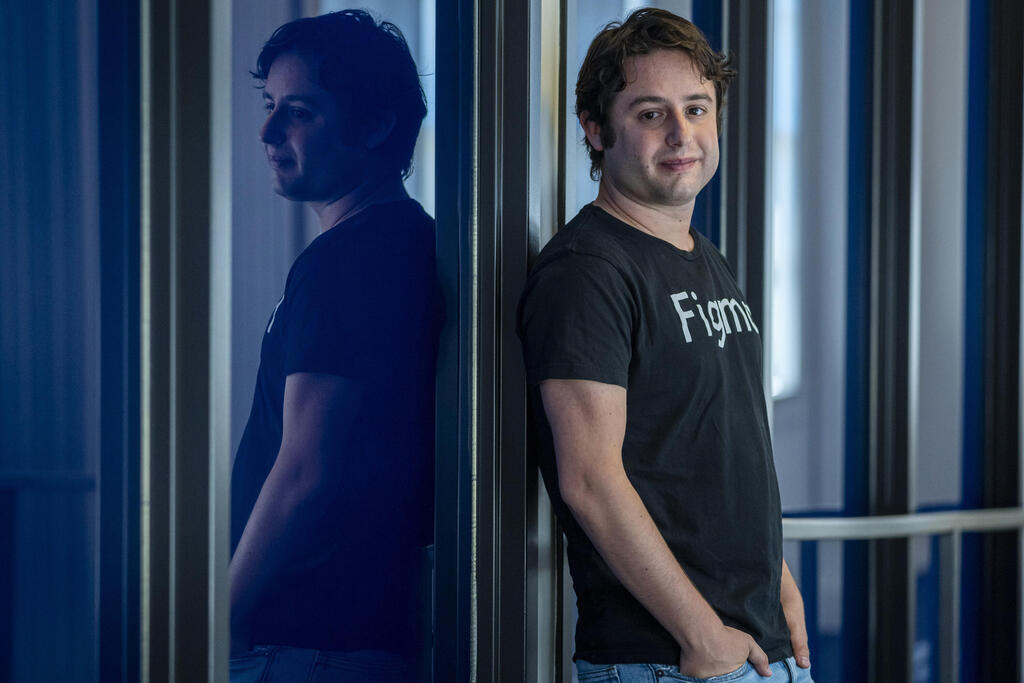
How does a math-loving kid end up acting on stage?
“In addition to math, I was also really into acting as a kid and my mom was supportive of that. The only rule my mom had was that if you commit to something, you finish it. Acting, through constantly auditioning, made me less fearful of rejection because I was rejected constantly as a kid. It never felt personal because for acting, it's so much about the specific thing they're looking for. I really enjoyed acting. It was also a way to start paying attention to tech because when checks for residuals stopped coming, I started asking what was going on.”
That early preparation for technological entrepreneurship paid off. Field (33), who founded Figma with a university classmate at the age of 20, is today a billionaire and one of the most respected young figures in American high tech. Figma develops cloud-based design tools, primarily for creating digital interfaces such as websites and apps. Within a short time, it became a hit among young designers, who formed a global community known as FOF - Friends of Figma. The Israeli community, notably, was among the first in the world to organize events around the software, as early as 2018.
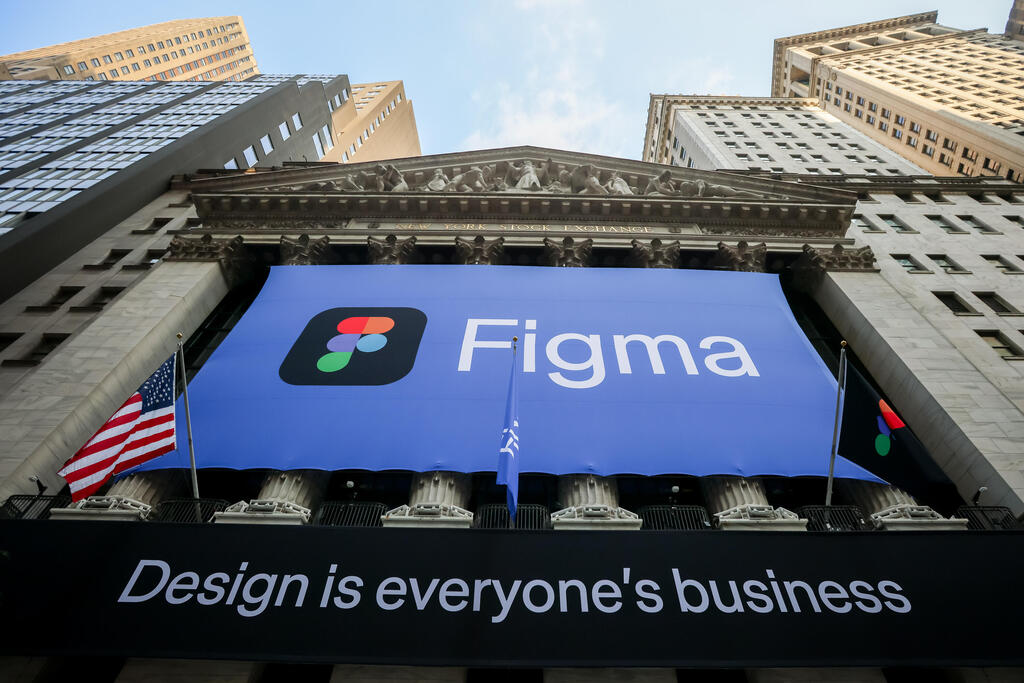
The company’s great business and financial breakthrough was expected to come three years ago, in September 2022, just before Field turned 30, when design software giant Adobe stunned the market by announcing its intention to acquire Figma for a staggering $20 billion. That deal ultimately collapsed due to opposition from antitrust authorities in the United States and Europe. The companies canceled the transaction, and Figma continued independently, armed with a $1 billion breakup fee. Three years later, in July 2025, Field took his company public on the Nasdaq at a valuation of $20 billion. The boy who once flew with Peter Pan and Microsoft had successfully landed on the American stock exchange.
Too young to manage
Figma released its first design product in 2017, but early on, investors were not particularly impressed. The product still had growing pains, and more significantly, Field himself was widely seen as too young to run a company.
Then the pandemic arrived, and with it, Figma’s breakout moment. As the world shifted to remote work, demand surged for cloud-based tools that could replace office-bound workflows. Figma was already built for the cloud, allowing designers and developers to collaborate on the same file in real time, without complex installations. That represented a major disruption in a field long dominated by Adobe. Not coincidentally, Adobe sought to acquire the young company as a shortcut into the cloud era. According to U.S. media reports, even Joe Biden’s presidential campaign switched to using Figma’s tools exclusively during the pandemic. When Kimberly-Clark ran out of toilet paper in the United States in early 2020 amid panic buying, it reportedly used Figma’s software to rapidly design new packaging and rebuild inventory.
The boom transformed Figma from a small startup run by a college dropout into one of Silicon Valley’s hottest names. Today, 95% of Fortune 500 companies use Figma products. The company is also highly international, only about half of its revenue comes from the United States, and it serves roughly 13 million monthly active users. That user base has taken on near-cult status. On its first day of trading, Figma’s stock surged 250%, the largest first-day jump on record. The enthusiasm pushed the company’s market value from $20 billion to $68 billion.
But Wall Street soon took a closer look. Analysts and investors concluded that while Figma is growing rapidly, it is still incurring heavy losses, like many startups. Its market capitalization fell back to around $20 billion. One major factor behind the decline is artificial intelligence, which threatens to upend software companies altogether. Just as the cloud disrupted legacy software firms during the pandemic, AI is now challenging the cloud-native generation. In Figma’s case, popular design and presentation tools such as Canva and Gamma are beginning to encroach on its territory, even if they are not yet direct competitors.
Since the IPO, the stock has come under pressure. Does that reflect fears that Figma might seem “old” compared to AI-native companies?
“We told people during the IPO and echoed in the road show that we think AI is very important and that we would do M&A, so I don't think anyone is surprised. Our bar for when we buy a company is very high. Most of our acquisitions have been more on the aqua hire side, finding a great team. I think there are questions asked even about some of the AI native companies that are private regarding whether they will be an AI winner, so AI native does not equal AI winner.”
He draws a distinction between design and programming. “Design is a very different way to work than code. Design involves phases where people are divergent, thinking about different possibilities, systems, and visual language, and then they converge to build the final thing. Designers think visually, while programmers generally think more procedurally or in terms of logic and requirements. The key test I talk about all the time is: if we imagine the most wild capabilities models can have tomorrow, are we excited or is it bad? If models get better, we should get better, and if the answer is not yes, then we have to change something strategically.”
Over the past year, you’ve gone from leading a red-hot startup to running a public company that has disappointed investors. In retrospect, are you happy you went public?
“It feels very much the same as being a private company so far, except that we have to prepare a little bit more for earnings. I like the investors; they are smart people. But what keeps me up at night is thinking about product, not share price. In my free time, I jailbreak models because I want to know everything about how they think and work.”
And after all that investigation, do you have an answer to the question on everyone’s mind: Is AI a bubble?
“I think no one knows where things are headed. The nature of an exponential curve is that you project demand further on it, but at some point, the curve doesn't hold up, and that's when we call it a bubble. If frontier AI research stopped today, the productivity gains and the ways jobs would shift as the technology is implemented would take years to play out.”
The AI Solution Hidden in Israel
In October, Figma used some of the money it received from Adobe (another billion dollars from the IPO has since been added) to acquire the Israeli startup Weavy for $200 million in cash, the largest and most significant acquisition in its history. The deal made quite a few headlines, both because it is expected to introduce Figma into the world of AI and because the Israeli company is only a year old and had raised just $4 million prior to its acquisition. Figma’s plan is to establish a research and development center in Israel based on the Weavy acquisition, joining its main site in San Francisco and another site in London.
“The Weavy acquisition is very different from anything we’ve done before and very important to us,” Field says. “Most of our acquisitions to date have been acqui-hires, meaning they were made to bring in a team of employees. But Weavy is already a real business. There is a great talent base here in Israel, and we want to build more here. We will be recruiting and have already opened eight new positions in addition to the 20 employees that Weavy employs.”
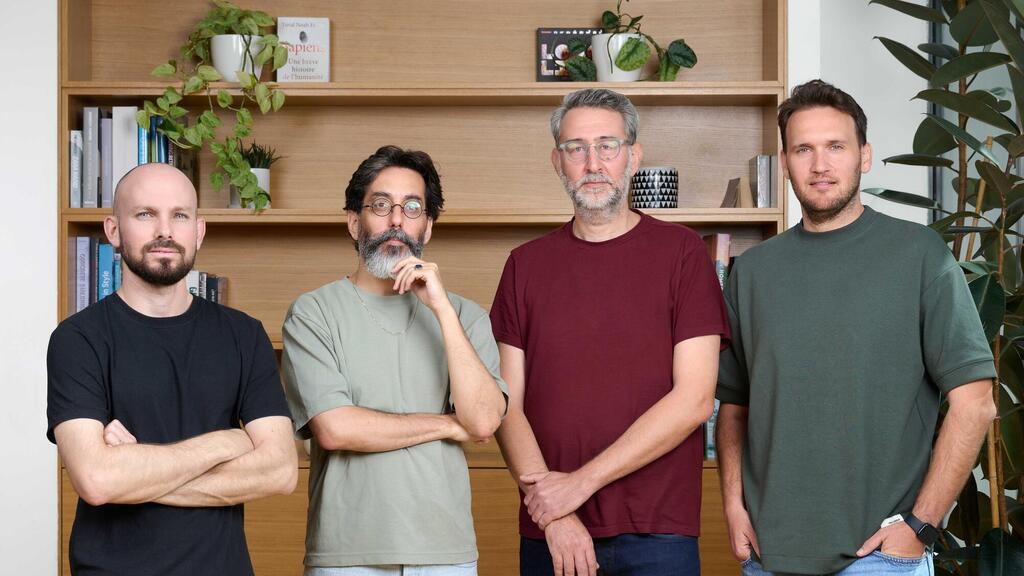
The numbers may sound small, but these are typical hot deals in today’s AI fever. The companies being acquired are startups born in the new era following November 2022, the defining moment of ChatGPT’s launch. They employ few people and are making rapid progress in product development and early sales thanks to artificial intelligence capabilities. Figma, which ironically is now experiencing in the AI world what Adobe once experienced in the cloud world, understood that it had to add an AI layer to its products. The Israeli company Weavy, which specializes in AI solutions for video editing, already has a product despite its young age and has even begun selling it in recent months, generating several million dollars in revenue. The company was founded by a group of former Fiverr employees and is led by CEO Lior Albeck, with co-founders Jonathan Alumot (CTO), Jonathan Gur-Zeev (Chief Product Officer), and Itay Schiff (Chief Creative Officer).
How did you find Weavy, which is ultimately a very small and young Israeli company? Why was it chosen to add an AI layer to your solutions?
“We've been tracking the space for a long time with our M&A team. When Weavy came up, I immediately started hearing internally that these people are really smart and feel like "Figmates" already. I was impressed by their cultural aspects, attention to detail, product sense, vision, and forward-thinking nature. It aligns with my point of view that you don't go all AI or ignore AI; it's a hybrid approach where you work together. You steer the AI, adding your own taste and curation, pointing it in a direction. The system they built allows the output of a prompt to be like clay, a medium to shape, and you keep going.”
Your investors don’t like you losing money. While Figma will cross the $1 billion revenue mark for the first time this year, losses are also above $1 billion (a one time stock based compensation associated with the IPO. On a non-GAAP basis, net income was $62.4M). The question is: will adopting AI make you more or less profitable?
“If you look at our margins, you can determine if you think we are losing a lot of money; I don't see it that way. Our margins have gone down because we are not yet charging for the AI side of our core Figma product. We are going to implement pricing and packaging which will come live and offset costs, something we discussed in our earnings call. Weavy is already charging clients; they have a seat-based model, and they charge credits for inference, which is not free, especially for high-end graphics and video. Part of the integration will be unifying the platform so that users don't have to pay twice but instead pay once for one platform and one billing relationship.”
So, in hindsight, do you regret that the deal with Adobe fell through?
“Oh, no, I don't. Adobe is a great company that I respect, and I obviously wouldn't have entered the deal if I knew it would fail. Very thankfully, we kept our foot on the gas the entire time we were doing the Adobe deal, so we came out of that in a really good place. We didn't pause; we accelerated. We entered the deal because we thought it was a good move for our shareholders and for building class inside of Adobe at the time.”
Hatred of Chocolate for $100,000
Field’s answers throughout the interview tend to be philosophical, bordering on science fiction. He drifts into futuristic descriptions, and during our conversation in Tel Aviv he quizzes me, among other things, on whether I’ve seen, and more importantly, understood, the television series The Three-Body Problem, based on the science fiction novel of the same name.
He grew up a child prodigy, the only son of a middle-class American Jewish family in California. His parents named him after the poet Dylan Thomas, and from that moment on never stopped nurturing him. “We spent almost everything we earned on his education,” his father said in an interview in 2012. By the age of six, Field was already solving algebra problems, and he recalls being bored throughout elementary school. He would often leave the classroom in search of something to do. “I liked to spend time mainly with the school janitor,” he says. “I don’t know if I was a genius, I don’t think so, but I was very curious. I wanted to learn everything I could about math, because that’s what interested me most at the time. I wasn’t thorough in my studies and had a lot of gaps, and looking back, I realize that the janitor at my school was also very curious and liked investigating things. He worked at that job so he would have free time to solve problems in math and physics.”

“The kid was always a little weird,” Field’s father said in the same interview. At age 13, young Dylan began taking university-level math courses. The natural progression for the budding geek was studying at a technology-focused high school, building robots and setting up websites for friends. But the most dramatic change in his life occurred when he abandoned academia. Shortly before turning 20, Field was selected for the “20 Under 20” program run by American entrepreneur and billionaire Peter Thiel, founder of PayPal and the first investor in Facebook. The program awards $100,000 to develop a technological idea, on the condition that participants leave university for two years. Applicants had to write an essay titled “What Most People in the World Don’t Understand.” Field, who hates chocolate, wrote a long essay arguing that people don’t understand that chocolate is disgusting, and he was convincing.
Field dropped out of computer science studies at Brown University in Rhode Island and, together with his classmate Evan Wallace, moved to San Francisco to found Figma. He never completed his degree, but became a billionaire himself, and like Thiel, who set him on this path, he now invests in startups and mentors young executives.
Meanwhile, the market has been brutal to Figma. Were you prepared for the stock’s post-IPO plunge on Wall Street?
“I knew that the stock would be going up and going down, although I did not know the magnitude. Before the IPO, I tried to make sure the team knew that stocks go up and they go down. This can be because of macro factors, or whatever is happening in the market, or something random, or because we performed well or poorly. I think that in the long term, it is an interesting signal, but in the short term, day-to-day, it's noise. We try to emphasize that we will be able to control the inputs and the long-term outlook by doing the right things for the long term.”



