










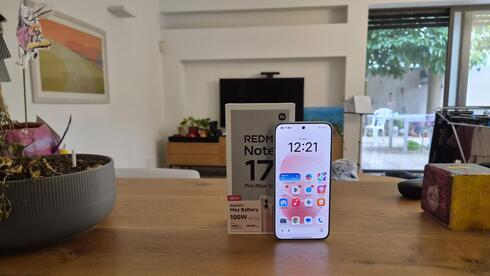
Smartphone review
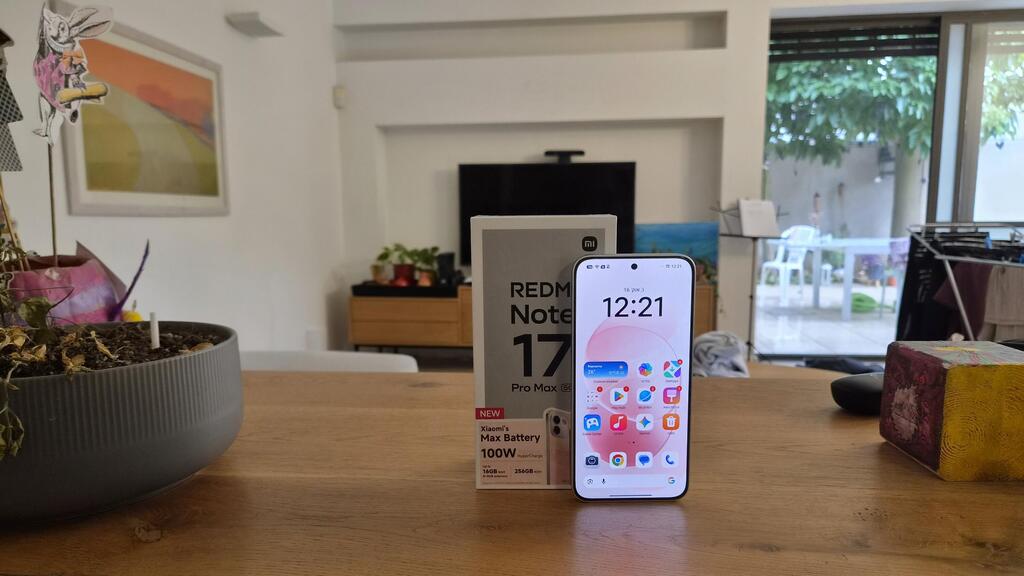
Xiaomi’s Redmi Note 17 Pro Max has a massive battery. The rest is less impressive
With a 10,000 mAh battery that lasted more than two and a half days in testing, the Redmi delivers exceptional endurance. But middling performance, limited cameras and a cluttered interface make it harder to recommend on battery life alone.
Top line
Xiaomi is fond of gimmicks, especially in its Redmi line, ranging from 200-megapixel cameras to 10,000 mAh batteries. The problem is that a single standout feature isn't enough to carry an entire smartphone.
The Redmi Note 17 Pro Max is a fair-to-middling mid-range device, largely because of its specifications, particularly its memory, which hold back performance. At around NIS 2,200 ($710), the price is reasonable for a mid-range phone. You can accept the fact that it isn't the fastest device and that its cameras aren't the best. Here, however, the limitations of the hardware are noticeable, even if they don't affect every task. One can only hope that Xiaomi will eventually bring this enormous battery to more advanced devices in its lineup.
Not so long ago, smartphones struggled to last a full day, and searching for an available charger was a familiar ritual. Over time, that began to change, partly because processors became more energy-efficient, even as battery capacities largely stagnated, typically topping out at around 5,000 mAh.
In recent years, that has started to change with the adoption of silicon-based batteries. First came modest increases of a few hundred milliamp-hours, followed by capacities of 6,000 mAh or slightly more. Now Xiaomi has taken a major step forward with the Redmi Note 17 Pro Max, a smartphone equipped with a 10,000 mAh battery that the company claims can last for three days.
Does the device live up to that promise? And what else does it offer beyond its exceptionally large battery? We put it to the test, courtesy of Hamilton, Xiaomi's importer.
Build and design: Large and standard
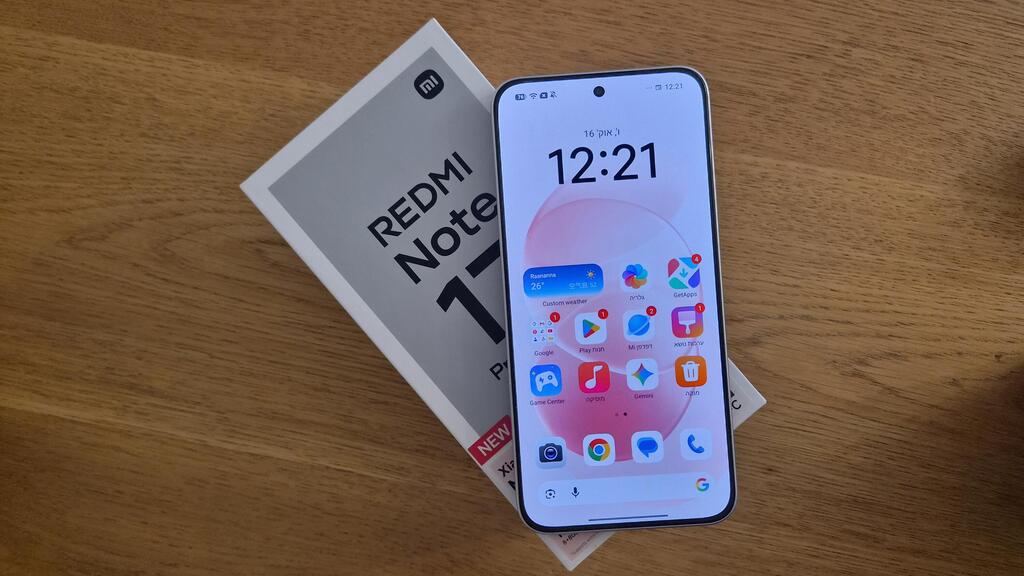
The Redmi Note 17 Pro Max is a large device, with a 6.83-inch screen, slightly smaller than those on the S26 Ultra and iPhone 18 Pro Max, and a weight of approximately 230 grams. While that might sound heavy on paper, the phone doesn't feel particularly heavy in practice. It isn't especially thin, but neither is it excessively thick, whether because of the battery or other design choices. It is, for example, slightly thinner than the iPhone 18 Pro Max.
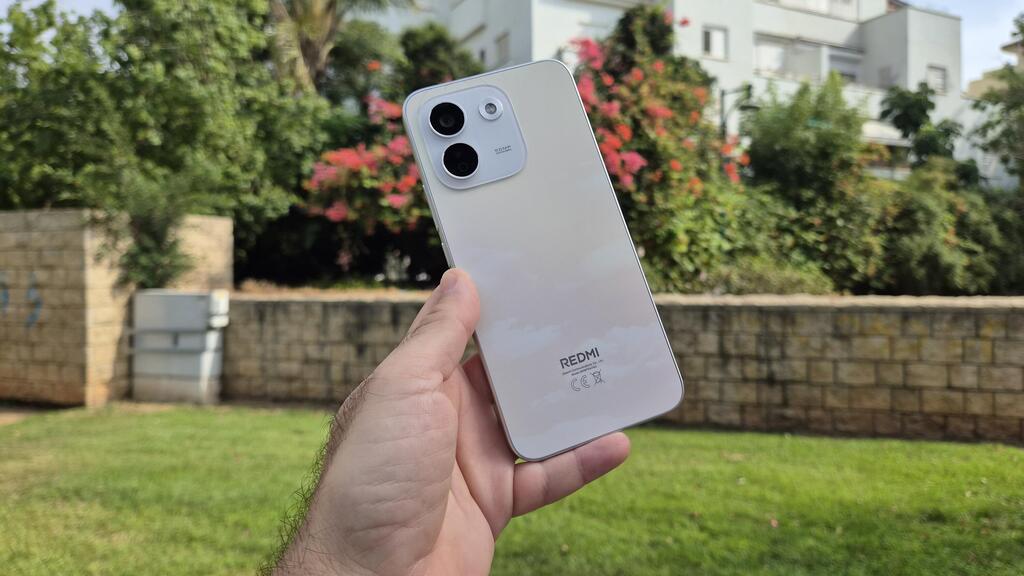
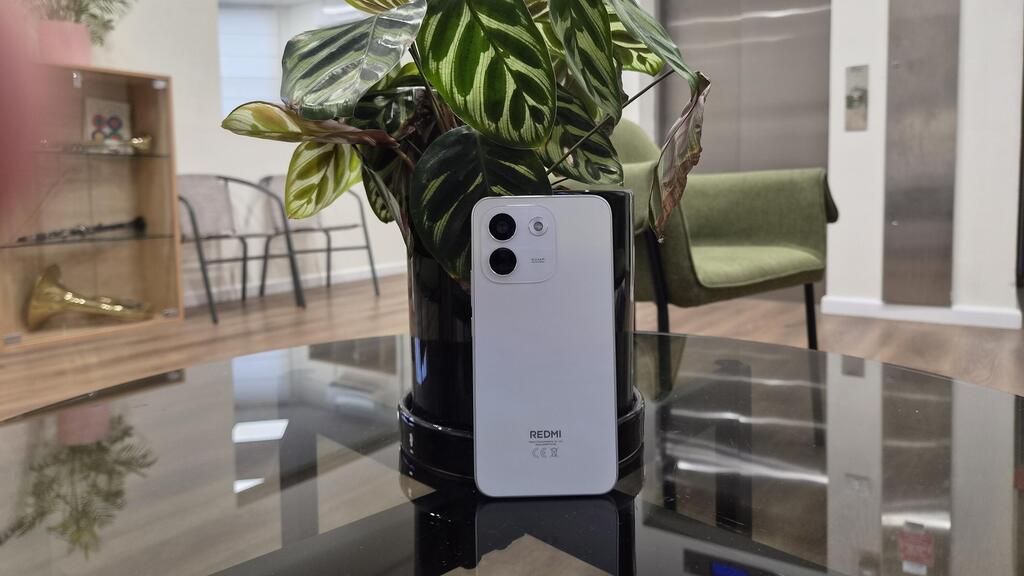
The design is conventional: a large, flat, edge-to-edge display, with a selfie camera taking up minimal space at the top. The power button and volume keys are on the right side, while the left side is bare. On the back, two camera lenses protrude only slightly from the body. As is typical of Xiaomi, the phone comes with a silicone case that helps minimize the lenses' protrusion.
There is, however, a small twist for those who choose not to use the protective case. On the white model we received for review, the back reacts to light, shifting its color slightly depending on the viewing angle. It's a neat little gimmick and a pleasant visual effect, but nothing more.
The front is protected by Gorilla Glass Victus 2, as on the S26 Plus, for example, while the back is made of plastic. That makes the included silicone case a welcome addition. The Redmi also meets the IP68 standard, offering protection against dust and the ability to withstand immersion in water for up to 30 minutes at a depth of 1.5 meters.
The phone is powered by Qualcomm's Snapdragon 6 Gen 5 processor, paired with just 8GB of RAM. The available memory can be expanded using some of the internal storage, with a 4GB expansion enabled by default. That allocation should not be a major concern, given that the device comes with 512GB of storage.
On paper, these are respectable specifications, though perhaps not powerful enough for consistently smooth performance. The main sticking point appears to be the RAM. What was considered sufficient not so long ago no longer seems to keep pace with today's demands, a trend I also recently observed with the S26 FE. It seems that 12GB has become the new minimum, or at least the preferred amount, for smooth performance.
That doesn't mean the Redmi constantly stutters. It is capable enough for everyday use and handles a variety of tasks and apps with ease. Still, there is a sense that things aren't entirely fluid, particularly when gaming or running titles with demanding graphics. The device doesn't overheat, but it can struggle to keep up with the demands of more intensive games.
The large screen delivers vivid, high-quality colors and reaches a high level of brightness, making it usable even in direct sunlight. Reflections are visible, but not enough to interfere with operation.
So, how does the battery perform? It largely lives up to the promise, although the results depend on how the phone is used. I charged it to 100%, and after a little over a day and a half, it was still at 50%. After two and a half days, or roughly 64 hours, it had dropped to 10%, at which point I gave in and plugged it in. That falls short of a full three days, but more than two and a half days is still impressive, with the possibility of squeezing out a little more. As with any device, battery life ultimately depends on how much you use it and what kinds of tasks you perform.
The phone is supposed to come with a 100W charger, although one was not included in our review unit, which should allow for relatively fast charging. Using a 65W charger, I got from 15% to 50% in about 30 minutes. The battery reached 80% after a little over an hour, while a full charge took approximately two hours.
Software and interface: Cluttered, as usual
The Redmi runs Android 16, even as some devices already ship with Android 17 and others are receiving it through software updates. Xiaomi's HyperOS interface sits on top. As is typical of the Redmi series, the phone comes with a substantial amount of pre-installed software, including TikTok, CapCut, the WPS Office suite and several games. During the initial setup, users are also prompted to install even more games. Add the various Xiaomi-branded apps, and the overall experience feels cluttered.
On the positive side, the phone includes a range of AI features that are becoming increasingly standard, including text rephrasing, photo object removal, video editing and audio transcription. Hebrew support varies by feature. Text rephrasing and proofreading are supported, for example, while audio transcription is not.
As with other models, Xiaomi has also introduced a feature resembling the iPhone's Dynamic Island. It can display a small Spotify player next to the selfie camera when you leave the music app, as well as a countdown timer, an indicator for background audio recording and other activity notifications.
Cameras: Basic, with good results
The phone has just two rear cameras: a 50-megapixel main camera with 2x optical zoom and an 8-megapixel ultra-wide-angle camera.
That is a relatively limited selection, and the results reflect those limitations. Daylight landscape shots look good, although closer inspection reveals some blurring in the details. Optical zoom is limited to 2x, but even at 10x digital zoom, the results are not bad. Nighttime shots are surprisingly good, with a substantial boost in brightness. Look more closely, however, and not everything comes through with the sharpness and clarity one might want.



