









VC Survey 2027
"The funds that win will look a lot like the startups they back"
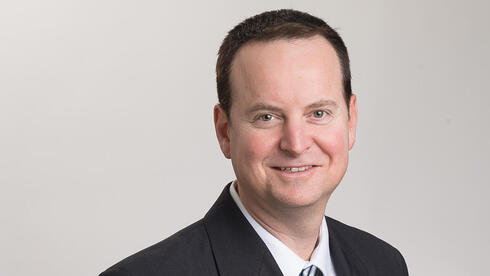
Yodfat Harel Buchris, Managing Director at Blumberg Capital, joined CTech for its 2027 VC Survey.
"The biggest change is that building software has become cheap. A team of four can now ship in three months what used to take twenty people a year," said Yodfat Harel Buchris, Managing Director at Blumberg Capital, when asked how AI is changing the fund's investment strategy.
"That changes the question we ask in every founder meeting. It is no longer 'can they build it', it’s 'why will this company still matter when ten other teams can build the same thing next quarter'?"

With AI reshaping how startups are built and funded, and Israel's tech ecosystem adjusting to a new economic and geopolitical reality, investors are rethinking their playbooks. Buchris joined CTech to share insights for its VC Survey 2027, which invites prominent investors to discuss the trends, challenges and opportunities expected in the year ahead.
You can read the entire interview below.
ID CARD
Fund Name: Blumberg Capital
Total Assets Under Management: Around $1B
Partners/Managers: David Blumberg, Bruce Taragin, Yodfat Harel Buchris, Steve Gillan
Notable Portfolio Companies: Fundguard, Snorkel ai, Blackbox ai, Angle Health
Notable Exits: BioCatch, DoubleVerify, Nutanix
How is AI changing the way you evaluate companies, from business models and capital needs to valuations and competitive advantage? Is this a fundamental shift in how companies are built and scaled, and are parts of the market overheating?
The biggest change is that building software has become cheap. A team of four can now ship in three months what used to take twenty people a year. That changes the question we ask in every founder meeting. It is no longer “can they build it,” it’s “why will this company still matter when ten other teams can build the same thing next quarter?”
At Blumberg we invest mostly in B2B software, so this hits our core. Our answer is that the moat has moved away from the code. It now sits in distribution, in proprietary data, and in how deep the product goes into the customer’s workflow. A product that becomes the system of record for a security team or a finance department is very hard to replace. A thin layer on top of a model or an app is not.
There is also a flip side we’ve learned. Building got cheaper, but expanding and operating these systems got more expensive for the customer. Integration, security reviews, inference bills and the people needed to run it all add up. So we look for teams that can do both. They need to build a product the enterprise truly appreciates and uses, and then grow its usage because it can and because it is the best solution available to it.
Capital requirements at the early stage are dropping, and that’s good for founders and for funds our size. Companies get to real revenue with smaller teams and smaller rounds. But we separate two kinds of revenue. One comes from customers experimenting with AI because their board asked them to. The other comes from customers who rebuilt a process around the product. The first kind churns. The CIOs in our Innovation Council tell us the pilot era is ending and they are cutting down their vendor lists, so that gap will show up in the numbers soon.
Are we seeing overheating? In parts of the market, yes. Seed rounds are priced on founder brand before there is a product, and valuations assume today’s AI multiples will last. Inference costs are also eating into gross margins in ways many business plans ignore. The fundamentals still matter, they just take longer to show up.
Related articles:
- "Israel has always won on deep technical moats, but in enterprise AI, vertical AI, and fintech, the real moat is now distribution."
- "Being an Israeli company in the current atmosphere is not helping and in many cases decreases the valuation."
- Beyond the AI hype: what investors are looking for in startups today
Does Israel's mix of AI, cybersecurity, defense tech and deep tech give it a new competitive edge, or is its traditional advantage eroding? How will foreign investors' appetite, early-stage fundraising and the election results affect its ability to build global companies?
The headline numbers are strong: Israeli tech companies raised about $3.6 billion across 91 rounds in Q3 2026, up 53% year over year. But look underneath and you see concentration. Cybersecurity alone took about $4.3 billion, or 38% of all funding, and although the capital raised was up 53% YoY, the number of rounds still declined.
So I don’t think Israel’s edge is eroding, I think it’s narrowing. We are world class in cyber, security for AI and data infrastructure, and outside those categories seed activity is thinner. That’s a risk, because the next breakout categories will not necessarily come from today’s crowded ones.
Foreign investors have not left. In Q3, around 110 foreign funds made their first investment of the year in Israeli companies, and foreign capital accounted for ~70% of the capital. The bigger concerns are early-stage depth and the fact that more of the workforce now sits abroad. The share of employees at private Israeli tech companies based in Israel fell from 69% in January 2019 to 62% by March 2026. Going global early is healthy, as long as founders and R&D keep their base here.
That is why what Israel needs most right now is real investment excitement. Capital and momentum at the early stage are what encourage our best talent to build here, to innovate, and to aim for the best product in the world in their category.
In the elections, neither bloc won enough seats to govern alone, and President Herzog begins consultations with the parties on November 4. Without taking sides, investors don’t price a specific outcome. They price uncertainty. What a foreign LP needs to see is a stable government, predictable regulation and tax policy, and continued support for early-stage R&D. The faster we get clarity, the better for Israel’s ability to raise capital and build global companies.
How will the VC industry in Israel and globally evolve over the next three to five years? How will changes in fundraising, fund structures, secondary transactions and exits reshape it, and what will funds need to do to stay competitive?
Over the next three to five years I expect the industry to split. Large platforms will keep raising bigger funds, and focused early-stage funds with a clear edge will do well. The small funds offering capital and little else will get squeezed.
Only 211 emerging firms closed a US venture fund through Q3 2026, down from 927 in 2022, and firms on Fund IV or later took a record 88.2% of capital.
Money alone becomes a commodity.
Exits will shape everything. For Israeli companies, acquisition by a strategic buyer was and will remain the main path. That’s why we built our Multinationals corporations project at Blumberg. We map and meet the largest corporations to understand what they will need to buy or acquire in three to five years, and then invest early in the companies that fit. Funds that understand the buyer from day one will have a real advantage.
Secondaries are becoming a normal part of a company’s life, not a sign of distress. Continuation funds, liquidity for early employees and angels at Series B and C, and LP stakes changing hands all help bridge long holding periods. Global secondary volume reached approximately $121 billion in H1 2026, up ~20% from H1 2025, with GP-led deals at $65B, up 35% YoY.
GP-led secondaries were 54% of total volume, the highest GP-led share ever recorded.
To stay competitive, funds will need three things: real sector depth, real access to customers and acquirers, and discipline on entry price. Teams will also get leaner, using AI in sourcing and diligence the same way our portfolio companies use it to build. The funds that win will look a lot like the startups they back. Focused, efficient, and very clear about why they exist.
The technology is getting better every year, and so are the founders. We as investors have to keep the same pace. We need to be better, more creative, and add real value beyond the check.
Finally, name 2-3 startups that, in your opinion, are worth watching this year.
Aryon Security - Aryon Security is defining a new category within cloud security by preventing misconfigurations and risks before they reach production, rather than detecting them afterward. As cloud environments become more complex and AI accelerates infrastructure changes, proactive security becomes increasingly essential. Aryon’s differentiated approach positions it to lead this emerging category and become a significant player in the cloud security market.
Anchor Browser - Anchor Browser provides secure, scalable browser infrastructure for AI agents. As AI evolves from answering questions to executing real-world tasks, browsers are becoming a critical execution environment. Anchor is well positioned to become a key infrastructure provider for the rapidly growing computer-use and enterprise AI automation markets.
BAND - BAND is building a neutral collaboration layer that enables AI agents from different vendors and frameworks to communicate and work together. As enterprises adopt increasingly complex multi-agent systems, interoperability and coordination will become critical infrastructure needs. BAND has the potential to become a foundational layer of the agentic AI ecosystem.



