










Roadshow+
"I wouldn’t be surprised if, in the next five years, we see Israeli companies hit $100 billion valuations"
Rotem Eldar, managing partner at 10D, was speaking on a panel at the Calcalist and Poalim Tech Roadshow event. Tal Barnoach, founder of Disruptive AI: "The next three years will offer exceptional opportunities. It’s a very good moment for investors in Israel and abroad." Natalie Refuah, partner at Viola Growth: "Total high-tech funding this year is about $10 billion, and I think we’ll see a 20% increase."
The war appears to be over, and Israeli high-tech continues to rebound. According to data from Startup Nation Central, companies raised $9.3 billion in the first half of the year, the highest total since 2022, with a significant portion coming from mega-rounds.
The data underscores a trend that has become increasingly clear in recent years: a shift from “Startup Nation” to “Scale-Up Nation.” In other words, an ecosystem once defined by quick exits is now driven by growth-stage companies aiming to build at scale rather than sell early.
1 View gallery
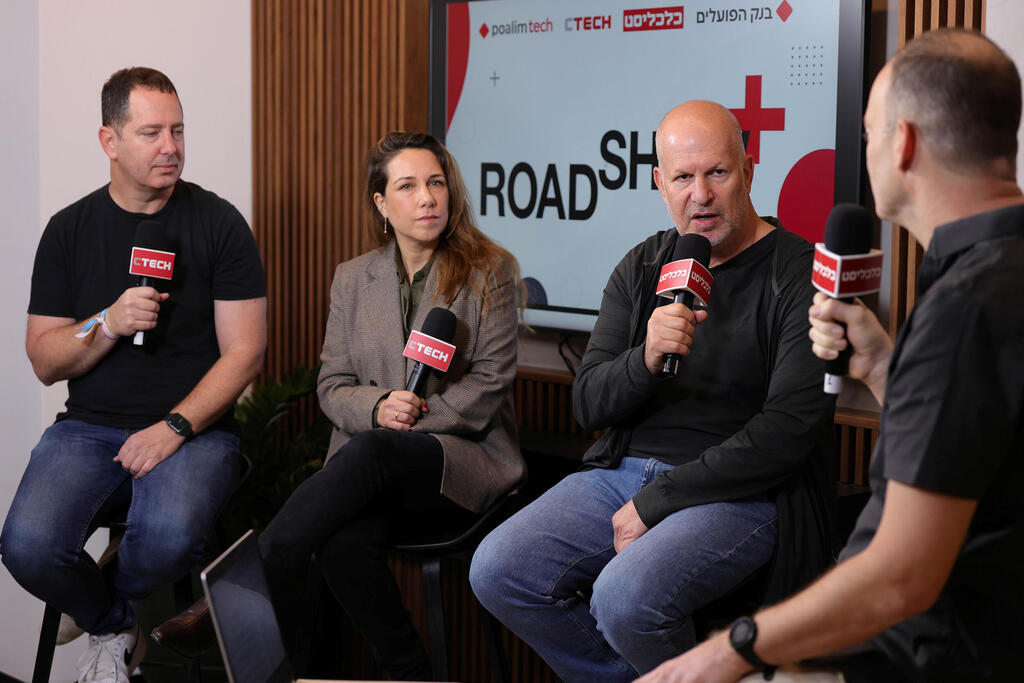
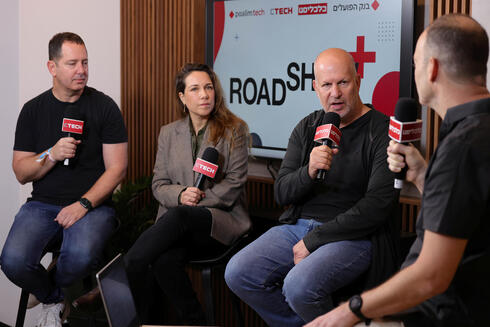
Roadshow+ panel (from left): Rotem Eldar, Natalie Refuah, Tal Barnoach.
(Photo: Oz Mualem)
Is this shift coming at the expense of young startups, and how is AI reshaping the landscape? These questions were at the center of a Calcalist panel moderated by Hagai Gilboa, featuring Natalie Refuah, partner at Viola Growth; Tal Barnoach, founder of Disruptive AI; and Rotem Eldar, managing partner at 10D Fund.
To what extent is the transition from Startup Nation to Scale-Up Nation already a fait accompli?
Barnoach: “The change stems from the fact that many foreign funds entered Israel and allowed entrepreneurs to raise more money, alongside Israeli funds that established growth capital. When I was an entrepreneur, companies raised a few million dollars and then were sold. In addition, the AI revolution enables companies to move quickly, everything can be done faster, which allows for scale that didn’t exist before.”
How do you see growth companies developing this year, and will they become global leaders?
Refuah: “Total high-tech funding this year is about $10 billion, and I think we’ll see a 20% increase. During the bubble years, it was over $20 billion. In the first half of this year alone, $3.5 billion went to growth, with about 30% of it going to cyber companies, compared with roughly 10% in the past. The growth market has matured. There’s a dichotomy between companies built to become profitable quickly using AI and those that prefer not to enter growth rounds, versus companies that want to continue raising and have access to significant foreign capital.”
Rotem, from the early-stage perspective, how is this trend affecting new startups?
Eldar: “Since Israeli unicorns emerged a decade ago, their results have been climbing, think of Wiz and others. I wouldn’t be surprised if, in the next five years, we see Israeli companies hit $100 billion valuations. This raises expectations at the early stage, which increases competitiveness. You can see it in round sizes and valuations. There’s a clear divide between highly attractive early-stage companies and those not built with an AI-native DNA.”
Is the shift to Scale-Up Nation good or problematic?
Barnoach: “It’s a welcome trend, growth investors strengthen Israeli industry, not just those looking for exits. But without early-stage, there can be no growth. The last two years were difficult due to the war and 2023’s slowdown. Fewer startups were founded because many entrepreneurs were in the reserves. We need more early-stage investment; otherwise, growth will stall. And the state relies heavily on exits and IPO-related tax revenues.”
Refuah: “I agree that the number of new companies is declining, but not because of growth, for other reasons. Viola launched its growth fund in 2008. If valuations in growth are too high, exits become difficult. Investors must enter at a valuation that allows them to be satisfied later. Every country needs a growth industry.”
Eldar: “The numbers can be misleading. The bar for raising a first round has risen, not because of a lack of capital, but because competition drives valuations up. It’s harder for early-stage startups to stand out. This pushes founders toward deeper technologies, hardware, physical AI, defense, robotics, areas where differentiation is clearer. Much of the fundraising in Israel aligns with these sectors.”
Where are growth companies headed next year? Will we see major IPOs?
Barnoach: “IPOs depend on the U.S., and we’re seeing early signs of recovery, like with eToro. After three difficult years, the next three will offer exceptional opportunities. It’s a very good moment for investors in Israel and abroad.”
Refuah: “More IPOs are coming, and the market will open up. Fintech has many strong candidates, and there’s room for big players beyond cyber and AI. Companies must focus on the right timing, not going public too early and ensuring profitability. Acquisitions will continue as well.”
Eldar: “The last two years proved the industry’s resilience. Thirty percent of the workforce was in the reserves. International sentiment toward Israel was uncertain. Yet companies raised record sums at high valuations. Now we can only imagine what the next few years will bring. We’ll see companies scale to extraordinary levels. I’m very optimistic.”



