









VC Survey 2027
"You can’t prompt your way to a new laser or a better chip."
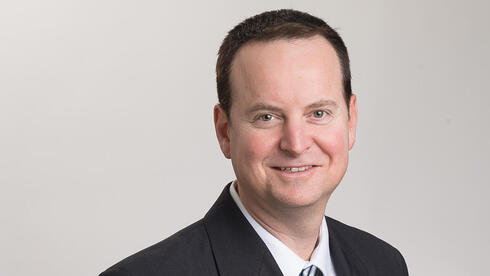
Zack Fagan, General Partner at Earth & Beyond Ventures, joined CTech for its 2027 VC Survey.
"In a world dominated by kingmaker funds, there’s a strong temptation to follow the consensus and pile into whatever the largest players are backing, but you don’t get a 1000x return from a consensus bet. By the time everyone agrees a company is a winner, the price already reflects it," said Zack Fagan, General Partner at Earth & Beyond Ventures, when asked about the future of VC.
"The funds that stand out over the next five years will be the ones willing to be early and contrarian, and to do the deep technical work needed to be right."

With AI reshaping how startups are built and funded, and Israel's tech ecosystem adjusting to a new economic and geopolitical reality, investors are rethinking their playbooks. Fagan joined CTech to share insights for its VC Survey 2027, which invites prominent investors to discuss the trends, challenges and opportunities expected in the year ahead.
You can read the entire interview below.
ID CARD
Fund Name: Earth & Beyond Ventures
Total Assets Under Management: $60M
Partners/Managers: Zack Fagan, Doron Zauer, Daniel Recanati, Israel Biran, Tal Achituv
Notable Portfolio Companies: Quamcore, SkyPearl, FusionMantle
How is AI changing the way you evaluate companies, from business models and capital needs to valuations and competitive advantage? Is this a fundamental shift in how companies are built and scaled, and are parts of the market overheating?
On the investor side, AI has made our work much faster. We can map a market, break down competition, or get through a data room in a fraction of the time it used to take. That said, the trap is that AI tends to agree with whatever you bring it, and often it's just wrong (confidently so). If you don’t check the output, you get diligence that looks complete and isn’t. So the time we save goes into the things AI can’t do for us (ex. time in the lab with founders, customer calls, pressure-testing the physics). The analysis is faster. The judgment still has to be ours.
On the company side, the story is how cheap building software has become. A small team can now ship in weeks what used to take a year and a much bigger headcount. Great for founders, but it erodes much of what used to protect a SaaS business. If a competitor can copy your product in a quarter, your product isn’t your moat. I believe this is a big part of why capital is moving toward deeptech (semiconductors, photonics, quantum, energy). You can’t prompt your way to a new laser or a better chip. AI is speeding up development there too, through simulation and faster design cycles, but the edge still sits in the science, the IP, and years of accumulated know-how. That’s hard to copy, and investors who never looked at hardware are starting to notice.
As for markets overheating, I’d look first at the VC ecosystem more than any one sector. A huge share of capital now sits with a handful of very large funds. They’re writing mega-rounds at valuations that are sometimes hard to justify on fundamentals, and smaller funds follow them in, paying the same prices for the same deals because nobody wants to miss out. Some sectors are clearly getting more money than they can absorb. That said, I’m less focused on a bubble in any one sub-sector and more on how the numbers play out for the asset class: what returns look like for funds deploying at today’s prices, and whether the exits are big enough to carry them.
Related articles:
- "Israel has always won on deep technical moats, but in enterprise AI, vertical AI, and fintech, the real moat is now distribution."
- "Being an Israeli company in the current atmosphere is not helping and in many cases decreases the valuation."
- Beyond the AI hype: what investors are looking for in startups today
Does Israel's mix of AI, cybersecurity, defense tech and deep tech give it a new competitive edge, or is its traditional advantage eroding? How will foreign investors' appetite, early-stage fundraising and the election results affect its ability to build global companies?
Israel’s economy is built on tech, and over the last few years it has proven far more resilient than most people would have predicted. Between the war, months of reserve duty pulling founders and engineers out of their companies, the judicial crisis and a global funding downturn, there was every reason to expect the ecosystem to stall. Instead, companies kept building, raising and exiting, and I think that says something structural about how this ecosystem works rather than something we got lucky with.
On whether we’re looking at a new competitive advantage or an eroding edge, I’d push back a bit on the framing. Israel’s edge has never really been tied to a specific category. What we’ve always been best at is identifying where the world urgently needs innovation and then getting very good at it very quickly. Fifteen years ago that was cyber, and today it’s AI infrastructure, defense, semiconductors and quantum. We already punch well above our weight in semiconductors and defense, and the physical bottlenecks of AI around power, heat and data throughput play directly to the strengths of Israeli engineering. So I don’t see the edge eroding so much as moving to where the problems are, which is what it has always done.
That said, it would be dishonest to pretend everything is fine. Anecdotally, I’ve seen more hesitation toward Israel from foreign investors over the past couple of years than I ever have before. I expect it to ease over time, because capital ultimately follows returns and Israeli companies keep delivering them, but time isn't free for companies raising money today.
This is where I think the election matters. A new government with new leadership and a new direction could do a lot to speed that recovery up. A change at the top gives foreign investors and LPs who have been sitting on the fence a reason to take a fresh look, and a stable, functioning government is what long-term capital wants to see before committing. It won’t solve everything overnight, but it should help.
How will the VC industry in Israel and globally evolve over the next three to five years? How will changes in fundraising, fund structures, secondary transactions and exits reshape it, and what will funds need to do to stay competitive?
Over the next three to five years, the biggest question for me goes back to how the numbers balance out. The capital that has poured into the system, and the prices it has been deployed at, will have to be justified by exits, and I don’t think anyone can say yet whether they will be. Most of the changes we’re seeing in fund structures and secondaries are, one way or another, a response to that open question.
A lot of it will come down to the IPO market, and so far the signals are mixed at best. The window has opened, but mostly for a handful of giants. Two deals accounted for most of this year’s IPO proceeds even as the number of listings fell, which is the same concentration of capital we’re seeing in private markets, now playing out at the exit. Even the biggest names haven’t necessarily rewarded those who bought in. SpaceX, the largest IPO in history, nearly doubled in its first week and has since fallen back below its offering price. The smaller IPO has also largely disappeared from Nasdaq, and some Israeli companies are now looking at Tel Aviv instead. Until that changes, I expect secondaries to continue growing as a way for LPs and early investors to get liquidity without waiting a decade for an exit.
Where I’m more confident is strategic M&A, especially in deeptech. Much of the value in our sectors ends up with large integrators building massive product offerings, and they often need a very specific piece of innovation to complete the picture, whether that’s a new material, a photonic component or a better way to manage heat at the chip level. Buying that capability is usually faster and cheaper than building it, so I believe these acquisitions will continue regardless of what the public markets do.
As for staying competitive, I think the industry needs a reminder of what venture capital actually is. In Hebrew we call it “hon sikun,” literally risk capital, and the name says it all. In a world dominated by kingmaker funds, there’s a strong temptation to follow the consensus and pile into whatever the largest players are backing, but you don’t get a 1000x return from a consensus bet. By the time everyone agrees a company is a winner, the price already reflects it. The funds that stand out over the next five years will be the ones willing to be early and contrarian, and to do the deep technical work needed to be right.
Finally, name 2-3 startups that, in your opinion, are worth watching this year.
Fusion Mantle - The world needs a new source of energy, and fusion has long been the holy grail: clean, practically limitless power from a small sun on Earth. Most of the attention, and most of the capital, has gone into building the reactors themselves. Fusion Mantle is focused on what comes next. It is developing the critical components and systems that turn a working fusion reaction into a functioning power plant, which is the part of the problem that will ultimately decide whether fusion ever reaches the grid. When the reactors are ready, someone has to supply that layer, and Fusion Mantle is positioning itself to be that company. (Portfolio company)
Li-Generate - Every battery in every EV, phone and grid storage system eventually reaches end of life, and the lithium, cobalt and nickel inside it are too valuable, and too strategic, to throw away. The problem is that most of the world’s refining capacity for these metals sits in a handful of countries, which leaves everyone else dependent on long, fragile supply chains for materials critical to the energy transition. Li-Generate has developed a process that extracts high-purity metals at room temperature, without the energy-intensive smelting that traditional refining relies on. It works on recycled batteries, and the same technology can also be applied to refining material straight from mining, so it addresses both ends of the supply chain. Because the process is compact and low-energy, refining can happen on-site, close to the mine or the collection point, which is exactly what countries and manufacturers trying to onshore their supply chains and build resilience need. (Portfolio company)
ZutaCore - AI’s real limits are physical, and heat is one of the biggest. Every new generation of chips runs hotter and denser, and traditional air cooling simply can’t keep up. ZutaCore has developed a waterless, two-phase, direct-to-chip liquid cooling system that removes heat right at the processor, without bringing water anywhere near the electronics. That lets data centers pack in more compute while using less energy and space. The market is catching up with them: ZutaCore’s technology is now being deployed, and its $100M Series C was led by Mitsubishi Electric, Carrier and Samsung, three companies that know exactly what the future of the data center looks like. It’s also a great example of how deeptech companies actually develop. ZutaCore was founded in 2016, years before AI made cooling a headline problem, and spent that time getting the technology and the manufacturing right so it was ready when the demand arrived. That’s the patience deeptech requires, and this looks like the year it really pays off.



