










"If we as companies cannot make creative changes, we too will be run over"
Shmoulik Barashi, a partner at Fortissimo Capital, was speaking on a panel held at the Calcalist and Discount Global Economy Conference. According to him, "Damaging cohesion is the greatest danger to Israel." Chairman of the Board of Directors of the Ashdod Port, Shaul Schneider: "Without the Ashdod Port, the country cannot function. We are a critical infrastructure that knows how to work in any scenario." CEO of Turpaz, Karen Cohen Khazon: "I fly more than 200 days every year so that the management and headquarters remain in Israel."
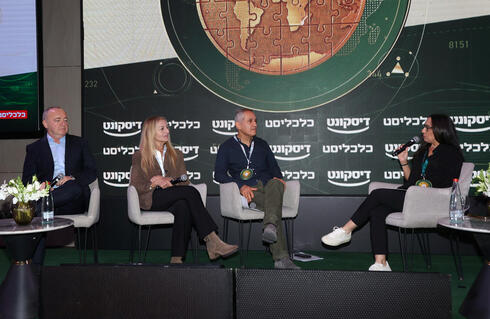
"Without the Ashdod Port, the country cannot function," said Shaul Schneider, chairman of the Ashdod Port board of directors, at the Global Economy Conference hosted by Calcalist and Discount. The panel, moderated by Calcalist reporter Orna Yefet, also included Keren Cohen Khazon, CEO of Turpaz Industries, and Shmoulik Barashi, partner at Fortissimo Capital.
Keren, in the past two years the world has experienced major disruptions, war in Israel and Ukraine, a trade war, and rapid technological change. Turpaz produces flavor and fragrance extracts, and during the war you acquired nine foreign companies. Tell us about this decision.
Cohen Khazon: "Turpaz produces flavor and fragrance extracts and unique raw materials for the pharmaceutical and food industries. You wake up with us in the morning and go to sleep with us at night. Everything you touch, eat or drink, we are there. We acquired nine companies during the war, and there are not many companies that could do that. Our strategy remains the same, growth through acquisitions and organic expansion. This also shows up in our daily management. It’s not enough to buy companies, you must manage them and leverage the synergies between them, and that is our specialization.
1 View gallery
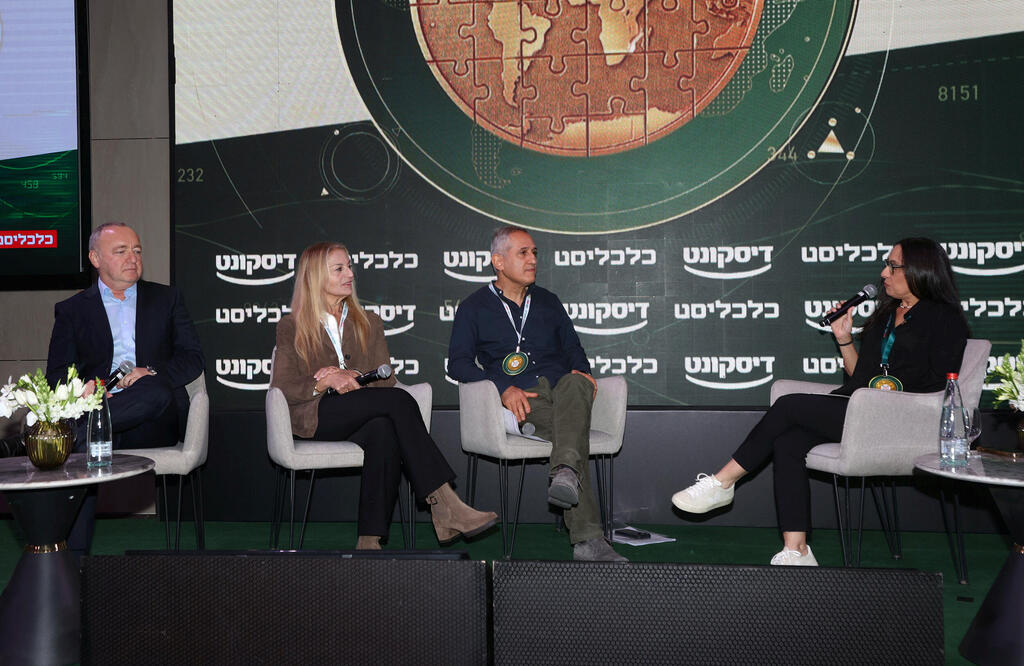
Panel participants (from left): Shaul Schneider, Karen Cohen Khazon, Shmoulik Barashi.
(Photo: Yariv Katz)
“To acquire companies is one thing; to manage the challenges is another. Sometimes there is a war, sometimes tariffs, sometimes a pandemic, sometimes logistics or currency volatility. In my 56 years, I’ve never had a single year without some sort of disruption. There is no doubt that the challenges, dynamics, and volatility introduce difficulties.”
You rely heavily on supplies. How has volatility in raw materials affected you?
Cohen Khazon: “Everything has an impact. You can see it as a disaster or as an opportunity. We try to understand how to turn every event into an opportunity, you just need the courage to see it and lead others in the same direction. If you understand the full picture, stay alert, plan ahead and act, you can turn anything into an opportunity.”
Shaul, the Ashdod Port is critical infrastructure for the Israeli economy. Given the last two years, how do you prepare for cyberattacks and security risks?
Schneider: "Ashdod Port is critical infrastructure that must maintain functional continuity in any situation. For the past two years, we have been operating under constant missile barrages and alarms. The port was targeted repeatedly as a strategic asset, but we continued to provide service. As critical infrastructure, we are committed not only to operational continuity but also to supporting the defense system. There has never been such a large number of defense ships unloaded anywhere in the world as we handled during this period, we did not stop for a moment.
“At the same time, despite competition from five private ports, we maintain a 40% share of all civilian goods entering Israel. We recently released our earnings report: in the last nine months, we recorded more than 20% growth in revenue and announced a dividend of 300 million shekels.”
Shaul, on one hand you’ve invested in an AI startup and piloted drones, but on the other hand you were fined for failing to meet certification requirements and for defective equipment. How do those fit together?
Schneider: "We are in the midst of an investment program, over the next five years we will invest 2.4 billion shekels. We operate some of the most advanced facilities in the world, with the ability to unload the largest ships that come here, including a 17-meter deep-water dock that allows MSC and other megaships to unload cargo. As a government-owned port, we rely entirely on our own cash flow; we do not receive state investments.
“Regarding today’s fine, yes, we were fined. It’s unfortunate that the regulators didn’t look at our achievements. We have grown 17% in container traffic and up to 26% in general cargo in just the last nine months, while the defense establishment has been using us continuously. The entire naval base in Haifa, with all its soldiers, operated from our docks for four months. We must manage a complex puzzle serving 2,200 ships and 4,000 trucks.
“On the innovation side, we established an accelerator at the port that supports startups. A total of 112 companies have gone through our program; we invest equity and help them progress.”
Shmoulik, Fortissimo invests in industrial companies in growth. How do you maintain stability in such a turbulent world?
Barashi: "Our fund and private equity activities focus on areas of growth, but that often means emerging from crises. Industry today accounts for about 15% of employment in companies of this type, around 60,000 workers under private-equity ownership. There is also a spillover of professionalism into other sectors.
“In terms of resilience, Israel continues to surprise. The country spent hundreds of billions on the war, yet growth stands at 3%, the current account is in surplus, and the deficit is relatively small.
“But we must remember, we are a small and fragile country. Iceland had excellent parameters once, and it still went bankrupt. That’s why companies must remain agile and creative. Another element that is harder to measure is cohesion. Cohesion is currently the greatest danger when it comes to our ability to operate as strong, united companies.
“Take Nokia, it led the smartphone and tablet industry but refused to admit it might be wrong. Apple came and ran it over. Companies that invent one thing destroy another. If we as companies cannot make creative changes, we too will be run over.”
Does volatility affect investors?
Barashi: "Investors are heavily affected. We have a lot of responsibility as their ambassadors. During the judicial overhaul, investors were very anxious. During the war, because we were transparent, involved in crisis management and still delivering results, we received warmth and support. But let’s not be confused, hostility toward Israel globally is growing."
Keren, has deglobalization changed your strategy? Have you relocated production?
Cohen Khazon: "I operate 26 factories worldwide. We are a global company that serves local markets as if we were native players. We have not relocated production from Israel. Personally, based on my values, I chose to live in Israel. I chose to build industry in Israel and to ensure that management and headquarters remain here and not elsewhere. I fly more than 200 days a year because of this commitment. If we do not build a strong industrial base in Israel, the country will not be able to reinvent itself."
Shaul, how do you price the security risk? After all, every container delay costs importers money, which gets passed on to consumers.
Schneider: "That’s not accurate. Ashdod Port provides solutions for six categories of goods. In the container sector, there are no delays - period. Delays occur only in general cargo, which accounts for 7% of all goods entering the country. We are not the ones prioritizing cargo, that is determined by the Ports and Shipping Authority. We are one part of the supply chain, and we provide an excellent service. The data speaks for itself."
Shaul, will the port eventually be privatized?
Schneider: "Whatever the government decides. We are critical infrastructure. Without Ashdod Port, the country cannot function. When other ports were unable to operate, we continued working. We are infrastructure that can operate in any scenario, including a blackout. We are a fully capable entity that meets the needs of the Israeli economy in any situation."



