










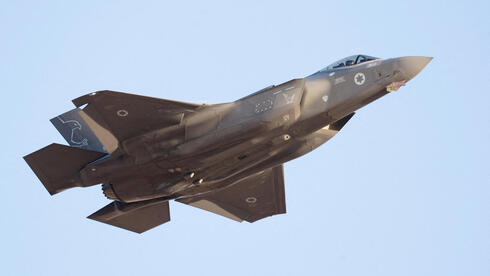
Israel races to lock in fighter jet deals as U.S. support uncertainty grows
Concerns over future aid and production access drive accelerated purchases of F-35 and F-15 squadrons.
Israel’s decision to accelerate the purchase of fighter jets is driven not only by an industrial window of opportunity, but also by growing concern over a potential erosion of American support, and the understanding that the current level of assistance, favorable terms, and priority access to production lines may not be guaranteed in the coming decade.
Senior defense officials, speaking about the Ministerial Committee for Procurement’s decision to approve the purchase of an additional squadron of F-35s and a new squadron of F-15IAs, emphasized the importance of timing. At the beginning of June, the window granted to Israel by American manufacturers Lockheed Martin and Boeing to place new orders under favorable pricing and delivery conditions is set to close.
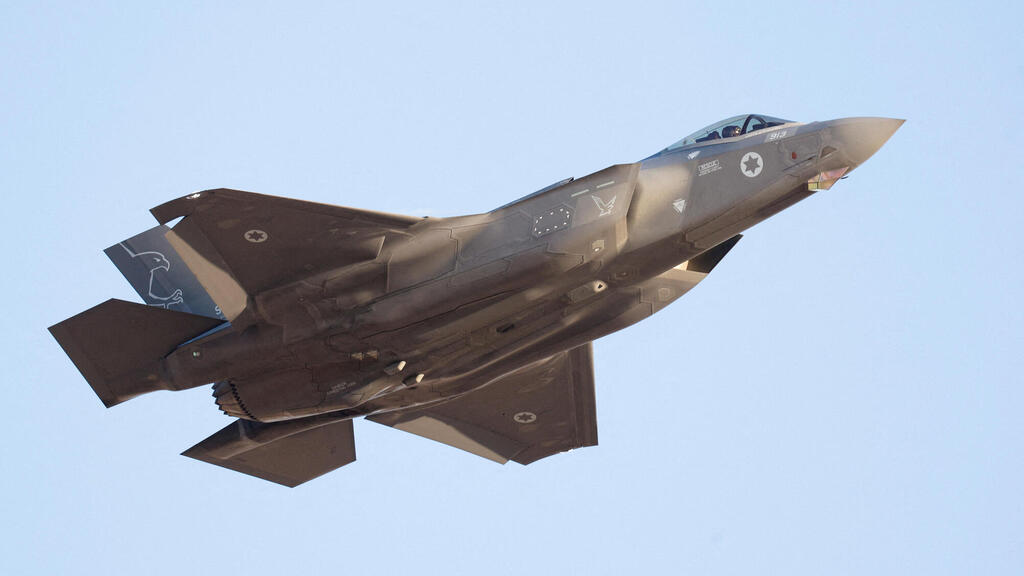
As global demand for advanced fighter jets continues to surge, prices are rising and production lines are already operating at full capacity. Any delay in decision-making would have significantly increased costs and extended delivery timelines. Israeli officials were unwilling to risk a scenario in which aircraft are delivered to countries such as Turkey or Saudi Arabia ahead of Israel.
This concern applies not only to the stealth F-35 but also to the advanced F-15IA, a heavily upgraded version of the long-serving F-15 platform, designed to carry up to 17 tons of munitions over long distances.
In recent years, Israel has already moved to expand its fleet. Approximately three years ago, the Ministry of Defense ordered a third squadron of F-35s, with deliveries expected to begin within the next 18 months. About a year and a half ago, it approved the purchase of its first F-15IA squadron, with deliveries scheduled for the latter part of the decade.
The newly approved procurement of two additional squadrons is expected to ensure that these aircraft enter service by the middle of the next decade. By that time, even as regional actors such as Saudi Arabia and Turkey acquire similar platforms, Israel aims to maintain a substantial operational advantage based on the same technologies.
However, industrial considerations were not the only factor behind the accelerated decision. The defense establishment is also increasingly concerned about shifting public opinion in the United States and the potential long-term implications for bilateral defense ties.
While former President Joe Biden has been described by some officials as among the most supportive Democratic leaders toward Israel, and Donald Trump is viewed similarly among Republicans, there is growing uncertainty about the policies of future administrations. In an era shaped by rising American isolationism and “America First” priorities, the durability of strategic alignment cannot be taken for granted.
The current U.S. security assistance framework, which provides Israel with $3.8 billion annually, is set to expire at the end of 2028. Negotiations over a new framework for 2029-2038 are expected to begin soon. Defense officials anticipate that the next agreement will involve structural changes, with less direct procurement funding and greater emphasis on joint development in areas such as artificial intelligence, advanced air defense, high-energy weapons, and robotics.
At the same time, growing criticism in the United States over Israel’s conduct in Gaza is contributing to a gradual erosion of political support. Continued large-scale financial assistance funded by American taxpayers may become increasingly difficult to sustain politically.
From Washington’s perspective, the rationale for aid has also evolved. For decades, security assistance to Israel functioned in part as a subsidy for American defense manufacturers, ensuring steady demand and supporting domestic employment. Today, however, those same industries are operating at capacity due to rising global demand, reducing their reliance on Israeli procurement.
Against this backdrop of uncertainty, Israel’s defense establishment appears determined to secure as much as possible under current favorable conditions, before those conditions change.



