










"The gap in the global AI arms race lies in infrastructure, and that's exactly where the opportunity lies"
Keystone is on its way to storming the data center sector.
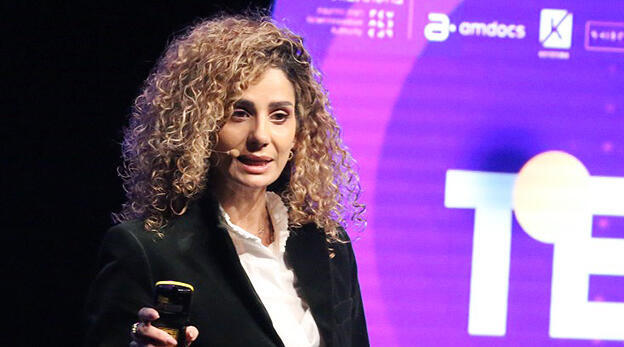
“AI is the new interstate arms race, and whoever controls it will gain economic and security dominance. This race is being fought at the infrastructure layer. Whoever controls the value chain, rapid and high-quality access to real estate and energy, along with entrepreneurial and regulatory expertise in building infrastructure, will be on the fast track to becoming a leading player,” said Liran Avisar Ben Horin, Head of Communications Infrastructure at Keystone, at Calcalist’s Tech TLV conference held in partnership with Leumi.
According to her, “The 21st century is driven by computing power and the ‘minerals’ that fuel it, energy, metals, and server farms. Energy is the real bottleneck in this arms race, not code, and in this arena Israel is lagging behind, but that gap also represents an opportunity.”
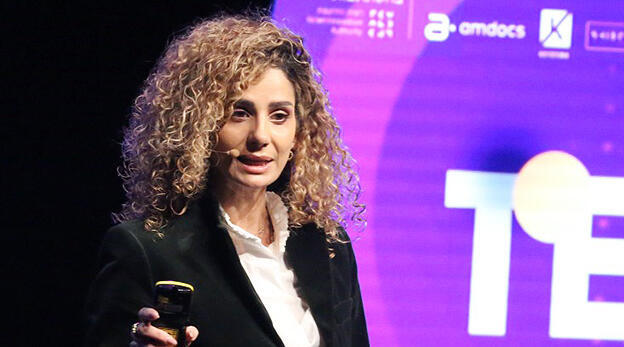
Avisar Ben Horin presented data on waiting times for connecting server farms to electricity grids in various countries, noting: “The waiting time in Israel is relatively short, about three years, and therefore international players view Israel as an attractive destination among ‘neo-cloud’ providers. This compares with waiting times of nine years in the Netherlands, the United Kingdom, and Ireland, and six years in Germany, Japan, and Spain.” She added that “Israel, along with eight other countries, has joined the Strategic Silicon Alliance, which will guarantee its partners access to information, technology, chips, energy, server farms, and the entire supply chain they require. This positions Israel as a geopolitical and strategic hub, and given our technological and scientific talent, we must maintain sovereignty in this field. Today Israel ranks only ninth in the global AI index, having dropped five places, largely because it stands at 26th in the infrastructure sub-index. We have no choice but to close this infrastructure gap.”
She also referred to the BYOG (Bring Your Own Generation) model, which is gaining traction in the United States: “If you want a data center, you must secure your own electricity, and this changes the rules of the game. What matters most is access to land in high-demand areas, access to reliable electricity, and entrepreneurial and regulatory expertise. The entire competition is about time to market, how quickly we can meet demand.”
In this context, she said, “Keystone is positioned to be one of the strongest players in the market, and we are tackling this challenge by leveraging our advantages: 370 dunams owned by Egged Real Estate, which Keystone controls; holdings in three power plants, Hovav, Hagit, and IPM; the initiation of two new power plants in Atarot and Sorek; and a building permit for Israel’s first server farm to be constructed adjacent to the IPM power plant. The IPM facility is unique in that its distribution system allows it to sell all the electricity it produces directly to private customers rather than to the national grid. We have already received approval to build a server farm of approximately 40 megawatts near the power plant, and we are simultaneously developing an additional 60 megawatts on other Egged lands.”
Against this backdrop, she concluded: “Israel will close the gap, and we are among the entrepreneurs leading this effort to bridge the infrastructure and energy divide, preparing Israel for an era of AI sovereignty and positioning it among the world’s three major powers in the field.”



