











“A startup aiming to break into the global market needs connections. Sometimes, one well-placed email is worth more than money.”
Twenty-five startups, ten meetings each with leading investors, and seven minutes per meeting. ScaleUp House’s “speed dating” event is designed to connect growth-stage startups with investors and industry experts who can help them make the leap onto the global stage. The joint initiative by Calcalist and Showcase IL aims to give selected companies access to a network of people who can offer advice, connections and new opportunities. “As an entrepreneur, I know how hard it is to keep knocking on doors,” says Hilla Ovil-Brenner, co-founder of the program. Maya Eisen Zafrir, CEO of LeumiTech, adds: “There is no textbook for growth. Every entrepreneur needs a diverse range of experts to turn to.”
“I was an entrepreneur myself, and I knocked on every door imaginable. I know how hard it is,” said Hilla Ovil-Brenner, founder and CEO of Showcase IL and co-founder of ScaleUp House, as she opened an evening in which entrepreneurs were not simply looking for a check. They had come to meet the experts who would guide them over the coming year, offering advice, connections and access to new opportunities.
ScaleUp House, an initiative led by Calcalist and Showcase IL in collaboration with LeumiTech, brings together startups and a network of partners that also includes Phoenix ESOP, Google for Startups, software development firm Sela and international law firm Sullivan & Worcester. The program targets companies that have moved beyond the initial startup phase, secured funding and begun generating substantial revenue.
These companies now face a different challenge: turning a local success into a global business. Hundreds of companies applied to the program, but only 25 were selected. The aim is to surround them with investors, advisers and potential partners who can help them navigate the next stage of growth.
6 View gallery
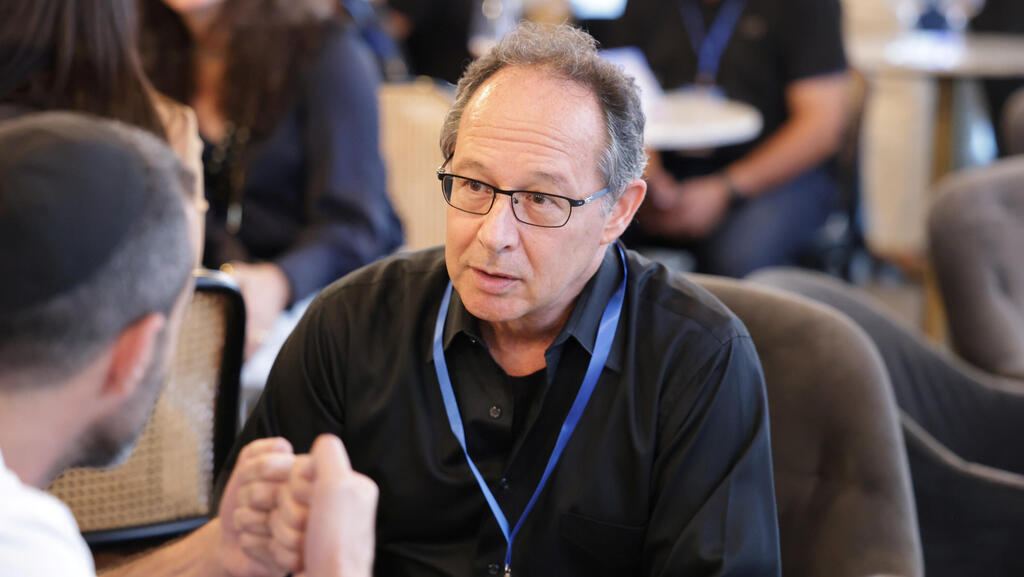
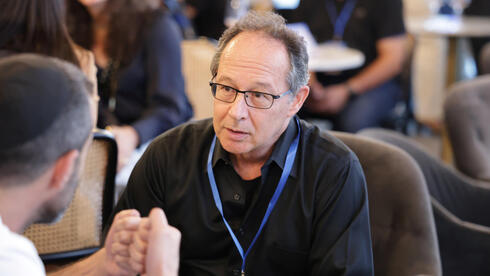
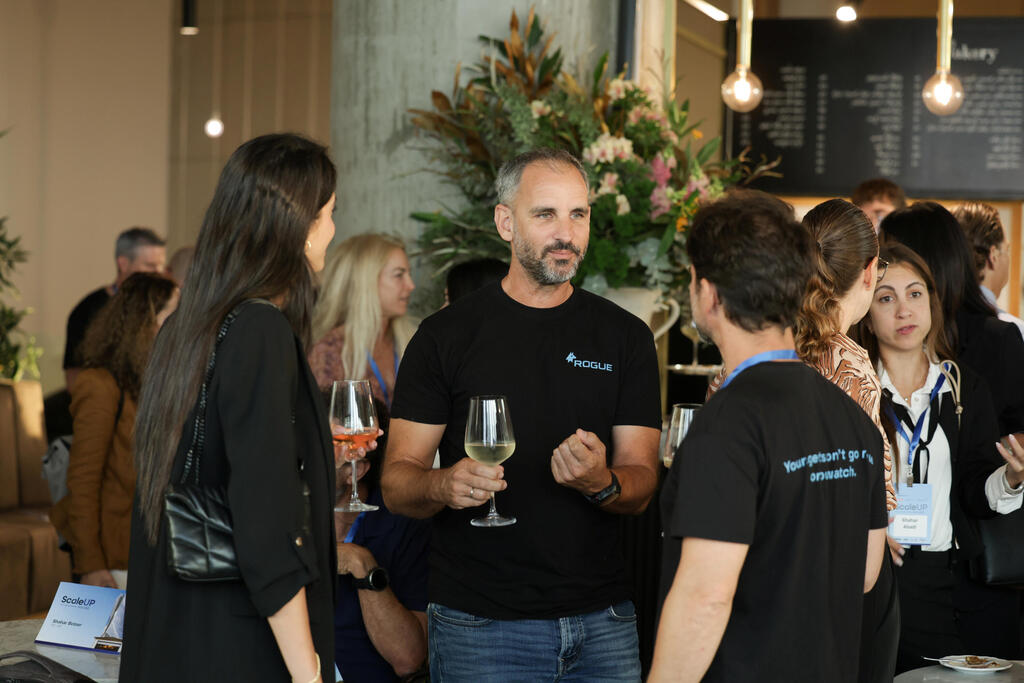
Avi Feldman, a partner at Mobilion Ventures, in conversation with an entrepreneur at the Scale-Up House "speed-dating" event.
(Orel Cohen)
The evening took the form of a speed-dating session designed to connect startups with the program’s network of experts. The format was simple but intense. Each startup had ten one-on-one meetings with venture capital investors and representatives of the program’s partners, with seven minutes allotted for each conversation. When the gong sounded, it was time to move to the next table.
In those seven minutes, entrepreneurs had to explain what their companies do, why they were positioned to win in their markets and what kind of help they needed. Then they had to start again with someone new.
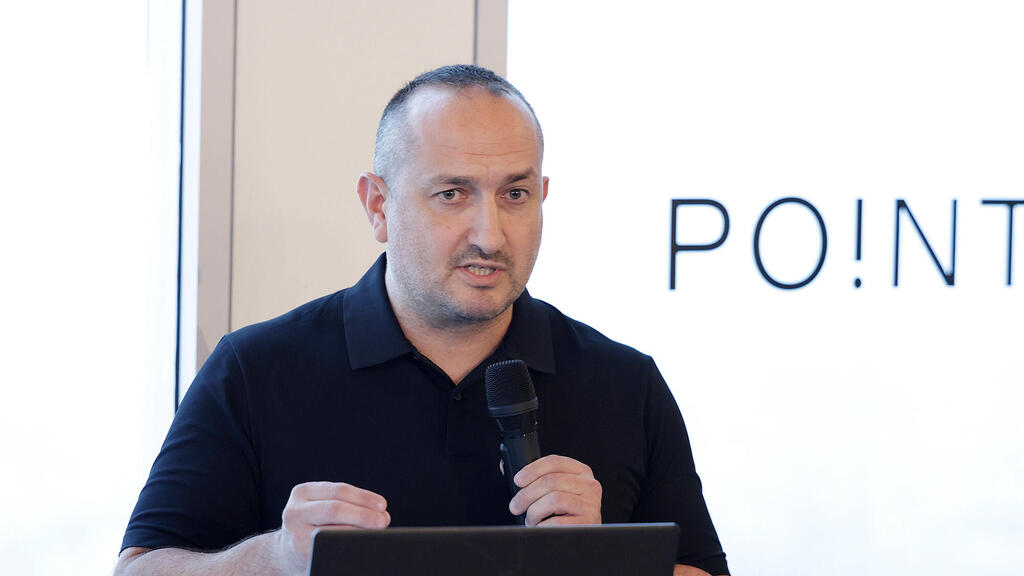
The venue was equally striking: the 61st floor of Azrieli Sarona Tower, inside POINT, a newly opened coworking space operated by the Azrieli Group. The windows offer panoramic views of Tel Aviv and its coastline. But Oded Setter, a vice president at the Azrieli Group who heads its Office and Rental Residential division, made clear that the scenery was not the main attraction.
“You didn’t come for the view,” he told participants. “You came for the meetings.”
Setter noted that the Group’s buildings house everyone from technology giants occupying entire floors to startups with just five employees. “CEOs simply don’t want to deal with real estate issues,” he explained.
Why does a startup that has already gained traction need a network of advisers rather than relying on a single investor for guidance? According to Maya Eisen Zafrir, CEO of LeumiTech, the rules of the game have changed. Investors have become more selective. Although they continue to deploy large sums of capital, sometimes in larger rounds than before, they are backing fewer companies. The money is still there, but fewer startups manage to secure it.
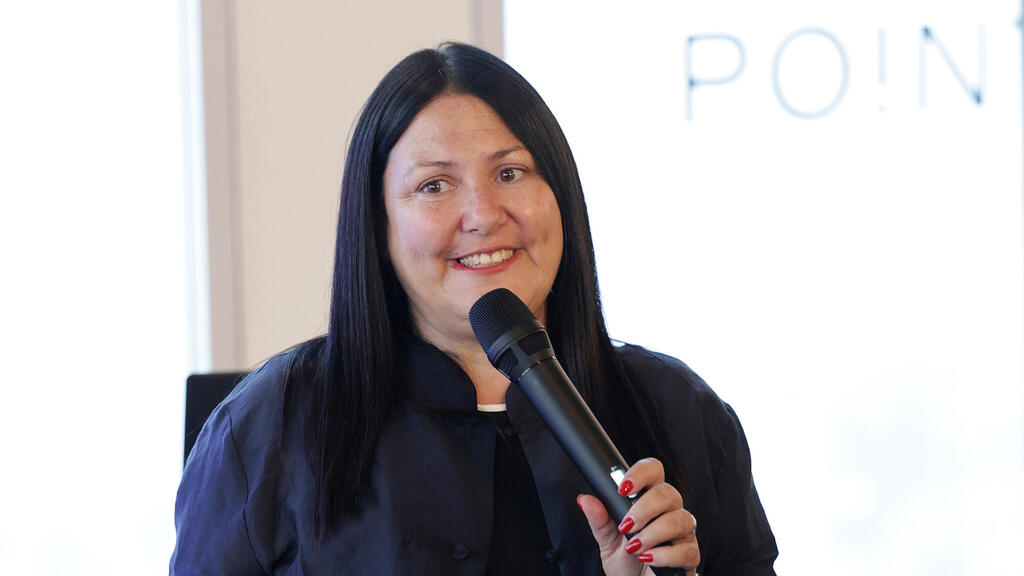
“Meanwhile, sitting right alongside you are other entrepreneurs trying to tackle the exact same problem,” she said. For founders at this stage, the challenge is to determine where to focus their energy, prove that their business model works and prepare to scale ahead of their next funding round.
For Eisen Zafrir, one of the most difficult questions concerns a company’s “moat,” the distinctive advantage that competitors cannot easily replicate.
“Sometimes that moat consists of your best customers; other times, it’s proprietary data. There is no single, definitive answer. The old ‘textbook’ approach no longer applies, which is why you can’t rely on just one investor,” she said.
She describes the shift as a move from “go-to-market” to “go-to-scale.” The question is no longer simply how to enter a market, but how to expand within it and build a lasting competitive position.
Her advice to entrepreneurs facing those seven minutes with an investor could apply just as well to a first date: “Show up sharp, yet remain open.” Founders need to understand what makes their companies distinctive and what could propel them forward, she said, while remaining willing to listen and reconsider their assumptions.
If investors are concentrating their capital in fewer companies, those that make the cut need to stand out. Sharon Barzik-Cohen, a partner and CFO at Qumra Capital, puts it bluntly.
“A great deal of money is being invested in tech, but it is concentrated in fewer companies. It is only during ‘bubble’ periods that every company gets funded,” she said.
In her view, companies need more than a promising market. They must have a strong product that solves a difficult problem in a way that competitors will struggle to replicate, along with a clear vision of how they can become market leaders.
The path to global growth also depends on people and presence abroad. “There is no avoiding the need for a presence there. I see CEOs relocating as early as the very initial stages,” she said.
That is one reason events such as ScaleUp House can be valuable even when they do not lead directly to investment. “A piece of sound advice given by an experienced investor to a young entrepreneur can be of immense importance,” Barzik-Cohen said.
Israeli entrepreneurs face an additional obstacle that has little to do with the quality of their products. Avi Feldman, a partner at Mobilion Ventures, which invests in mobility technologies ranging from vehicles and drones to robotics, described how overseas investors can perceive a company based in Israel.
“When you’re sitting in Israel trying to raise capital, it’s as if I were to come to you and say, ‘I have an amazing project for you, but its headquarters are in Kyiv,’” he said. “Those who aren’t here, who don’t understand the reality we live in, view us as a conflict zone.”
Foreign investors may factor in an additional risk premium because of a company’s location, Feldman said. They may worry that development could be delayed, deliveries disrupted or staffing affected. “And if that weren’t enough, add antisemitism to the mix,” he said.
The challenge can be especially acute for startups outside the sectors attracting the most investor attention. Artificial intelligence and cybersecurity currently draw significant interest and capital, while companies in other fields can struggle to secure funding and win customers, particularly in Europe.
For Feldman, this makes access to international markets and relationships especially important. “For a young Israeli startup, the most important thing is the ability to scale up internationally,” he said.
He does not necessarily expect to invest in every company he meets at an event like this. Instead, he sees his role as a resource entrepreneurs can use to gain advice and introductions.
“Bring it up, ask questions, make requests. You’re under no obligation to take anything. If I’ve been of help, it’s on the house,” he said.
Sometimes, he added, an introduction can be more valuable than an investment. “A single email connecting you to the right person can be far more significant than money. It bypasses all the standard channels, through which reaching a customer is often extremely difficult.”

As a company grows, its operating model must evolve with it. Or Koren, head of VC and Startup Partnerships at Google Israel, warned against assuming that the practices that worked in a startup’s early days will continue to work as it expands.
“Assuming that if you continue operating exactly as you did at the start, in your approach to customers and employees, it will keep working is a common trap. This leap requires significant changes,” she said.
At this stage, Koren said, Google can become a strategic partner, providing access to resources ranging from data and product teams to investor connections. “We try to identify the company’s core challenge at that specific moment, and then we step in to help them crack it,” she said.
She also acknowledged the unusual pressures facing Israeli startups. “The situation is complex. One day there’s a war, and the founder and the CTO head off to reserve duty for six months,” she said.
Yet Koren remains optimistic about the ability of Israeli entrepreneurs to adapt. “The strongest companies are built during times of uncertainty. Today’s entrepreneurs are capable of building much faster, with fewer resources and in less time,” she said.
The issues discussed at the event came into focus through the story of one of the participating startups: AI Radio Pharma.
The company is led by Sigal Clemenson-Kushnir, formerly vice president of marketing at Microsoft Israel. Her brother, the company’s chairman, previously co-founded UroGen Pharma, which develops treatments for cancers of the urinary tract and went public on Nasdaq in May 2017. UroGen is currently valued at approximately $1.7 billion.
The siblings set out to find a new technology in oncology and discovered one at Sheba Medical Center. A research team had developed peptides, short chains of amino acids that function as small proteins, capable of carrying a therapeutic agent directly to cancer cells.
The approach is known as targeted radiotherapy. Conventional radiation treatment can damage healthy tissue as well as cancer cells. Targeted radiotherapy, by contrast, uses a molecule designed to bind to specific cancer cells and deliver a radioactive substance to them. Any material that does not bind to its target is designed to clear from the body.
Novartis has already demonstrated the potential of this treatment approach, but Clemenson-Kushnir said that fewer than 4% of patients are currently eligible for such treatments because existing therapies target highly specific biological markers. AI Radio Pharma is using artificial intelligence to develop new molecules that could target additional types of cancer.
The company launched its first clinical trial in Australia two months ago and plans to submit an application to the U.S. Food and Drug Administration by the end of the year to conduct a trial in the United States.
Clemenson-Kushnir is also familiar with the challenges Feldman described. After closing a Series A funding round, the company completed a corporate restructuring known as a “flip,” moving its corporate domicile to the United States while retaining a development center in Israel.
“It’s much harder to remain solely an Israeli company,” she said. “Furthermore, very few biotech companies in Israel have managed to scale successfully. This isn’t the cybersecurity or general AI sector, and we lack an ecosystem comparable to, say, Boston.”
What does she hope to gain from ScaleUp House? The same thing Ovil-Brenner was looking for when she began knocking on doors: connections and a stronger network.
“Networking, building the ecosystem,” she said.
Her ambitions go beyond the next funding round. “My dream is to succeed in curing even one person and helping to extend lives,” she said. “And the second thing is to build a significant pharmaceutical company, one that combines Israel’s strengths in AI, technology and top-tier chemists to create yet another success story from here.”



