










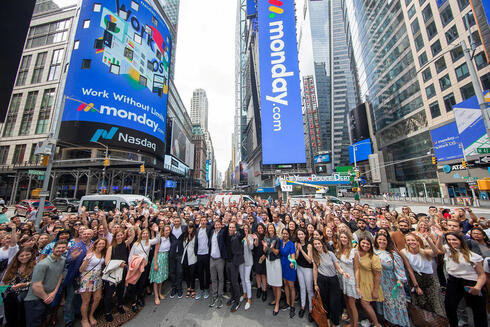
Monday faces senior management exits amid AI restructuring
Several vice presidents and other senior executives are expected to leave the Israeli software company in the coming weeks, following a workforce reduction affecting roughly 20% of employees and a strategic shift toward an AI-powered work platform.
A wave of senior management departures is expected at Israeli software company monday.com in the coming weeks, amid an organizational restructuring and a strategic shift toward building an AI-powered work platform.
According to information obtained by Calcalist, Orly Stern Izhaki, VP, AI Work Platform; Sergei Liakhovetsky, VP of R&D; and Seetvon Amir, VP of Product, are expected to leave the company within the next month. Lior Zagury, Senior Director, Global IT & Workforce Technology, who has been with monday.com for six years, is also expected to depart at the end of October. These departures follow the exit of Liron Shtraichman, a VP of R&D, last month.
The departures come amid a broad organizational restructuring announced by monday.com in July. The company said it would reduce its global workforce by approximately 20%, affecting an estimated 620 to 630 employees, as part of a strategic shift in its business.
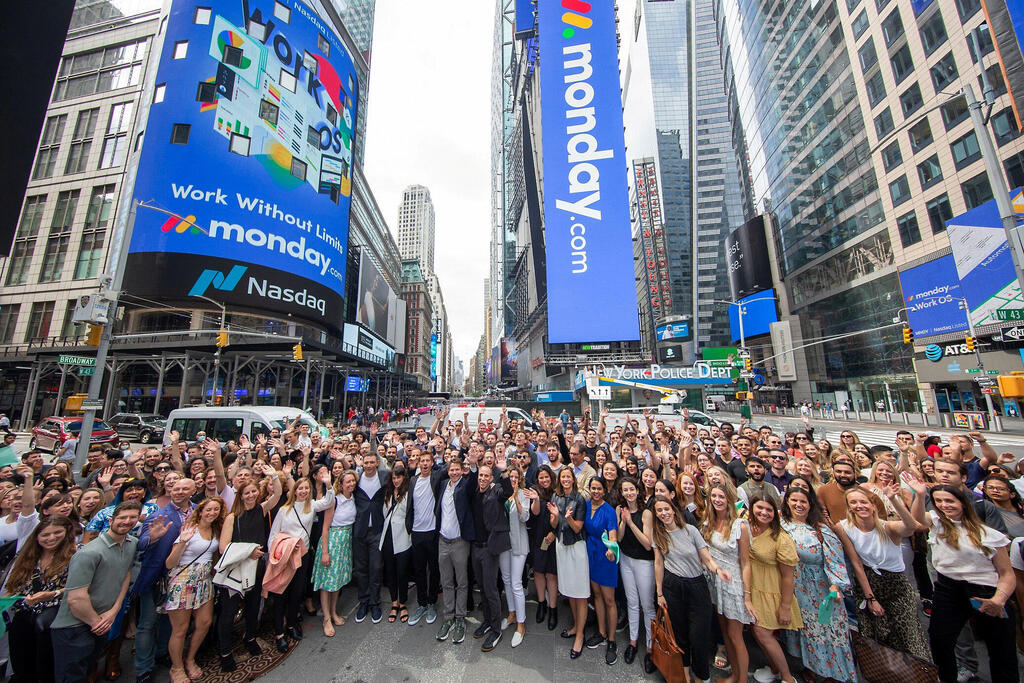
Monday.com is moving from software that helps individuals manage their work toward a platform designed to enable employees and AI-powered tools to collaborate on tasks. The company says the transition is intended to create a leaner, more focused organization while allowing it to continue investing in strategic areas related to artificial intelligence. It has also said it plans to continue hiring for key positions throughout 2026.
Monday.com has described the restructuring as more than a cost-cutting exercise, framing it as a response to changes in how enterprise software is developed and used. The reorganization is expected to incur net costs of approximately $45 million to $55 million, including severance payments and office-related expenses. According to the company's filings, most of the restructuring is expected to be completed by the end of 2026.
In the second quarter of 2026, monday.com reported revenue of $364.6 million, up approximately 22% from $299 million in the same quarter of 2025. First-half revenue reached approximately $715.9 million, compared with $581.3 million in the corresponding period last year, an increase of roughly 23%.
The company also reported growth in its business with large enterprise customers. Annual recurring revenue (ARR) from its AI products doubled from the first quarter, accounting for 17% of the total increase in ARR during the second quarter.
Net profit under generally accepted accounting principles (GAAP) reached $3.46 million in the second quarter, compared with $1.57 million a year earlier. For the first half of 2026, net profit totaled approximately $31.5 million, up from about $29 million in the same period of 2025. Adjusted operating profit, excluding certain expenses under the company's non-GAAP reporting measures, rose to $61.1 million in the second quarter from approximately $45.1 million a year earlier.
At the same time, monday.com's financial statements recorded approximately $21.4 million in restructuring expenses during the first half of the year, related in part to the exit from office space in Israel.
The company's share price reflects the challenges facing the business in the capital markets. Monday.com, which trades on Nasdaq under the ticker MNDY, closed at $90 on Friday, following a daily drop of approximately 4%. Its market capitalization stood at roughly $3.8 billion.
The shares had fallen approximately 37% since the beginning of 2026 and 50% over the previous 12 months.
In response to a request for comment, monday.com said: "Monday announced this past summer an organizational restructuring process to prepare the company for the next phase of its growth. Such processes involve management decisions by the company, alongside personal choices made by individual executives regarding their future paths. Consequently, several executives are now concluding their roles, each under their own specific circumstances. We thank them for their significant contributions and extensive efforts on behalf of the company over the years."



