











LinkedIn’s AI recruiters are changing the rules of the job hunt
The platform’s latest recruiting agent promises to help employers find suitable candidates faster. For job seekers, that means making sure their experience, skills and professional activity are visible to the systems doing the screening.
As job seekers turn to artificial intelligence to write résumés and submit applications, employers are increasingly using the technology to decide which candidates merit a closer look. In late September, LinkedIn announced LinkedIn Hiring Assistant 2, or LIHA 2, the latest version of its recruiting agent. The tool identifies potential candidates, assesses their suitability for open positions and recommends whom recruiters should contact. The new version is scheduled to begin rolling out in November to customers using the product.
For job seekers, the shift could have a direct effect on their chances of getting an interview. Having the right skills and experience may no longer be enough. Candidates also need to ensure that AI systems can recognize those qualifications and connect them to the roles they are seeking.
According to LinkedIn, recruiters using Hiring Assistant review 83% fewer profiles when searching for suitable candidates and identify interview-ready candidates 33% faster. Candidates identified by the agent are four times as likely to be contacted as those found through traditional sourcing methods. One of the new system’s main features is its ability to learn from recruiters’ feedback and an organization’s preferences, applying that information to subsequent searches. LinkedIn says more than 20,000 companies worldwide already use its agent-based recruiting solutions, including AMD, Cisco and Palo Alto Networks.

AI is also being used in other stages of recruitment. LinkedIn allows recruiters to conduct initial screening through questions that candidates answer in writing or on video. The system can then ask follow-up questions based on their responses. According to the company, the median time required to complete an initial screening through Hiring Assistant is just six minutes.
In a survey conducted by LinkedIn in the United States in August, 64% of recruiting professionals said it had become harder to know whom to trust and what is authentic when evaluating candidates. In response to this challenge, the new version of the agent also incorporates identity-verification data, candidates’ answers to screening questions and information from companies’ recruitment systems to help recruiters assess their suitability.
“LinkedIn works a bit like a dating app,” says Shay Thieberg, co-founder and chief marketing officer of MAIA Digital. “On one side, someone specifies the criteria they are interested in, whether physical attributes or personal qualities, and on the other, someone lists relevant and important information. Those dating apps match people, and LinkedIn works on the same principle.”
MAIA Digital, founded by Thieberg and Eli Igra Serfaty, specializes in LinkedIn strategy and management. The company helps organizations and executives build their professional presence on the platform through company-page management, organic and paid promotion, and positioning executives and subject-matter experts as thought leaders in their fields. Its services also include employee training and brand ambassador programs, which help groups of employees develop their professional profiles and visibility.
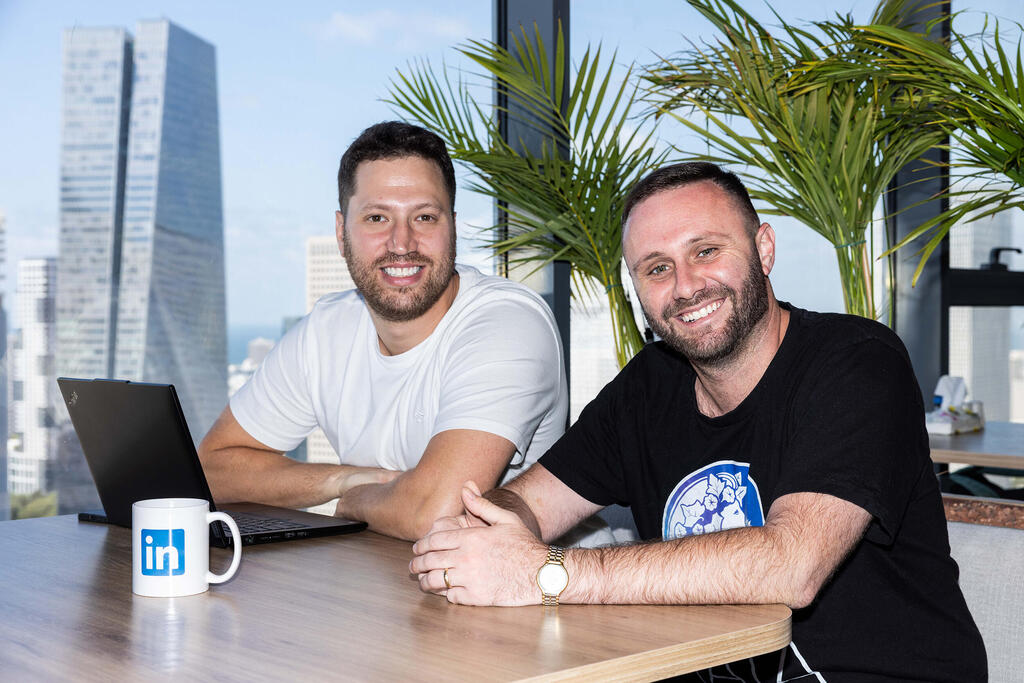
According to Igra Serfaty, the company’s co-founder and CEO, this work is intended to support organizational goals in recruitment and employee retention, marketing, sales and investor visibility. About two months ago, MAIA Digital was selected as LinkedIn’s first and only official partner in Israel.
“Most job seekers and career changers fall short because they do not keep their profiles up to date,” says Thieberg. “When I ask during talks whether anyone has gone into their LinkedIn profile in recent years and updated the Skills section to include AI skills, there is complete silence. If a recruiter posts a job description and adds the criteria that matter to the organization, and those are missing from your profile, you have less chance of being matched.”
According to Thieberg, LinkedIn’s AI no longer relies solely on matching keywords. “What is new is that AI scans not only what is written in the profile, but also posts and comments, drawing on all our LinkedIn activity. The system can identify how many years of experience you have, what responsibilities you held, your achievements, figures and how many people you managed.” However, he stresses that the system can draw only on information candidates have included in their profiles and activity on the platform.
What are the most important things to change in a profile?
“It is important to start at the top, with the headline,” says Igra Serfaty. “Your profile headline should include keywords related to both your role and your industry, rather than simply where you work.” Writing “Marketing Manager,” for example, may not be enough, since the title can apply to jobs in very different fields. Candidates should specify their area of expertise and include keywords relevant to the positions they hope to secure.
He also recommends completing the various sections of the profile and providing detailed information about experience, skills and achievements. “What is great about LinkedIn compared with a static résumé is that there is no space limit, so you can include a lot of information.” Recruiters may not read every detail, he says, but AI systems can scan the information and use it to assess a candidate’s suitability.
Thieberg points to another way to increase professional visibility: participating in discussions through comments. “Candidates are not making enough use of comments on the platform. They matter because not everyone feels comfortable publishing posts, and comments give them a way to take part in the conversation. When you join a discussion, more people are exposed to you, and you tap into the network of someone who could be a senior executive, team leader or hiring manager. It really is a growth engine. Comments are an excellent way to attract attention; they are a kind of foreplay. In addition, recruiters’ systems can now scan your activity, so comments become part of that too.”
Another recommendation is to connect external professional platforms to a LinkedIn profile through the Connected Apps feature. This allows candidates to showcase work they have actually done, rather than relying exclusively on descriptions of their skills. A programmer, for example, can link a GitHub account to display software development projects. Other platforms can also be connected, including Behance for design portfolios, Replit for software development and ElevenLabs for AI-generated audio.
According to LinkedIn, profiles with a connected app receive up to 2.9 times as many messages from recruiters. That figure does not establish that connecting an app alone causes the increase, but Thieberg says displaying a portfolio alongside the skills listed in a profile can help candidates stand out. “Presenting a portfolio alongside the skills listed in the profile may give a candidate an advantage over others,” he says.
Does the agent also learn from recruiters’ preferences and past decisions?
“Absolutely,” says Thieberg. “Not just those of the recruiter, but of the entire organization.” He says the system can also learn from changes in job requirements, which may reflect the direction in which a company wants to develop. A traditional company seeking to attract younger employees or recruit more workers with technological skills, for example, can adjust its hiring criteria accordingly. “LinkedIn takes that context into account and looks for candidates who also fit where the organization is heading.”
The technology can also help existing employees identify opportunities to advance or move into different roles. LinkedIn has recently added internal mobility capabilities, allowing employees to apply for positions within their own organizations. “When a position opens up in an organization today, just before it is advertised externally, it is posted on the internal system, allowing people with ambitions, or those who want to advance or change roles, to apply for existing positions within the organization.”
What about candidates with less conventional career paths, such as older workers, career changers or people whose experience comes from military service?
“It is important to understand that relying on your profile alone is no longer enough,” says Igra Serfaty. Alongside completing their profiles and detailing their experience and skills, candidates should build an active, consistent presence on LinkedIn by publishing posts and participating in discussions. This can be particularly important for people whose career paths do not fit conventional recruitment criteria.
“It is worth publishing content, whether you are a junior candidate who wants to show why you deserve a chance, or someone highly experienced who is changing careers and needs to explain to the market why you are a good fit.”
“LinkedIn has about 1.4 billion users worldwide and around 3 million in Israel, and no more than 3% publish content,” he says. According to Igra Serfaty, those who publish and participate in professional discussions can increase their visibility, attract job opportunities and give recruiters a better sense of what they could bring to an organization.
Thieberg also emphasizes the importance of building a relevant professional network. Rather than sending connection requests indiscriminately to “anyone with a pulse,” he recommends focusing on people active in the same industry, professionals with relevant expertise and potential recruiters.
LinkedIn’s digital business cards, known as LinkedIn Business Card, are also expected to become available in Israel, according to Thieberg. They can be saved in a digital wallet and used to connect with people by tapping phones together, potentially making it easier to build professional relationships outside the platform.
As LinkedIn expands its use of AI in recruitment, it is also trying to address what it calls “AI slop”: generic AI-generated content that offers little original knowledge or perspective. In September, the company reported that it had reduced views of content classified this way by 40%. “LinkedIn is making a considerable effort to maintain high-quality content. They are very much against bots,” says Igra Serfaty.
Thieberg adds that, according to figures published by LinkedIn, the company can identify 94% of AI-driven activity on the platform. He says LinkedIn distinguishes between AI-generated content, automated comments, automated connection requests and generic material that adds no original value. But the company is not opposed to AI-generated content itself. Rather, it wants users to contribute their own perspective.
“It has to include some human element to break through the ceiling of the generic or cringeworthy content we so often see,” he says.



