










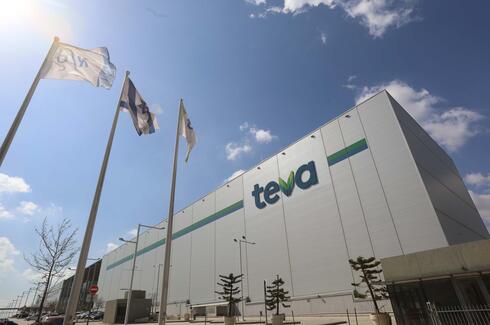
Teva reaches its highest level since 2017 as investors embrace its transformation
Shares have risen about 20% in August, lifting the Israeli drugmaker's market value to $43.5 billion as innovative medicines and a growing pipeline reshape its investment story.
Teva is having a moment that would have been difficult to imagine a few years ago.
The Israeli drugmaker's shares have climbed roughly 20% in August, taking the stock to its highest level since early 2017 and pushing Teva's market capitalization to approximately $43.5 billion.
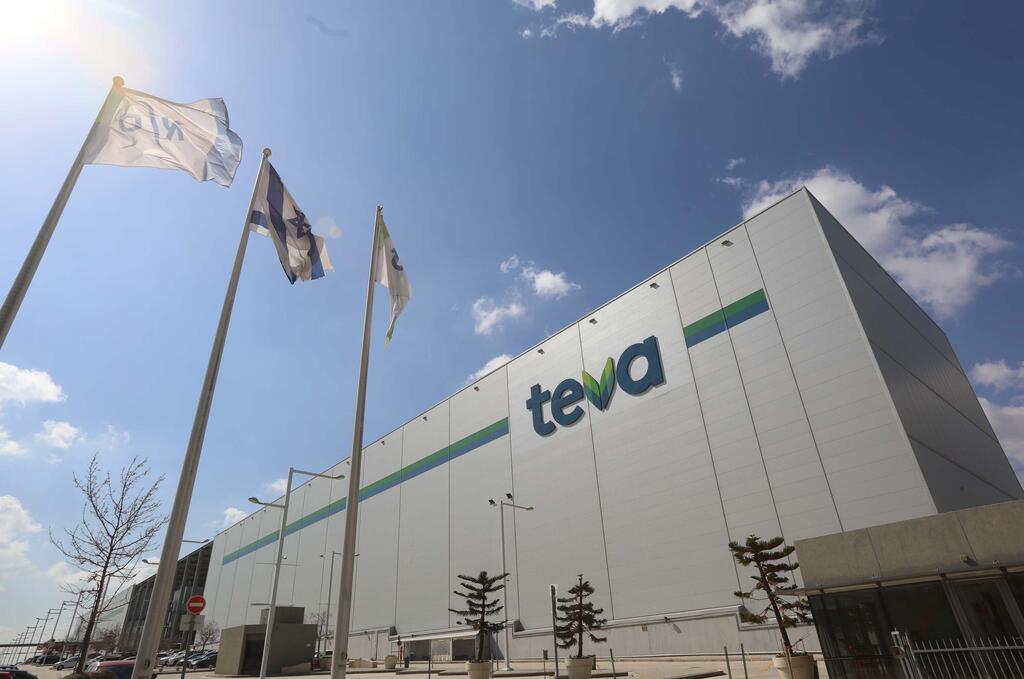
The rally extends a remarkable turnaround for a company that was once synonymous with the global generic-drug business and had fallen deeply out of favor with investors. Teva's shares have now gained more than 100% over the past year, although the company is still in the process of proving that its transformation can deliver sustained growth.
The latest boost comes as Teva advances a pipeline increasingly centered on innovative medicines. Last week, the U.S. Food and Drug Administration accepted Teva's application for ecopipam, an experimental treatment for children and adolescents with Tourette syndrome. The FDA has set a target decision date for late in the first quarter of 2027.
For Teva, the regulatory milestone adds another potential product to a pipeline that investors are increasingly viewing as the foundation for the company's next phase of growth.
Ecopipam is being developed as a treatment for pediatric Tourette syndrome and, if approved, would be the first new therapy for the condition in more than a decade, according to Teva. The company says it would also represent the first novel mechanism of action for Tourette syndrome in more than 50 years.
The application is supported by Phase 2b and Phase 3 results. In the Phase 3 study, pediatric patients who had responded to ecopipam had a 53% lower risk of relapse over 12 weeks compared with placebo.
The drug came into Teva's portfolio through its $700 million acquisition of U.S.-based Emalex, completed in June. The acquisition weighed heavily on Teva's second-quarter earnings because of a one-time accounting charge, but investors appear increasingly willing to look beyond that temporary hit toward the potential value of the company's development pipeline.
For years, Teva was primarily valued as a generic-drug manufacturer. Under CEO Richard Francis, the company has been attempting to change that perception by expanding its innovative-medicines business while reducing its reliance on generics.
The strategy is beginning to produce visible results. In the second quarter, revenue from Teva's innovative medicines exceeded $1 billion for the first time, rising 43% from a year earlier.
Austedo, the company's leading treatment for movement disorders, generated $696 million in quarterly revenue, up 40%. Ajovy, its migraine treatment, rose 56% to $244 million, while Uzedy, a newer schizophrenia treatment, increased 43% to $77 million.
Teva subsequently raised its forecast for combined revenue from the three drugs to $3.7 billion this year, representing 17% growth.
The growth in innovative medicines is helping compensate for continued pressure on Teva's traditional generic-drug business, where revenue fell 15% in the quarter. Among the factors weighing on the business was the loss of revenue from Revlimid after the end of the agreement that had allowed Teva to market a generic version.
The company's pipeline is also becoming more substantial. Teva has five drugs in advanced development that it expects could reach the FDA over the next five years, as well as a portfolio of 15 biosimilar products that it expects to nearly double to 29.
Duvakitug, which is being developed for inflammatory bowel disease, is currently the main potential growth engine in the pipeline. Ecopipam adds another potential commercial opportunity, particularly in neuroscience, an area in which Teva has been building on its existing expertise.
Another potentially important change is approaching next month. Teva plans to begin directly listing its shares on the New York Stock Exchange on September 14, replacing its longstanding American Depositary Receipt structure.
Teva was originally listed in Israel before beginning to trade in the United States through ADRs nearly four decades ago. The company has said the direct listing could make its shares accessible to a broader group of institutional investors.
Teva CFO Eli Kalif said the company could become eligible for inclusion in the Russell 1000 index following the direct listing and, if its market value continues to rise, potentially the S&P 500 at a later stage.



