










Lyte raises $165 million at $1.6 billion valuation as investors pile into physical AI
The robotics startup, founded by veterans of Apple and Israeli 3D-sensing company PrimeSense, has now raised $272 million since its 2021 founding, as investors increasingly target the sensors and perception systems needed to bring AI into the physical world.
Lyte, a robotics and artificial intelligence startup founded by veterans of Apple and Israeli 3D-sensing company PrimeSense, has raised $165 million at a valuation of $1.6 billion, roughly tripling its value in less than a year and bringing its total funding to $272 million.
The round puts the Mountain View, California-based company among a growing group of startups attracting substantial capital for the hardware and infrastructure needed to bring artificial intelligence into the physical world.
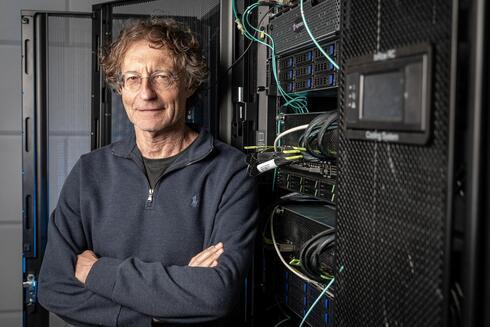
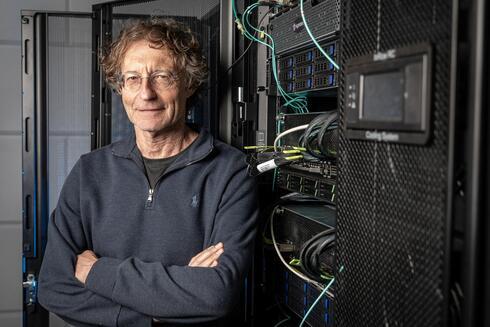
It also brings together two generations of semiconductor entrepreneurs and engineers. Lyte's founding investor and chairman is Avigdor Willenz, one of Israel's most successful semiconductor entrepreneurs, while the company's founding team includes engineers who helped develop the depth-sensing technologies behind Apple's Face ID.
The latest round was co-led by Maverick Silicon, with participation from Fidelity Management & Research, Atreides Management, Key1 Capital and Ora Global. Exor Ventures, which participated in earlier financing, is also among Lyte's backers.
The new funding comes just eight months after Lyte emerged from stealth on January 5 with $107 million in aggregate funding. Since then, the company has more than doubled the capital it has raised and crossed the $1 billion valuation threshold.
Willenz's involvement gives Lyte a connection to a long history of Israeli semiconductor companies that went on to become important technology platforms.
Willenz founded Galileo Technologies, which developed networking chips and went public on Nasdaq before being acquired by Marvell in 2000 in a transaction valued at about $2.7 billion.
He later became an early investor in Annapurna Labs, a chip company that developed processors for Amazon's cloud infrastructure and was acquired by Amazon in 2015. He was also a founder and early investor in Habana Labs, an Israeli developer of AI processors that Intel acquired in 2019 for about $2 billion.
Willenz is now betting on another layer of technology that could become increasingly important as artificial intelligence moves beyond data centers.
"Lyte is building at the right layer, at the right moment," Willenz said when the company emerged from stealth. "I've seen how foundational technologies unlock entire industries. What stands out here is the depth of the team and the discipline to solve perception as a system, where lasting value is created."
Lyte's founders bring their own history in perception technology.
CEO Alexander Shpunt co-founded PrimeSense, the Israeli 3D-sensing company whose technology powered Microsoft's Kinect. Apple acquired PrimeSense in 2013 for $350 million, and the technology subsequently became part of Apple's depth-sensing platform.
Shpunt later worked at Apple as a Distinguished Engineer, where he focused on perception systems used across the company's products.
The company's CTO, Arman Hajati, followed a different path. Born in Iran and educated at the University of Tehran, he built his engineering career in the United States and eventually became a lead system architect and senior engineering manager at Apple, working on the tightly integrated sensing technologies that now inform Lyte's approach.
The third founder, Yuval Gerson, is another veteran of PrimeSense. He later worked at Apple as a MEMS system architect before joining Lyte as an engineering fellow and vice president.
Lyte is not building a robot. Its ambition is to supply some of the underlying technology that allows robots and other autonomous machines to understand their surroundings.
Its flagship product, LyteVision, combines 4D sensing, RGB imaging and motion awareness into an integrated perception platform. The company is also developing custom silicon and software designed to bring those components together.
The problem Lyte is targeting is one that has become more important as robotics advances. While AI models have made rapid progress in understanding language, images and other digital information, autonomous machines must also interpret constantly changing physical environments.
Robotics companies typically combine different sensors and components from multiple suppliers, then spend significant engineering resources integrating and calibrating them and developing software capable of combining the resulting data.
Lyte's approach is to integrate those functions into a unified system that can provide spatial and visual information to AI models.



