









"AI is like a junior employee with amnesia. It has to be taught over and over again"
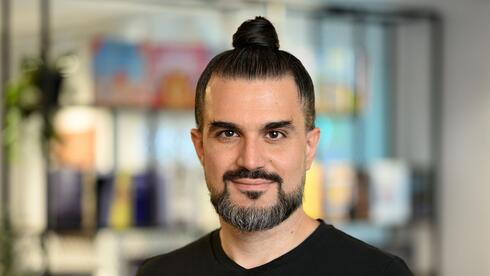
Asaf Yonay, VP and Head of AI Adoption at Wix, was speaking on a panel that dealt with the implementation of artificial intelligence in organizations, as part of Calcalist and Commit's AI Week.
"It's not whether you do it, but how you do it. To create significant change in a short period of time, management must first decide that it is all in on implementing AI across the organization," said Seetvun Amir, VP of Product at Monday.com, speaking on a panel at Calcalist and Commit's AI Week that focused on the organizational adoption of artificial intelligence technologies.
Amir said that "almost nine months ago, we completely shut down the entire organization for an entire month, which we called ‘AI Month.’ We decided not to do anything except deal with AI in all its aspects." The move, she explained, was not only technological but also a mental shift: "We didn’t want to wait for change to happen to us, we wanted to lead it."
1 View gallery

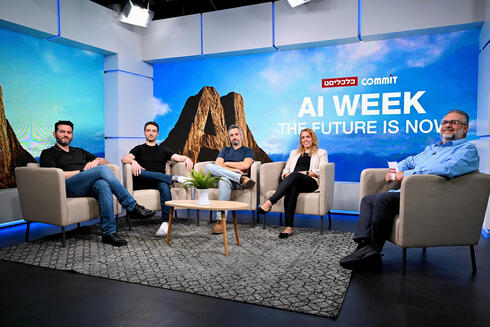
AI panel (from left): Assaf Mischari, Tammuz Dubnov, Asaf Yonay, Seetvun Amir.
(Photo: Kobi Kuenkas)
The panel included Amir alongside Tammuz Dubnov, founder and CTO of Autonomy AI; Asaf Yonay, VP and Head of AI Adoption at Wix; and Assaf Mischari, serial entrepreneur, AI expert, and managing partner at Team8. Yonay described a different but complementary approach: "It started with an initiative from management, but it came on two fronts, both the desire to produce AI-based products, and the understanding that teams were already using AI and we needed to help them use it correctly."
Wix has invested in mindset-focused training alongside building a unified AI infrastructure. "We want people to use it correctly, including the protections that need to be in place," Yonay said. "In areas where we used to need eight disciplines, today four are enough, and maybe in the future two. That doesn’t mean fewer people are working, it means you can create a lot of value with fewer interactions."
Mischari, who works with both startups and large organizations, noted differences in how AI is adopted: "In startups it’s more bottom-up, it comes from the people themselves. Large organizations need to think in advance where they want AI, where they don’t, and where it will actually produce ROI."
According to him, the relative simplicity of today’s tools means that even large companies can adopt them quickly, if their efforts are well-targeted. "In healthcare, for example, the goal isn’t to replace the doctor but to streamline simple tasks. This is an industry where 50% of communication is still done by fax, so AI can provide immediate value."
Dubnov warned about the risks of improper use: "If you use it correctly, it can be wow. If you use it naively, it can be harmful. I know technology managers who say: ‘The AI tool is putting garbage into my code at a dizzying rate.’" He noted that the gap between novice and advanced users is enormous.
One of the key challenges raised by the panel was how to measure success. "It’s very difficult to measure velocity," said Yonay. "AI is not deterministic, if X goes in, Y won’t necessarily come out. So we don’t measure the boost. We ask instead: Are we using it correctly? Are our solutions high-quality?"
Mischari added: "We need to coordinate expectations, with employees, management, and the board, and re-evaluate them every month."
The discussion also touched on the challenges of working with AI agents. "AI is like a junior employee with amnesia," said Yonay. "It has to be taught over and over again."
Dubnov expanded: "It has no common sense, no tribal knowledge. That’s why we build infrastructures that simulate the organization, so the agent can understand even what isn’t explicitly said."
Amir added that much of the day-to-day work involves "teaching and getting used to the fact that AI can be incorporated into the products themselves. This will significantly accelerate adoption."
At the end of the panel, each participant offered one piece of advice for organizations beginning their AI journey.
Amir emphasized that AI implementation must be a strategic, management-driven move, because expecting busy employees to learn new tools in their free time is not enough to create radical change. The goal, she said, is to get the entire organization to adopt new working methods and ensure that "no one is left behind." She also recommended creating dedicated roles for innovation and AI implementation, identifying internal champions to serve as “internal engines,” and shortening procurement and legal processes to enable faster adoption.
Yonay argued that technological change must include three layers, technological, cognitive, and organizational, starting with mindset and mental readiness. He suggested treating AI like a junior developer: it needs onboarding, documentation, and structured projects, because "AI is not 100% good."
Yonay recommended "fighting with the agent", trying, failing, and succeeding, to discover the limits of its abilities and find the “sweet spot” of usage (such as a 70% with AI / 30% without ratio).
Mischari focused on whether AI should replace people or make them more efficient. Technologically, he recommended designing products to avoid dependency on a single AI vendor and suggested tackling legacy systems by using bots that simulate human behavior (such as keyboard and mouse actions) to integrate without costly system overhauls and extend system lifespan.
Dubnov advised putting more responsibility on the AI itself, letting the AI agent handle partial and “crooked” information instead of forcing users to adjust their behavior. He also stressed the importance of deploying AI across multiple personas beyond developers, such as product managers and designers, to avoid organizational bottlenecks.



