








SolarEdge CEO Shuki Nir: “We don’t just want to survive, we want to thrive”
After a 95% collapse in value, the solar tech company’s chief outlines a sweeping turnaround, and bets on profitability, discipline and new growth engines.
Shortly after taking over as CEO of SolarEdge about a year and a half ago, Shuki Nir decided to remove the company he manages from the list of stocks he follows. “I know what the stock is doing, but if I watch the fluctuations on a daily basis, I might make the wrong decisions,” he explains. “SolarEdge’s stock is not for the faint of heart. There is relatively high volatility in our industry, and because SolarEdge reached a crisis point, it created additional uncertainty in the markets.”
His point is well taken. In 2022, SolarEdge was still the largest Israeli company on the Nasdaq, with a market value of $20 billion. Two years later, in December 2024, when Nir (56) took over, it was on the ropes, with a value of only $100 million after erasing 95% of its market value.
It was a difficult starting point, certainly for someone in his first role as CEO, but also one that could serve as a launching pad. After all, SolarEdge did not have much further to fall. In the meantime, it appears that Nir’s aggressive moves, which included widespread layoffs and the elimination of operations in several markets, have succeeded in stabilizing the company and restoring investor confidence. The stock is trading around $61, compared to $12 when he took office, and SolarEdge’s market value has climbed back to $3.8 billion. That is still far from its peak, but enough to place it among the 25 largest Israeli companies.
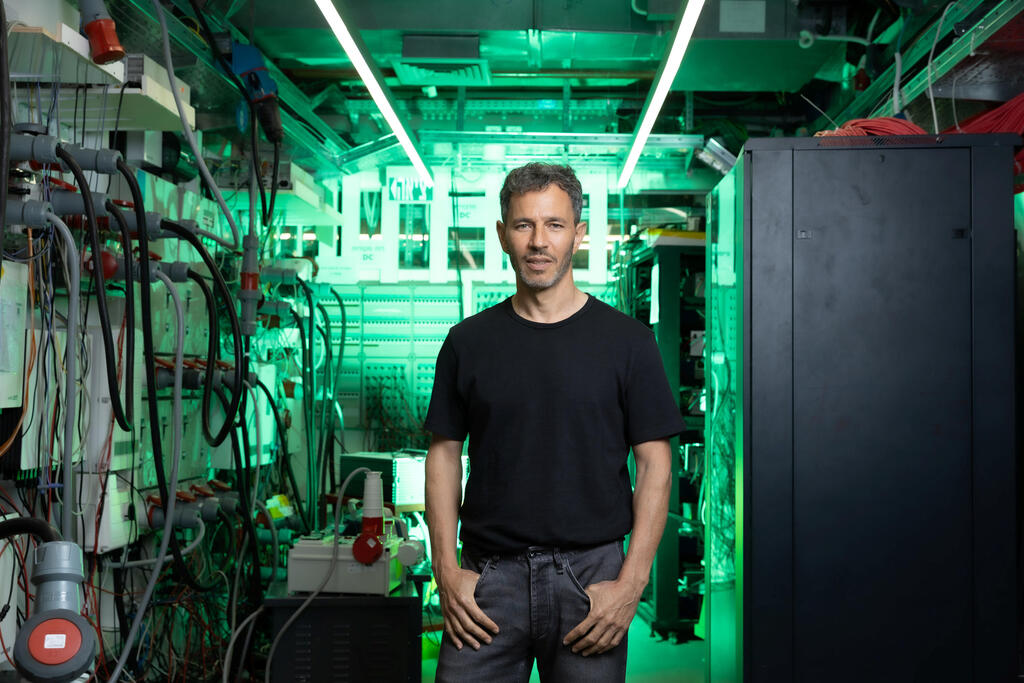
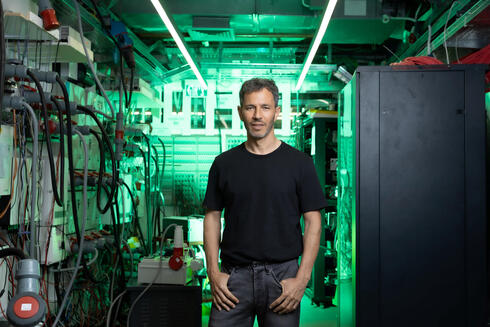
Now, in his first interview since being appointed CEO, Nir says he joined SolarEdge with aspirations of eventually leading the company, but that the opportunity arrived faster than expected. “I felt ready to become CEO, and the marketing management role was an entry point for me, but I didn’t think that in August 2024, about two months after I took the position, the previous CEO, Zvi Landau, would resign,” he says.
And what happened then? You barely had time to do anything as Chief Marketing Officer.
“That’s right. When Zvi announced he was leaving, the board of directors began searching for a CEO, and I applied. I didn’t leave a mark in my previous role, and anything positive that happened in SolarEdge’s marketing was not because of me. I barely had time to sit in the chair before I was moved into the CEO role.”
It is somewhat surprising that you, someone who had never previously run a public company, were appointed CEO of a company in such a steep decline.
“In every meeting I had with the board of directors, they reminded me that this would be my first CEO role, and I understood why that concerned them. But I replied that I was very ready for the role. I came with around 20 years of experience managing technology companies, and the experience I gained at SanDisk, which also went through a recovery process, was relevant to SolarEdge. In the eight years between leaving SanDisk and joining SolarEdge, I advised CEOs and sat on the boards of directors of ironSource and other companies, and that broadened my perspective on different technologies, business models, and management styles. I came into the role hungry, energetic, mentally mature, and fully focused because my children were already grown. I told myself that after eight years of relative calm, this was now my mission. I approached it with open eyes: there was a strong brand, a strong team, and you first needed to examine how much money you had in the bank compared to how much cash you were expected to burn, and then start reorganizing everything.”
Weren’t you worried that if the company went bankrupt under your leadership, your career would be ruined?
“I had an inner conviction that I had a good plan and that we could execute it. I also wasn’t an unknown quantity. The search process for the CEO role started while I was already inside the company and learning about it. The board spoke with the management team that knew me, and apparently the confidence that the team would stand behind me and my plan to revive SolarEdge was significant enough that they preferred not to bring in someone who may have looked better on paper but whose ability to work with the team was uncertain.”
What was the company like when you took over as CEO in December 2024?
“It was a difficult period. The company was losing money and market share, and the negative cash flow was almost half a billion dollars. Naturally, that created an atmosphere of uncertainty within the company. Employees here had gone through a very difficult three or four years. Our competitors constantly told customers and suppliers, ‘Why are you working with SolarEdge? They might not even be here in a few months.’”
They were not far from reality.
“When you compete with someone, you use every tool possible to create an advantage for yourself. But I understand how it looked from the outside and why there wasn’t full confidence that SolarEdge would survive the crisis.”
And today?
“I think that concern no longer exists. SolarEdge now has more than half a billion dollars in the bank, cash flow is positive, we are increasing revenues and profit margins, and we are presenting a roadmap for new products and markets. We are shifting from defense to offense. The next challenge is to move beyond profitability.”
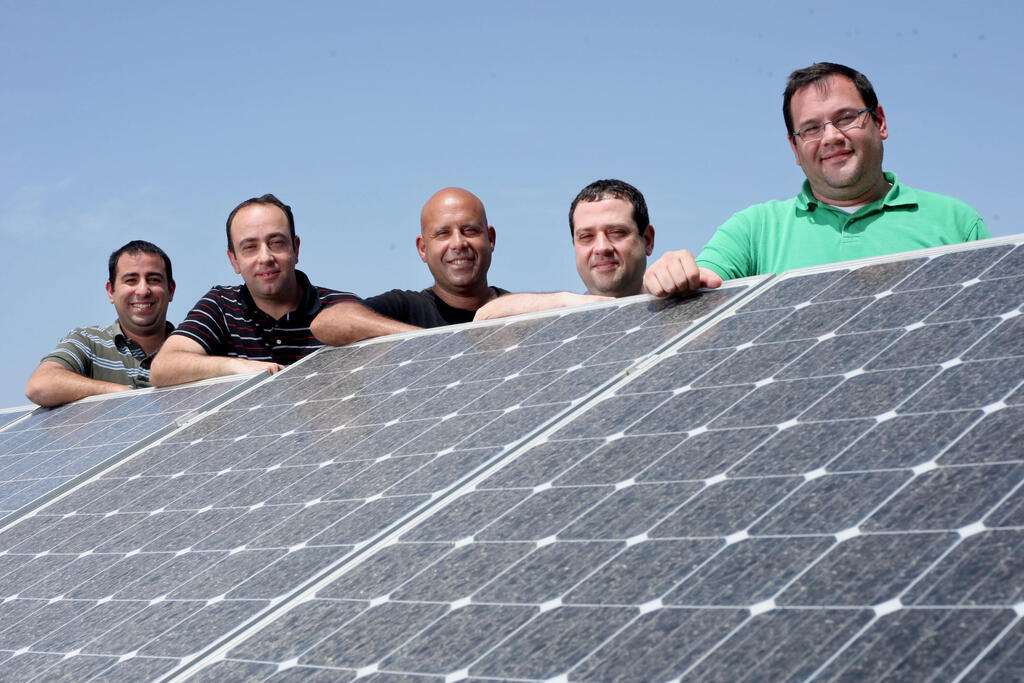
“When you're in trouble, you have to shrink, like in a winter sleep”
Founded in 2006, SolarEdge grew over the years into one of the world’s leading developers of systems designed to maximize electricity production from solar panels through advanced power optimizers and energy converters operating on each panel individually. The model proved particularly attractive to businesses and private consumers, who used SolarEdge’s systems to sell excess electricity generated from rooftop and field-based solar installations back to local utility companies, reducing energy costs while generating additional income.
SolarEdge sells its systems in more than 100 countries, though most of its revenue comes from the United States and several European markets, including Germany, the Netherlands, Italy and France. Riding the global green-energy boom, the company went public in New York in 2015. Revenue and valuation climbed steadily, and for years it appeared little could slow its momentum, until a combination of market forces hit the company simultaneously.
The chain of events that triggered SolarEdge’s crisis began with the sharp decline in oil and gas prices in early 2020, alongside the outbreak of the coronavirus pandemic, which significantly weakened incentives to install solar panels. Although demand for green energy in Europe surged after Russia’s invasion of Ukraine in February 2022, driven by the continent’s energy crisis, the boost proved temporary. As energy markets stabilized and electricity prices fell, demand weakened sharply, while distributors and installers accumulated large inventories.
At the same time, beginning in 2021, central banks around the world rapidly raised interest rates, severely undermining the economics of solar installations. Many of SolarEdge’s customers financed installations with loans, expecting future electricity sales to offset the investment over time. The combination of weakening demand, bloated inventories and higher financing costs significantly damaged the company’s performance and, by May 2023, triggered a collapse in its market value.
The entire industry was affected by the downturn, and the stock chart of SolarEdge’s main competitor, the American company Enphase Energy, reflects a similar trajectory. However, SolarEdge was hit harder because of its heavy exposure to Europe, one of the regions most affected by the slowdown. Decisions made during the boom years, including acquisitions outside the company’s core business and inventory assumptions that later proved overly optimistic, also compounded the crisis.
To illustrate how rapidly SolarEdge’s stock collapsed, Nir points to the compensation package he received when he joined the company as CMO in the summer of 2024.
“When I started talking to SolarEdge about taking the role, the stock price was $75, and I remember telling my wife, ‘I have an amazing deal, I’m going to get shares at $75,’” he recalls. “But by the time we signed, the stock had already fallen to $40, and by the time I actually joined the company, it was trading at $12 per share.”
What were your first steps in the role?
“To achieve financial stability, we sold non-core operations, including a battery factory in Korea, a company in Italy that develops batteries for electric vehicles, and an Israeli company specializing in solar tracking systems that follow the sun to maximize panel efficiency. We stopped selling through distributors in markets where we believed operations were less profitable, such as Japan and Korea, and we had to part ways with hundreds of employees around the world.
“When you’re growing, it makes sense to pursue multiple growth areas. But not when you’re in distress and need to conserve energy, then you have to shrink, like in a winter hibernation. We moved into minimum-consumption mode so that when spring arrives, we can flourish again. The idea was that instead of spreading our strong team across 20 initiatives, seven of which were not optimal, we would focus on the 13 areas with the best returns.”
What else?
“At the same time, we consolidated groups within the company. For example, the product organization was merged with marketing and sales under a single manager instead of several different executives overseeing overlapping operations. That both improved efficiency and reduced costs. We carried out similar consolidations across multiple departments.
“We also expanded manufacturing in the United States because legislation there incentivizes local production. It’s a process that takes time and investment, but it was important for improving profitability and was necessary throughout 2025 so that by 2026 we could already manufacture products in the United States. Today, the vast majority of our production takes place there. In Israel, we only maintain the factory in Ziporit, which mainly supports development and short-run manufacturing. We still produce small quantities in Asia, but only on a limited scale.”
It must have been very difficult to retain employees during such a dramatic restructuring.
“Yes. You shut down projects people have worked on for years, and that hurts morale. Employees naturally ask themselves: who guarantees that the next project won’t also be canceled after two years?
“I could have reduced expenses to zero, that would have been the easiest thing to do. But it also would have meant the end of the company. We tried to create balance by giving employees transparency about what was happening so they would feel part of the process. I think the people who stayed became much more committed to the company. There were also employees who didn’t believe the turnaround would succeed and chose to leave for what they saw as better opportunities.”
How do you maintain morale among employees who feel uncertain about their future?
“From day one, I told managers and employees that I would speak to them as openly as possible. That transparency may have caused some people to leave, but for others it provided a clear roadmap. There were employees I tried to keep who still decided to leave. I’m not angry at anyone who left, there’s nothing personal about it, but I believe you have to be transparent with employees, for better or worse.”
When was the hardest moment for you?
“In conversations where I tried to convince employees to stay because I believed SolarEdge would recover, and they rolled their eyes at me.”
“We don’t just want to survive, we want to thrive”
It is difficult to overstate the scale of the upheaval SolarEdge has gone through. Until the crisis from which it is now trying to emerge, the company was considered one of the crown jewels of Israeli high-tech. Founded about 20 years ago by five entrepreneurs from Unit 81, the elite technological unit of the Intelligence Corps, and led by its late CEO Guy Sella, who died of cancer in 2019, SolarEdge grew into a global success story.
At the core of its technology are power optimizers and converters for solar systems designed to maximize electricity production from solar panels. Over the years, the company also expanded into energy storage systems and batteries that allow excess electricity generated during the day to be used in the evening and at night. At its peak, SolarEdge employed more than 5,000 people and sold its systems in more than 150 countries. Over the past two years, however, it has laid off roughly 2,200 employees, hundreds of them in Israel.
Beyond the rise in the company’s market value, what is its current condition?
“We were forced to part ways with employees in Israel as well, but at our factory in Tziporit, which previously employed around 300 people, we added another 600 jobs and now have close to 1,000 employees there. After several difficult years, we are finally starting to talk about growth and profitability being just around the corner. In the second quarter of this year, we posted a loss of only $3.5 million, which is close to breakeven, and in the third quarter I hope the minus sign will disappear altogether. A company needs to be profitable.”
So the cash bleeding has stopped. But where are the growth engines?
“We increased production in the United States because it is more profitable for us, and we are focusing our development efforts on our new platform, Nexis, to ensure it becomes a growth engine this year. We knew we were in crisis, but if we did the right things, there was a high probability we could emerge from it. For that to happen, we could not abandon investments such as building a manufacturing infrastructure capable of supporting profitable growth in demand, alongside developing a winning product. We don’t just want to survive, we want to thrive. The goal is to build a company that can return to greatness over the long term.”
What exactly is Nexis?
“Nexis is designed for the residential market. The traditional optimizer technology that SolarEdge was built on was able to generate up to 25% more energy from the sun on certain rooftops, and between 8% and 10% more on most roofs. That’s a significant amount, and over 10 to 20 years those gains translate into a lot of money. That’s also how we entered the energy-storage business.
“In recent years, we began selling batteries for electricity storage, transforming solar systems from platforms that generate electricity only for immediate use into systems where owners can decide when it is most worthwhile to use the energy. Once we developed that capability, the value of intelligent software capable of managing the process increased significantly. In Nexis, all of these components were designed together to work as one optimized system.”
Alongside its efforts in the residential market, SolarEdge hopes that improving electricity efficiency will position the company competitively in one of the hottest sectors in the world today: reducing electricity costs in data centers, which are being built at massive scale to provide the computing power required for the rapidly growing internet and especially the AI revolution.
“We entered this field with a strong product, and at the same time Nvidia developed chips that require an architecture like ours inside data centers. When this opportunity suddenly emerged, it was like a growth engine falling from heaven, or from Jensen,” he says, referring to Nvidia founder and CEO Jensen Huang.
Explain.
“Energy is the scarcest resource for the AI revolution today. Building a data center is constrained by the amount of electricity that can be connected to it. SolarEdge’s solution allows data centers to maximize the proportion of incoming electricity that actually reaches the processors operating inside them.
“This year we are developing a dedicated product for data centers. Next year we plan to begin pilot installations, and in 2028 we believe we will start seeing revenue from the segment. Nvidia understands the power requirements of its chips, and our technology is well suited to those needs. If SolarEdge successfully enters the data-center market, this could become a billion-dollar opportunity.”
“Working hard means being in the sun and sweating. I just work a lot”
Nir, who lives in Herzliya, grew up in Moshav Hogla in the Hefer Valley. His mother served as deputy head nurse at Hillel Yaffe Medical Center in Hadera, while his father was a career military officer who later worked for Israel Military Industries. At the same time, his parents maintained agricultural land where they grew fruits and vegetables, an experience that shaped Nir’s understanding of hard work from an early age.
“My first job was growing cauliflower with two friends when we were in eighth grade, but compared to what we did then, I don’t feel like I work hard today. Working hard means being in the sun and sweating. I just work very long hours,” he says.
After serving in the Intelligence Corps’ drone unit, Nir studied law and accounting at Tel Aviv University, though he says he felt directionless at the time.
“I was a good student, but I didn’t know what I wanted to do with my life,” he says. “During my studies, I realized I wasn’t going to become a lawyer or an accountant, but I believe in taking opportunities. When I graduated, I joined Deloitte, which wanted to send someone to its New York office for two years and later bring them back to Israel to help implement the professional culture and capabilities that existed there.”
When that chapter ended in early 2001, Nir returned to Israel and joined M-Systems, at a time when DiskOnKey was at its peak. He eventually served as head of the consumer-products division and vice president of marketing and sales for the DiskOnKey division until the company was acquired by SanDisk. As a shareholder, Nir says the deal resulted in what he describes as a “life-changing exit.”
During the 2008 financial crisis, SanDisk itself entered a severe downturn and was forced into a recovery process. After the company was eventually sold to Western Digital, Nir worked as a consultant and served on several boards of directors until joining SolarEdge in June 2024.
Now, when asked how he will measure the success of the turnaround he is leading at SolarEdge, Nir says his mission is “to take the company back to where it needs to be.”
“I never felt I was handed a company where the sky was falling,” he says. “I approached the mission with my eyes wide open. I’m a competitive person, and I understand that very significant things can still be achieved here. We have all the ingredients, we just need to arrange them correctly for it to happen.”



