










Boarding Pass
EndoCure out to address the misdiagnosis crisis for cancer and endometriosis
Led by a repeat founder and a world-renowned robotics pioneer, the Israeli startup has developed a robotic platform capable of producing 3D images with 10 times the density of an MRI.
“Current imaging methods, MRI, CT, and manual ultrasound, often fail to detect small or deep tumors, are highly operator-dependent, and are either expensive, invasive, or inconsistent,” says EndoCure. “This creates major gaps in diagnosis, delays in treatment, unnecessary surgeries, and poor patient outcomes.”
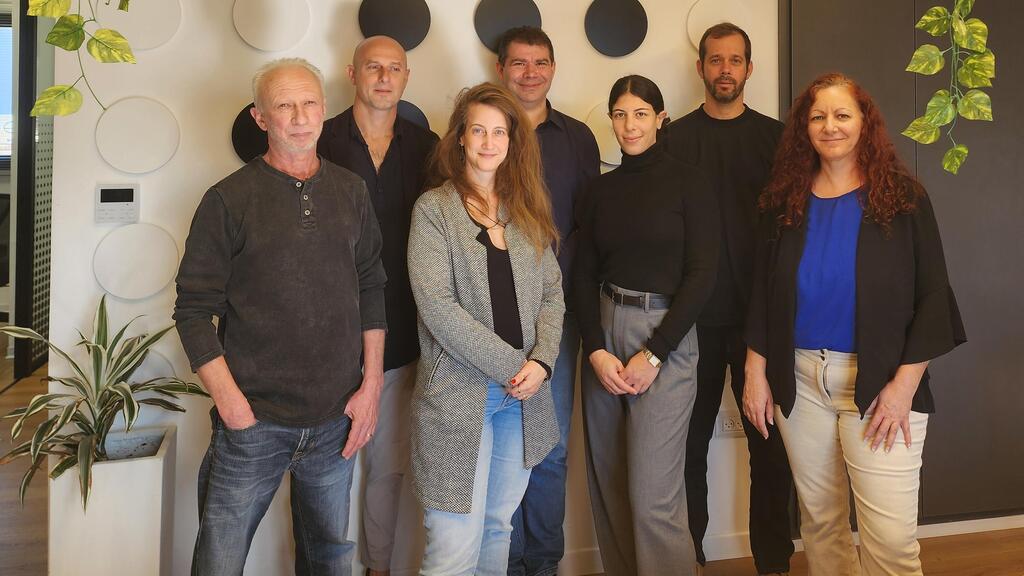
Founded in 2023 by Dr. Hadas Ziso, a repeat founder with 20 years of MedTech experience, and Prof. Moshe Shoham, a robotics pioneer who was behind the $1.6B Mazor Robotics exit, EndoCure has raised $2.7 million to date and is seeking to address the aforementioned gap with Revealan, a proprietary robotic ultrasound platform. The startup is currently moving through clinical studies, including a trial for bladder cancer monitoring at Bnai Zion Medical Center.
Ultimately, Revealan is gearing to shift “ultrasound from a subjective tool to a reliable, scalable platform, opening new possibilities for diagnostics, personalized treatment, and improved outcomes.”
You can learn more about the company below.
Company Name: EndoCure
Sector: Healthcare, AI
Product/Service description:
EndoCure is a medical device startup, building a proprietary robotic ultrasound imaging platform, Revealan, that redefines diagnostic imaging for complex conditions like endometriosis and cancer. Unlike conventional ultrasound, which is highly operator-dependent, Revealan delivers standardized, reproducible 3D imaging with at least 10 times the density of MRI, enabling more accurate and reliable diagnosis.
Chronic conditions like cancer and endometriosis remain difficult to diagnose accurately due to the limitations of current imaging tools. Cancer is the most misdiagnosed of the 'big three' conditions, and 75% of endometriosis patients receive an incorrect diagnosis and are forced to undergo diagnostic surgery. While MRI and PET-CT often miss small findings, ultrasound is highly operator-dependent and inconsistent, leaving a critical gap in the early and reliable diagnosis.
EndoCure’s solution integrates robotic scanning and AI-powered analysis, with two pending patent applications. It’s designed to be compatible with any existing ultrasound machines, avoiding full system replacement, reducing capital barriers, and speeding up market adoption. Regulatory tool claim strategy (510K) is aimed to enable use across multiple indications from day one under existing CPT codes. With these strategies, EndoCure is positioned to quickly scale across multiple high-need indications.
Founder Bios:
Dr. Hadas Ziso (co-founder and CEO) is an innovator in AI-powered robotic ultrasound, and an experienced leader in the research and development of advanced medical robotics, image-guided systems, and therapeutic ultrasound technologies. She is a second-time founder with 20 years of experience in this field. She established the company and fundraised in Israel during wartime, with a strong will to grow Israeli innovation and impact women’s health, worldwide. Across her career, she led multidisciplinary engineering teams and advanced multiple medical technologies from concept through preclinical and clinical stages to FDA clearance.
Prof. Moshe Shoham (co-founder) is a renowned global expert in medical robotics, and a professor emeritus in the faculty of mechanical engineering at the Technion. Prof. Shoham’s research work focuses on kinematics and dynamics of robots and medical robotics. He is a founder and co-founder of several companies in these fields, including the successful Mazor Robotics with a $1.6B exit, Forsight Robotics with over $1B valuation, Microbot Medical and Tamar Robotics, which he founded together with Dr. Ziso. Prof. Shoham is a fellow of IEEE and ASME and an International Member of the US National Academy of Engineering “For contributions to robotic technology for image-guided surgery.”
Year of Founding: 2023
Last Investment Round: $700,000
Last Investment Stage: Pre-Seed
Date of Last Investment: 30/11/2025
Total investment to date: $2,700,000
Investors: Teuza VC fund, founders, HiCenter Ventures (grant), Israel Innovation Authority (grant), IL Investors Forum and US investors
Current number of employees: 7
Open positions: 2
Website: https://endocure.tech
Social Media: https://www.linkedin.com/company/endocure
How was the idea born?
Dr. Ziso decided to make a difference in women’s health about three years ago. She researched unmet needs in this field, and learned about endometriosis, a very difficult chronic condition, affecting one in ten women of reproductive age.
Endometriosis is very difficult to diagnose, as the lesions that cause it are too small to be detected by the existing imaging methods. As a result, the patients are being dismissed, ignored, and forced to undergo laparoscopic diagnostic surgery. Ziso couldn’t accept this reality and came up with the idea of Revealan – a robotic imaging platform that can detect small lesions.
From that original passion for changing women’s health the solution evolved to something much wider, enabling monitoring various conditions in the abdominal and pelvic area. For example, a PI-sponsored study is about to begin in Bnai Zion Medical Center for bladder cancer patients, out of the incentive to replace lifetime bi-annual cystoscopy.
What is the need for the product?
The unmet need that Revealan addresses is the lack of accurate, standardized, and accessible imaging for the early detection and monitoring of complex conditions like endometriosis and cancer. Current imaging methods, MRI, CT, and manual ultrasound, often fail to detect small or deep tumors, are highly operator-dependent, and are either expensive, invasive, or inconsistent. This creates major gaps in diagnosis, delays in treatment, unnecessary surgeries, and poor patient outcomes. Revealan fills this gap by offering automated, operator-agnostic, AI-powered 3D ultrasound imaging with density exceeding MRI, providing consistent, high-quality diagnostic data.
How is it changing the market?
Revealan is changing the market by transforming traditional ultrasound into a scalable, standardized, and intelligent diagnostic tool:
- Automation removes operator variability, making high-quality imaging accessible even in underserved areas or by non-experts.
- AI-powered analysis enables earlier and more accurate detection of subtle findings, reducing misdiagnoses and unnecessary surgeries.
- High-density 3D imaging, at least 10 times denser than MRI, improves diagnostic precision and surgical planning across multiple conditions.
- Cost-effective compared to MRI or CT, allowing broader adoption in clinics, not just hospitals.
- Plug-and-play integration with existing ultrasound systems reduces the barrier to entry for providers.
Together, this shifts ultrasound from a subjective tool to a reliable, scalable platform, opening new possibilities for diagnostics, personalized treatment, and improved outcomes.
How big is the market for the product and who are its main customers?
EndoCure’s Serviceable Obtainable Market (SOM), aiming for just 7% of ultrasound devices at US imaging centers, reaches $1.35B.
Revealan’s main customers include:
- Hospitals’ imaging centers - Especially departments in gynecology, oncology, and radiology that need standardized, high-density imaging for diagnosis and surgical planning.
- Outpatient imaging centers – Standalone facilities offering diagnostic ultrasound services where efficiency, accuracy, and scalability are essential.
- Private clinics – Doctors who specialize in obstetrics and gynecology, fertility specialists, and urologists seeking better tools for diagnosing complex conditions like endometriosis or pelvic cancers.
- Telemedicine and remote diagnostics providers - Interested in operator-agnostic imaging that can be deployed in rural or underserved areas.
Does the product exist already? If not - at what stage is it and when is it expected to hit the market?
The product is up and running in clinical studies, not available yet for commercial use. EndoCure’s open Seed round is dedicated to bringing the product to the market in two years.
Who are the main competitors in this sector and how big are they?
Key competitors include:
- ABUS (GE Healthcare) – Automated Breast Ultrasound System focused on breast cancer detection. Backed by GE, ABUS is a major industry player with a large market presence, but is limited to a single indication.
- Melody (AdEchoTech) – FDA-cleared robotic manipulator for remote ultrasound exams. Melody focuses on tele-ultrasound without 3D or AI capabilities, and are not broadly scaled yet.
- Ropca – Robotic ultrasound for musculoskeletal (MSK) inflammation. Ropca has strong technology but is focused on rheumatology, and expensive robotic arms limit scalability. It is not in the market yet.
What is the added value that the founders bring to the company and the product?
Ziso brings over two decades of experience leading innovation in medical devices. With a strong background in product development, clinical validation, and market access, Hadas has successfully led complex projects from concept through trials to FDA clearance. Her deep understanding of unmet clinical needs, and her connections in the Israeli and US healthcare ecosystems have been critical in shaping EndoCure’s vision and clinical partnerships.
Prof. Shoham is a world-renowned expert in medical robotics and the founder of multiple successful MedTech companies. As a professor at the Technion, his expertise in precision robotics, regulatory strategy, and scalable product design provides EndoCure with a strong technological edge and credibility. His involvement opens doors to top-tier investors and strategic partners, while helping guide product innovation to meet real-world needs.
What will the money coming in from the round be used for?
The money is set to bring EndoCure to FDA clearance and the beginning of commercialization, and therefore includes mostly R&D and clinical activities, along with regulatory, biz dev, and marketing.
In the "Startup Boarding Pass" section, CTech will cover the (relatively) small investments made in companies during the early stages of their existence - and the entrepreneurs and startups who have not yet had the opportunity to reveal their stories to the world. Please use the linked form and fill it out according to the guidelines. This form is intended for startups raising between $500,000 and $3 million from venture capital funds, angels, or official grants from Israeli and foreign institutions. If relevant, someone at CTech will be in touch for follow-up questions.



