










Why is Amazon paying $7.5 billion for a three-year-old Israeli AI startup?
Decart began as a company trying to make AI computing more efficient. It then built a viral virtual world, developed real-time video models and attracted the attention of Nvidia and Anthropic before Amazon emerged as its buyer. The technology behind that unlikely journey may now help Amazon challenge Nvidia.
In the autumn of 2024, a small Israeli startup released a strange experiment. Called Oasis, it looked like Minecraft, but there was no conventional game engine behind it. The world was generated by an AI model as players moved through it. Turn around, walk forward or change direction, and the environment changed with you.
The demonstration spread quickly. Decart said Oasis attracted five million users in its first week. Elon Musk was among those who took notice. For a company that had been founded only a year earlier, it was an extraordinary introduction to the global AI industry.
But Oasis was not really what Decart had been built to do. The company's original business was far less visible: software designed to make artificial intelligence run more efficiently on expensive computing hardware. That business, rather than the virtual world that made it famous, is now at the center of Amazon's agreement to acquire Decart's technology and bring its founders and engineers into the company.
The transaction is reportedly worth $7.5 billion, although Amazon has not disclosed its financial terms. If that is indeed the final figure, Decart will have become one of the most valuable Israeli technology companies in less than three years. It is a remarkable outcome for a startup that has raised more than $450 million and, until recently, was still introducing itself to the wider market through experimental AI products.
The story of how it got there is also a story of a company that was willing to change direction repeatedly, without abandoning the technical problem that had brought its founders together in the first place.
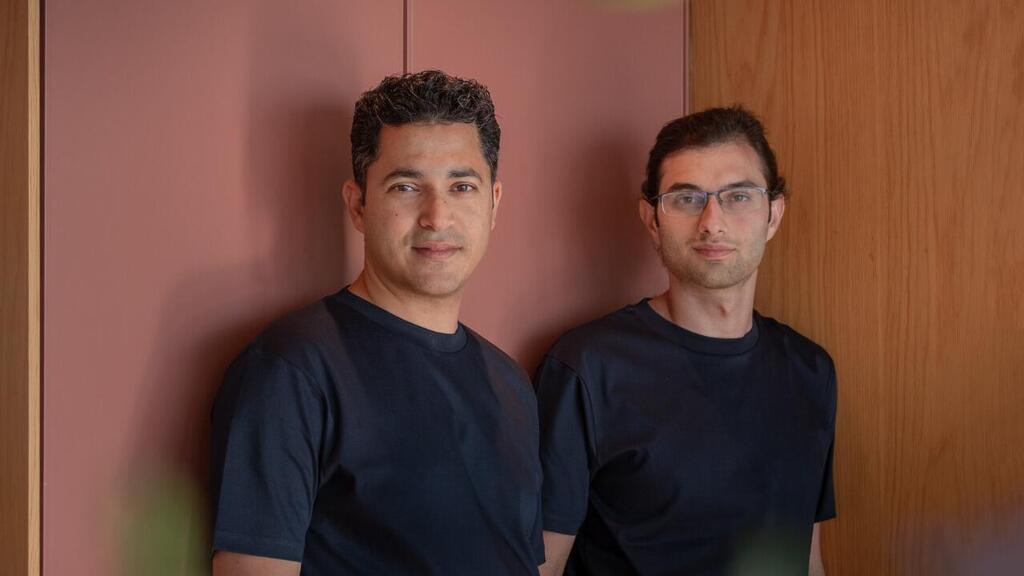
Decart was established in September 2023 by Dean Leitersdorf and Moshe Shalev, who met while serving in the IDF's Unit 8200. Leitersdorf, a computer scientist who completed his doctorate at 23, had a strong academic and technical background. Shalev had spent 13 years in the intelligence unit. Orian Leitersdorf later joined the founding team.
Their initial focus was GPU optimization. As companies began spending heavily on training and running AI models, the founders saw an opportunity in improving how those models used computing resources. The idea was straightforward, even if the engineering was not: rather than relying only on faster and more powerful processors, make better use of the hardware already available.
It was not an obvious route to public attention, but it gave Decart a way to generate revenue early. The company licensed its technology to cloud providers and other customers, building a commercial business alongside its research. By December 2023, it had already attracted a multimillion-dollar customer for its GPU optimization technology.
That early traction helped it raise a $21 million Seed round in October 2024, led by Sequoia Capital, with participation from investor Oren Zeev. Benchmark led a further $32 million investment the following month, at a valuation of more than $500 million. For a company barely a year old, those were substantial commitments. Investors were backing both the founders and the possibility that optimization would become a critical part of the AI industry.
Oasis gave them something else: visibility.
The product was an early demonstration of what generative AI could do beyond producing text, images or short videos. Instead of rendering a finished scene, the model generated an interactive environment in real time, responding to the player's movements. Decart said it could generate video for around 25 cents an hour, compared with costs that could reach approximately $100 an hour for competing approaches.
The economics were part of the point. Oasis was not just a flashy demonstration; it showed how much could be achieved when the underlying computing process was optimized. The product helped Decart reach millions of people, but it also served as a showcase for the technology the company had been developing from the beginning.
The founders did not, however, turn Decart into a gaming company. They moved on.
From virtual worlds to real-time video
In July 2025, Decart introduced Mirage, a system for transforming live video. It could change the appearance and style of a video stream while preserving movement and visual continuity. The ambition was to make video generation and editing happen as footage was being captured, rather than after the fact.
The company said Mirage could operate at 20 frames per second, with processing delay of approximately 100 milliseconds. That opened up potential uses in live streaming, gaming and interactive video, where a delay of several seconds would make the experience impractical.
The next funding round came in August 2025. Decart raised $100 million at a valuation of $3.1 billion, bringing its total funding at the time to $153 million. The round included existing backers Sequoia, Benchmark and Zeev Ventures, as well as new investors including Aleph.
The numbers were striking, but so was the company's claim that it had spent less than $10 million of the $153 million it had raised. Revenue from GPU acceleration and video licensing was helping pay for computing, a major expense for AI companies. Decart was trying to avoid the familiar pattern of raising enormous sums simply to finance the cost of running its own technology.
Its products continued to develop. Lucy focused on real-time video editing, allowing users to change people, objects and environments while footage was being filmed. Oasis, meanwhile, moved beyond its original game-like format. In June 2026, Decart introduced Oasis 3, an interactive world model designed to generate simulated environments, including driving scenarios that could be used in the development and testing of autonomous vehicles and other physical AI systems.
The products were different, but they all relied on the same underlying capabilities: generating complex visual environments, processing information quickly and keeping the computing costs manageable.
By May 2026, Decart had raised another $300 million at an estimated valuation of $4 billion. Radical Ventures led the round, which included Nvidia, eBay Ventures, Adobe Ventures, Toyota Ventures and Atreides Management, alongside existing investors Sequoia, Zeev Ventures and Benchmark. Total funding had passed $450 million.
The presence of Nvidia was particularly notable. The chipmaker was not simply an investor in an AI startup producing another model. Decart was developing technology that could help customers get more out of the very hardware Nvidia sells, while also working with competing chip platforms.
Why Amazon wanted the technology
Amazon's interest makes more sense when viewed against its effort to build a serious alternative to Nvidia in AI computing.
The company has invested heavily in its own processors, particularly Trainium, which is designed to train and run AI models at lower cost. But developing a chip is only part of the challenge. Customers also need software that can use it efficiently, and they need to see a meaningful performance or cost advantage before moving workloads away from established platforms.
Decart had been working with Amazon since 2025, helping optimize the performance of Trainium. Its software is designed to improve how AI workloads interact with hardware, reducing wasted computing capacity and helping models run faster and more cheaply. It can work across different platforms, including Nvidia GPUs, Google's TPUs and Amazon's own processors.
That flexibility is important to cloud providers trying to offer customers alternatives to Nvidia. It also helps explain why Amazon is interested in the people behind the technology, not just in a finished product.
In its announcement, Amazon said it had agreed to acquire the proprietary technology behind Decart's Optimization Stack, known as DOS, and bring the company's founders and AI researchers and engineers into Amazon. Peter DeSantis, Amazon's senior vice president overseeing foundational AI models, custom silicon and quantum computing, said: "Every leap forward in AI starts with getting more out of every chip."
The acquisition gives Amazon a team that has worked across hardware optimization, model development and real-time applications. That combination could be useful well beyond a single product. As AI companies spend more on data centers and processors, improvements in how those resources are used can have an impact across a much larger business.
It also helps explain the reported price. Amazon is not paying $7.5 billion for a game that went viral or for a video-editing application. It is seeking technology and engineering talent that could help strengthen its own AI infrastructure business.
Amazon was not the first major company to pursue Decart. Nvidia had previously shown interest in acquiring the startup, but those discussions did not lead to an agreement. Anthropic later entered advanced negotiations for a deal reportedly worth around $6 billion. The two sides exchanged draft agreements and Anthropic was reported to have largely completed due diligence, but the talks fell apart in early September.
Decart then tried to revive discussions with Nvidia, which declined to reopen negotiations. Amazon eventually emerged as the buyer.
The founders have agreed to remain at Amazon for five years, with a significant portion of the reported consideration deferred until later in that period. The arrangement is designed to keep the people who built the technology involved in its development and integration.
The deal is a remarkable conclusion to a short and unusually eventful journey for Decart. Its founders initially set out to build a major independent AI company. Along the way, they created one of the industry's most widely seen demonstrations of interactive generative AI, developed a series of video and world models, and attracted investment from some of the most influential names in technology.
They will now pursue that ambition inside Amazon. The company that began by trying to make AI computing more efficient may end up helping one of the world's largest technology groups compete in the next phase of the AI race.



