










Amazon emerges as potential buyer of Israeli AI startup Decart at $7 billion
The reported deal follows the collapse of Decart’s proposed acquisition by Anthropic, which withdrew after due diligence. Amazon is already a strategic customer and has given the startup early access to its Trainium chips, making the potential acquisition a way to deepen its push to compete with Nvidia in AI infrastructure.
Amazon is in talks to acquire Israeli-founded artificial intelligence startup Decart for approximately $7 billion, The Wall Street Journal reported Sunday, citing people familiar with the matter. The deal could be signed soon, although the negotiations could still fall apart.
The reported talks mark a new turn in Decart’s search for a buyer. Nvidia initially pursued an acquisition, before Anthropic emerged as the preferred bidder in August. But Anthropic abandoned the deal in September after conducting due diligence, leaving Decart looking for another potential acquirer.
Amazon could now be positioned to take over where Anthropic left off. The two companies already have a business relationship, with Amazon Web Services (AWS) serving as a strategic customer. CTech reported in May that Amazon had joined Decart’s customer base as the startup expanded its AI infrastructure business. The Journal reported that AWS gave Decart early access to Amazon’s Trainium3 AI chip in 2025, after being impressed by the startup’s founders.
1 View gallery

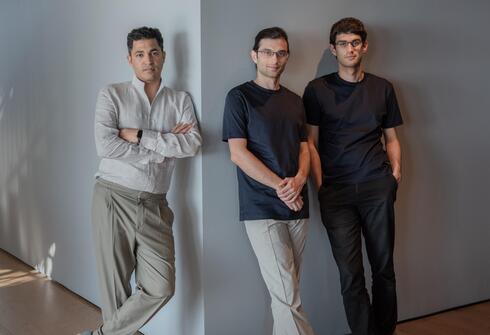
Decart founders Orian Leitersdorf (from right), Dean Leitersdorf and Moshe Shalev.
(Amit Elkayam)
Founded in 2023 by brothers Dean and Orian Leitersdorf and Moshe Shalev, Decart develops technology designed to make AI models run more efficiently and switch more easily between chips from different manufacturers. Its software could help companies extract more computing power from existing hardware, a potentially valuable capability as the AI industry faces soaring infrastructure costs and seeks alternatives to Nvidia’s dominant position in AI accelerators.
Decart is also developing AI systems capable of generating interactive environments and video in real time. Its products include Lucy, which can edit video in real time, and Oasis, a model that generates simulated environments. The company first attracted international attention with Oasis, a game that creates video as users interact with it.
Decart’s technology could help Amazon strengthen its efforts to compete in AI infrastructure. The company has been developing its own Trainium chips as an alternative to Nvidia hardware, and software that helps customers run models efficiently across different processors could make its cloud platform more attractive. An acquisition would also give Amazon direct control of technology that has already been tested in its own computing ecosystem.
Decart’s ability to work across different chips is particularly relevant as large technology companies seek to reduce their dependence on Nvidia, whose processors have become central to the AI boom. The challenge is not simply obtaining chips, but using expensive computing resources as efficiently as possible. Decart’s technology is aimed at that problem, although the scale of its commercial business remains far smaller than the valuation being discussed for a potential sale.
The reported $7 billion price would represent a substantial premium to Decart’s most recent publicly disclosed valuation. In May, the company raised $300 million at a valuation of approximately $4 billion, in a round led by Radical Ventures that also included Nvidia. Decart has raised approximately $450 million in total.
The sale process has been unusually fluid. In August, it was reported that Nvidia had been close to acquiring Decart before a competing offer emerged. Anthropic then entered advanced negotiations, with the transaction expected to value Decart at around $6 billion to $7 billion. The deal ultimately collapsed after Anthropic completed due diligence. The reasons for its decision were not publicly established.
The failure of the Anthropic deal did not eliminate interest in Decart’s underlying technology, but it left the startup facing renewed uncertainty over its future as an independent company. A potential acquisition by Amazon would put the technology inside a major cloud and chip developer, rather than a company whose core business is building AI models.
For Amazon, a transaction of approximately $7 billion would rank among its largest acquisitions in recent years. It bought film and television studio MGM for about $6.5 billion in 2022 and announced an approximately $11 billion deal for satellite company Globalstar this year. The Globalstar transaction was intended to help Amazon build out its satellite business and compete with SpaceX’s Starlink.
Neither Amazon nor Decart has publicly confirmed an agreement.



