











Growth+
“Once you distill the real goal, you can reverse-engineer the path that will lead there”
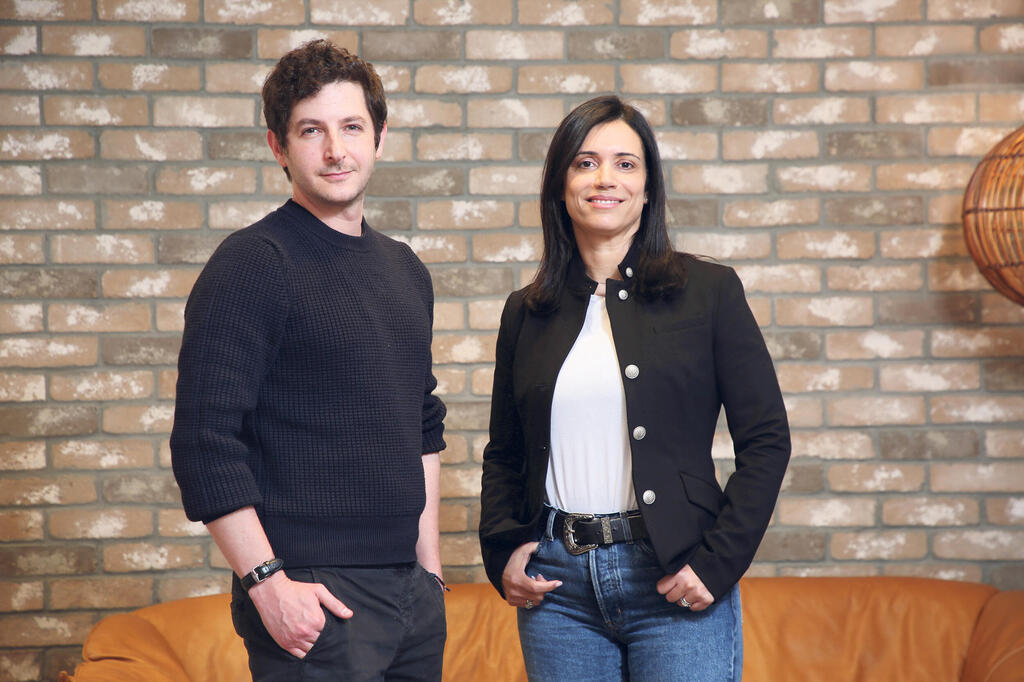
As part of the Growth+ project by Calcalist and Poalim Tech, Yali Saar of Tailor Brands met with Keren Yakolev Zur, founder of Dappas, who said: “I think the biggest challenge, in a positive sense, was building the team, finding the right people and building an organizational culture.”
“The common mistake is to think that Israeli high-tech is in waiting mode. The data from the Growth+ project tells a different story,” said Michal Hertzog Kissos, CEO of Poalim Tech, which accompanies the Growth+ project by Calcalist and Poalim Tech, now in its third year. The project consists of 1:1 meetings between the founders of leading tech companies in Israel and entrepreneurs of promising startups, with the goal of advising, supporting, and providing tools, knowledge, and practical guidance on entrepreneurship, creativity, startup management, and building companies for growth.
“This industry is not waiting for calm to return, simply because it does not have the privilege of stopping,” Hertzog Kissos said. “Companies continue to build, recruit, and sell amid the noise of war, market fluctuations, and the changes AI is driving.”
“What we see up close is not just continuity, but refinement. It is not that there are ever sterile conditions in Israel, but even compared to the usual uncertainty here, this period raises the bar. Companies that are learning to grow now are usually more focused and resilient. Our role is not only to provide liquidity, but to enable movement even in a crisis. And in the end, those who continue to build when the market is difficult are the ones who will shape the economy of the next decade.”
As part of Growth+, Yali Saar, co-founder and CEO of Tailor Brands, met with Keren Yakolev Zur, CEO and founder of Dappas, which develops an end-to-end packaging solution for small businesses.
Yali, tell us about a crisis or challenge you encountered early on and what you learned from it.
“Less than a year after we started Tailor Brands, we received our first acquisition offer. It was one of our first major crises, because suddenly three founders were sitting in front of a large sum of money and had to ask themselves whether to accept it or not, and, as expected, there were different opinions. When we founded the company, the idea was simply to ‘build the biggest thing there is.’ But that sentence, as beautiful as it sounds in theory, means different things to different people. It taught me a lesson I now repeat to every entrepreneur starting out: What do you really want to do with the business? What will be the best-case scenario for you in a year or two? Forget what you need to say to the world or in a newspaper interview. Once you distill the real goal, you can reverse-engineer the path that will lead there. If you get that right, it becomes the most important playbook for building the business going forward.”
Keren, what was your biggest challenge this year?
“This is the year Dappas really took off, so we went from zero to a thousand. We went from an idea to a working product. I think the biggest challenge, in a positive sense, was building the team, finding the right people and building an organizational culture. It was important to me that we create a company that is truly enjoyable to come to work at in the morning. We built a team that I am very proud of.”
Yali, what advice did you give to Keren?
“They are building an amazing product, but the challenge at their stage is to start breaking down the business fundamentals. You have to get into Excel, which is often less fun, and understand how much it costs to acquire a customer, how much you earn from them, and how to expand that gap in order to take this great technology and bring it to more and more people.”
What did you learn from each other?
Keren: “The most important advice I take with me is to define the goal and refine it. We sat down and broke down the market penetration strategy. In addition, because I come from the corporate world, my instinct is sometimes that working with large companies requires further scale. Yali changed my perspective when he said that large companies like Tailor Brands are often very open to working with early-stage startups that have not yet proven themselves, as long as they believe in the people and the technology.”
Yali: “This is the second time we’ve met. We met previously when Keren was in her former role and we came to present some of our technologies. It was inspiring to see Keren’s genuine passion for what she is building. This solution really runs through her veins. It reminded me how critical that early-stage passion is in the entrepreneurial journey.”



