










Opinion
Coding is only 20% of the effort: The revolution transforming Israeli tech
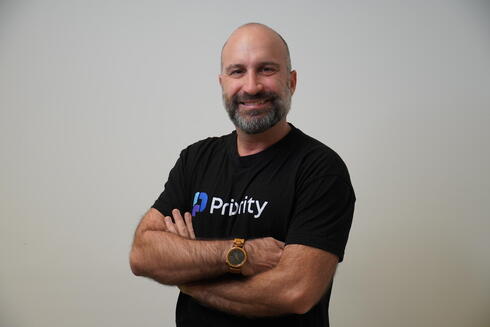
Saffi Keisari, VP of R&D (Chief of Engineering) at Priority Software, argues that in the age of AI, planning has become the most critical factor in the world of development.
In an era where Artificial Intelligence writes code faster than any human programmer, it’s time to shatter an old myth: the keyboard is no longer the most important tool in a developer's arsenal. At Priority, we already have departments that haven't written a single line of manual code in over six months and this is just the beginning.
Imagine you are building a skyscraper. The code represents the bricks. But what determines whether the building will stand the test of time is the engineering: the foundations, the skeleton, and the ability to withstand loads, vibrations, and wear. No one would dream of starting a skyscraper without a precise blueprint. Yet, in the software world, that is exactly what happened for years.

In the modern software landscape, we invest more in infrastructure planning, functional and load testing, and precise architectural design. Only when everything is perfect do the "cranes" go to work. This is the fundamental shift currently sweeping through the R&D world.
Code as a Commodity
If we once measured developers by "lines of code," we now realize that the code itself accounts for only 20% of the effort. AI has turned writing syntax into a basic commodity. The real revolution isn't in how to write, but in what to build and how to ensure it thrives in Production.
As code becomes cheap and fast, planning errors become significantly more expensive. A flawed architectural decision, a lack of scalability, or overlooking security can cost a fortune once the system is live.
The transition to an Open Spec (Open and Comprehensive Specification) methodology is a cornerstone of this revolution. This isn’t just another requirements document; it’s a methodology where the developer evolves into a Systems Architect. We spend the bulk of our time on logic, architecture, and the orchestration between systems.
When the planning is meticulous, AI becomes the "executing hands." But make no mistake: this isn't a simple "chat" like you’d have with ChatGPT. If you treat it as a mere Q&A, you’re missing the true potential. This is an engineering discipline that requires a deep understanding of customer and user needs. When the specification is precise, the coding phase becomes short, efficient, and resilient to errors.
The great challenge of software development in 2026 isn't making code run on a developer’s local machine; it’s ensuring it survives in the real world. Consequently, a massive portion of investment has shifted to the "Post-Code" phase: how the system performs in Production. This includes security, scalability, stability, resilience, and monitoring. These are no longer "final steps" but integral parts of the initial design. Those who fail to think ahead will pay the price later.
In the past, automation testing was a "luxury" often sacrificed due to time constraints. Today, in the AI era, building a hermetic testing suite is non-negotiable. It is easier and faster than ever to generate automated tests using AI, and anyone who doesn't invest in this upfront is simply gambling with their product quality.
The Courage to Discard the Old
One of the industry’s biggest bottlenecks is "Legacy Code" (those old), cumbersome systems that everyone is afraid to touch. The current revolution offers a golden opportunity: instead of patching layers upon layers, the speed of AI allows us to be bold. Sometimes, the most professional and economical move is to simply "trash" old code segments and let AI rewrite them from scratch based on a healthy, modern architecture.
We are witnessing the birth of the "System Engineer." They no longer sit isolated in front of a dark screen typing commands; they are strategists. They understand the business impact of every function, they integrate security from the characterization stage, and they know how to orchestrate AI tools to achieve a perfect result.
The bottom line for managers and entrepreneurs is clear: Don’t be impressed by the speed of coding; be impressed by the quality of planning. The more time we invest in the "Why" and the "How," the faster, cheaper, and more secure the execution will be. In the age of AI, the winners won't be those who write the fastest, but those who plan the best.
The author Saffi Keisari is the VP of R&D (Chief of Engineering) at Priority Software.



