








Prof. Ran Balicer: "We prevent diseases using AI"
The Chief Innovation Officer & Deputy-DG at Clalit Health Services spoke about next-generation medicine at Calcalist's Tech TLV conference held in collaboration with Leumi: "Today we can identify from CT scans who has a high risk of fracture due to bone loss. A radiologist looking at the scan may not necessarily see this, but the AI can."
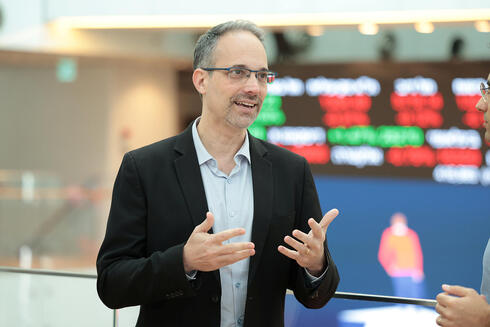
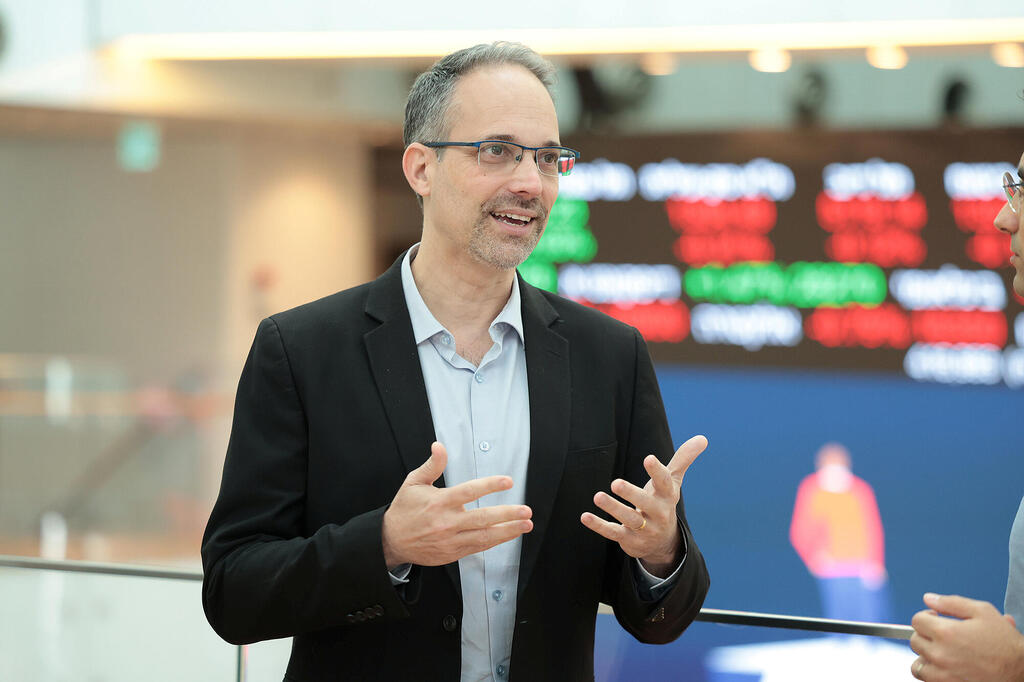
"We have been working behind the scenes for 15 years to take the vast databases we have at Clalit and use them for smarter, more advanced, and personalized medicine," said Prof. Ran Balicer, Chief Innovation Officer & Deputy-DG at Clalit Health Services, about next-generation medicine using artificial intelligence. Prof. Balicer spoke with Maor Shalom Swisa of Calcalist as part of Calcalist’s Tech TLV conference held in collaboration with Leumi.
According to Balicer, “It is very important for us to identify patients with certain diseases before they feel they have a problem, because by then it is often too late. We want to reach them early and provide preventive and proactive medicine. The problem is that we don’t always know when to intervene, but with the help of data and AI working behind the scenes, we are able to do it.”
How and for which diseases?
“We use the newest and most advanced technologies that the world of analytics and AI has to offer, and we have been doing this for 15 years, long before most of the world, and that gives us a major advantage. Take hepatitis C, for example. It can sit quietly in the bloodstream without noticeable symptoms, yet over time it can cause serious conditions such as cirrhosis and cancer. We know how to cure it once we detect it, but for more than half of the patients we don’t even know they are affected. Until a few years ago, we would screen 50,000 people annually and find only 38 positive cases, treat them, and save lives. But there were so many more we were missing.
“So we said we must do it better. We developed AI in our Clalit labs and put it into practice. Instead of identifying one patient in a thousand, we now identify one in ten, 38 people out of every 500. In other words, we have improved our efficiency a hundredfold in locating patients and providing treatment. We are preventing cancer and cirrhosis, and we are doing this across a long list of diseases. This is what we call next-generation medicine, predictive, preventive, and proactive medicine.”
You have data on five million people in total. How do you manage to hit the target? If I was involved in an accident and had a scan that was saved, can you draw conclusions about completely different things from it?
“Unequivocally. Today we can identify from CT scans who has a high risk of fracture due to bone loss. A radiologist looking at the scan may not necessarily see this, but the AI can, sometimes even from scans performed for entirely different reasons. All of this flows into a single system called AI Pro. It sits on the desk of every general practitioner, nurse, and clinical pharmacist, and injects insights into daily clinical activity. The doctor reviews the system’s recommendations, which are based on information from all available tests and sources, and decides on the appropriate treatment. A text message is then sent to the patient explaining that the doctor consulted with the AI system and made a recommendation. There is no other system like this in the world, it is not limited to one specific field but spans all areas of medicine, enabling doctors to deliver the most up-to-date care. For example, if a patient is taking diabetes medication and a blood test two weeks ago showed a change in kidney function, the system will recommend switching to a different diabetes drug. It operates autonomously and is deployed across general practice. No other organization in the world knows how to develop such a system, implement it at scale, and continuously evaluate it.”
How many such diseases can you identify today?
“Almost all the major conditions encountered in routine medicine: cardiovascular and cerebrovascular diseases, diabetes, hypertension, blood lipid disorders, infectious diseases, and osteoporosis. All of this is already in the system, and mental health is now being added as well. In January alone, we generated 100,000 AI-based recommendations at Clalit, each of which was reviewed by a physician who decided whether to accept it.”
What awaits us in the future in terms of proactive disease identification using artificial intelligence?
“Today we are introducing the ability to make predictions from new types of information. We talked about imaging, but people are now undergoing various genetic and molecular tests. In my view, there is no one else in Israel who knows how to take genomic insights and integrate them into routine medicine. When people choose to undergo genomic testing and the information is available to us, we can identify, for example, that a specific patient needs a lipid-lowering drug at a different dose than someone else. This is not theoretical genetic counseling, these insights flow directly into family medicine and everyday clinical practice. We give our doctors proactive time in which they can identify future diseases in their patients and call them in advance to prevent them. This is the medicine of the future: more economical, far less painful, and ultimately focused on achieving healthier lives for our patients.”



