










Jerusalem blocks major housing plan over Beitar Jerusalem’s training grounds
The municipality is opposing a 194-dunam development that would include 1,650 apartments in five high-rise towers, arguing that the proposed replacement facilities would leave the club unable to operate effectively. The ILA is now exploring alternatives, including a soccer field above Highway 16.
The Jerusalem Municipality is opposing a major construction project at Beitar Jerusalem’s training complex in Bayit VeGan, challenging a plan by the Israel Land Authority (ILA) that would transform a 194-dunam site into a large residential and commercial development.
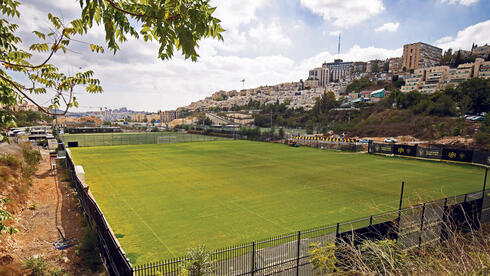
Known as “Emek Zion,” the project would include 1,650 residential units across four 50-story towers and one additional 40-story tower. Around 30 dunams of the site are currently occupied by three soccer fields used by Beitar Jerusalem’s various divisions, serving thousands of players.
Under the ILA’s proposal, Beitar would be left with just two soccer fields, located half a kilometer apart. One would be built on the roof of a commercial center and would not meet the standards required for official matches.
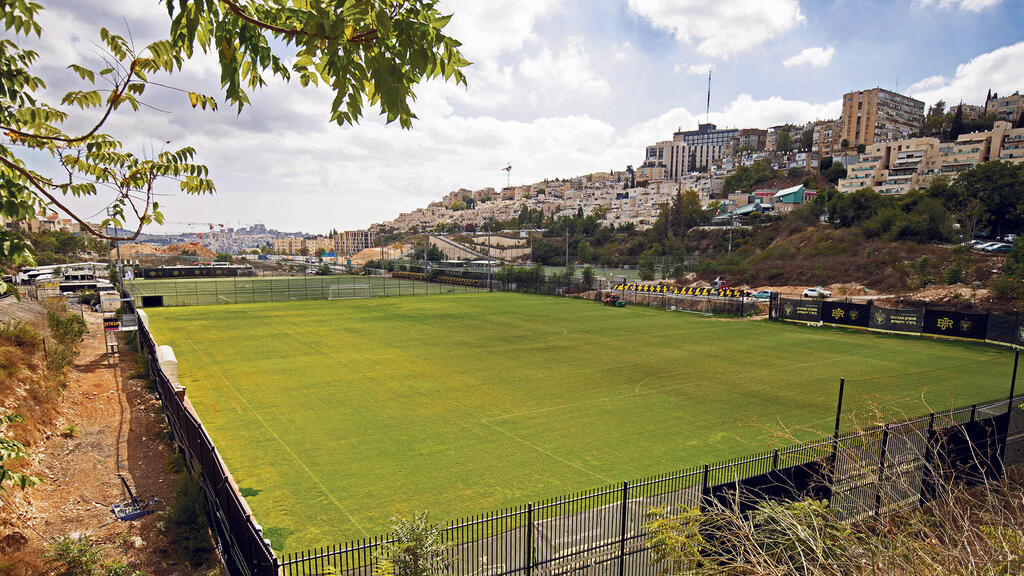
The municipality argues that such an arrangement would make it impossible for a club of Beitar’s size to operate effectively. Separating the facilities would disrupt the continuity of coaching, require duplicate equipment and separate gyms, and prevent the club’s different teams from holding joint activities.
The ILA has been advancing the plan for an extended period, with documents submitted to the Jerusalem District Planning and Building Committee for review in January. However, it was only last Thursday that the authority presented its proposed solution for the plots to the municipality. Representatives of the municipality’s Planning and Infrastructure Administration and Sports Department attended the meeting.
Following the meeting, the municipality decided to oppose the plan and work to block its approval. The District Planning and Building Committee had been scheduled to discuss the formal deposit of the plan, a key step toward final approval, today, but the discussion was canceled at the municipality’s request.
ILA seeks alternatives
The municipality is insisting that at least two plots remain connected to accommodate the club’s needs, including space for a gym and locker rooms. Finding a sufficiently large site for the club is complicated by Jerusalem’s mountainous terrain. At the municipality’s request, however, the ILA is exploring alternative solutions.
One proposal under consideration would extend the covering over Highway 16, which runs alongside the project site, creating a surface that could accommodate a soccer field. Another option, examined previously, involves identifying a suitable reserve of land elsewhere in the city.
The 194-dunam development site lies south of Shaare Zedek Medical Center and Shakhrai Street, north of Begin Road, west of Shmuel (Hans) Beyth Street and Highway 16, and east of the Machon Lev and Shalva institutions. Ownership is divided among private individuals, companies and state entities, including the ILA, the Jewish National Fund (JNF/KKL) and the Development Authority.
Beyond the five residential towers, the plan includes approximately 100,000 square meters of office and employment space and 13,000 square meters of commercial space.
The project is considered important to Jerusalem’s development because it would connect neighborhoods, sit near two light rail lines and reserve 19 dunams for the expansion of Shaare Zedek Medical Center. That expansion is expected to be funded through a $200 million donation made in May by WhatsApp founder Jan Koum.
The plan would also enable an expansion of the Shalva organization’s campus, which promotes the inclusion of people with disabilities. The expansion is intended to facilitate the establishment of a national emergency center for the rehabilitation of the injured, operating in coordination with Shaare Zedek Medical Center.
Jerusalem Mayor Moshe Lion told Calcalist: “While the development of Jerusalem is welcome and important, it must never come at the expense of a training complex used by children and youth from across the city. Such a move could jeopardize the future of a storied sports club and a true Jerusalem icon—Beitar Jerusalem. We will not allow harm to come to thousands of children, teenagers, and athletes. We call upon the Israel Land Authority (ILA) to present a suitable alternative and a professional, genuine solution for the training grounds, ensuring the club can continue its operations.”
The ILA stated: “The Emek Zion plan, which is being advanced in collaboration with the Jerusalem Municipality, constitutes an essential component of the Innovation District.” The authority said the project combines urban development with provision for citywide needs, including the expansion of Shaare Zedek Medical Center and the Shalva Center. It added that it is working with the municipality to identify alternative sites for Beitar’s training grounds.
Years of legal battles
Beitar Jerusalem’s training grounds in Bayit VeGan have been at the center of a long-running legal and business dispute over the possibility of rezoning the land for residential construction, which could have generated hundreds of millions of shekels.
In 1999, amid financial difficulties, Beitar sold its rights to the grounds to a company called Neot Bayit VaGan for $6.5 million, equivalent to approximately NIS 27 million at the time. The company’s shareholders were Meir Fenigel, brothers Meir and Sasson Levy, and Sasson Shem Tov.
In 2005, Arcadi Gaydamak, who owned Beitar at the time, attempted to acquire the training complex as well. The deal ultimately fell through because of opposition from the ILA to residential construction on the site.
For years, the authority opposed the transfer of rights to the grounds to Neot Beit VaGan. In 2019, however, an agreement was reached to formalize the leasehold, subject to payments to the ILA. Beitar, then owned by Moshe Hogeg, continued to use the complex for training.
A subsequent business battle centered on the acquisition of Neot Beit VaGan itself. In January 2022, Hadas Capital, controlled by Hillel Zuravin and Asher Sebbag, acquired the company for approximately NIS 120 million, according to media reports.



