








The Israeli entrepreneur who built a university for 271,000 students around the world
Shai Reshef has turned two education exits into a radically inexpensive online university serving students in 216 countries and territories, from refugees to Afghan women studying in secret.
"I saw that by educating someone, you can change their life, and I thought: 'What’s needed is to change the world.'"
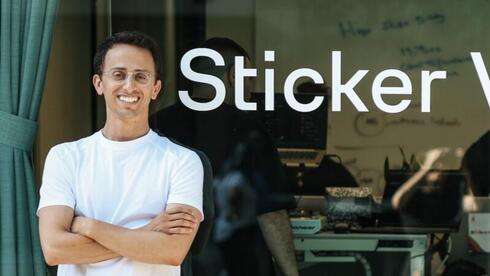
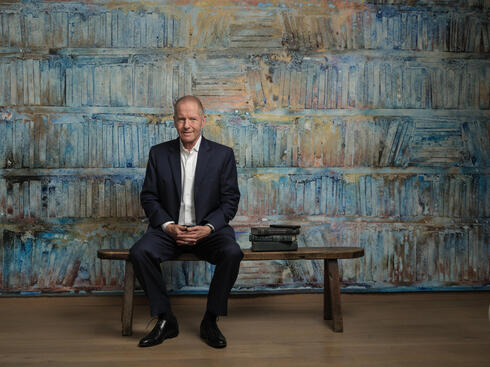
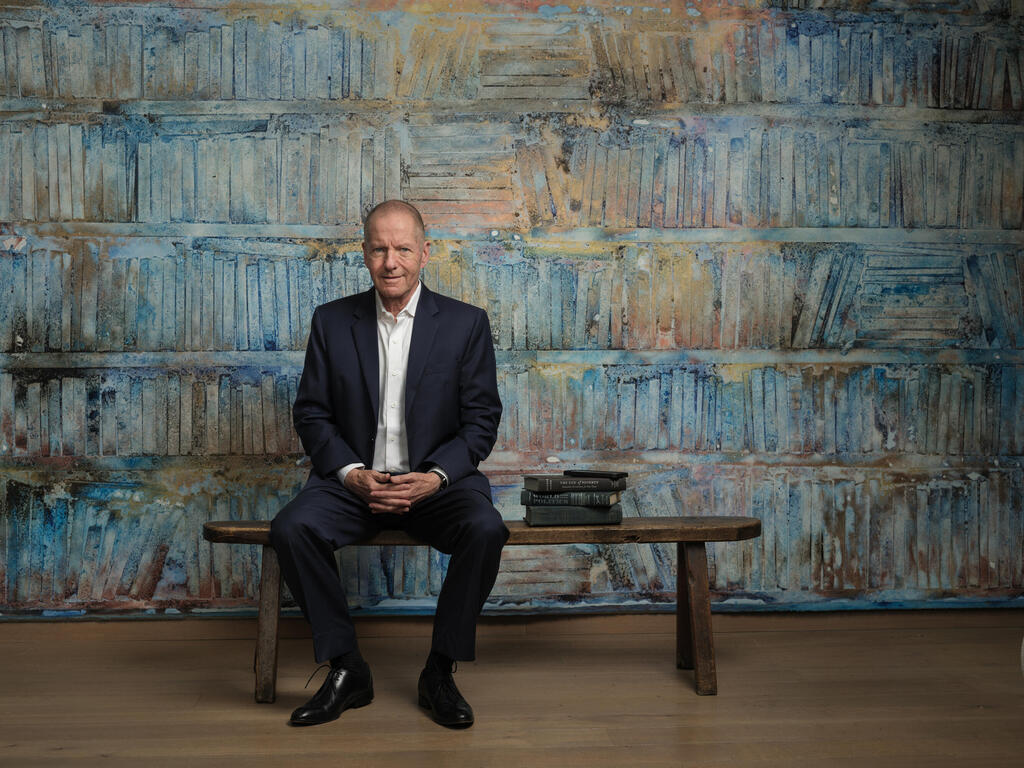
When many people speak in grand terms, their gaze tends to drift dreamily toward the horizon, as if underscoring the weight of the challenge and the burden on their shoulders. With Shai Reshef, however, his eyes actually light up with a spark of playfulness and delight as his words grow bolder, and he looks as though he is about to spring from his chair. Reshef makes sweeping statements, such as "No one in the world should be left without higher education simply because they cannot afford it due to economic, geographic, or political circumstances." Yet in his mouth, these do not sound like mere slogans or impossible tasks. They sound like something fun to do. Changing the world, for Reshef, appears to be a source of genuine joy.
In 2009, following two successful exits in the education sector, Reshef founded the University of the People. He was born, raised, served in the military, studied, and worked in Israel, yet he is truly a global citizen. In a country that is increasingly turning inward, Reshef offers something entirely different. In a world that often looks away from its most vulnerable, he throws them lifelines that are digital, accessible, and potentially life-changing.
Last week, the University of the People, an American academic institution where all studies take place online, began the academic year with approximately 271,000 students from 216 countries and territories worldwide, making it the largest university in the United States by enrollment. "And our goal is one million students. The demand is even greater."
According to UNESCO, there are currently around 270 million university students worldwide, meaning that roughly one in every thousand students globally is studying with Reshef. Developed nations are grappling with a higher education crisis, characterized by stagnant or declining student numbers due to factors including cost, falling birth rates, the rise of AI, and political instability. The United States has "lost" more than 1.5 million students since 2010, while Western Europe is also seeing enrollment declines, with many institutions facing financial difficulties.
Conversely, the developing world is experiencing a surge in the number of young people eager to pursue higher education, yet there is a severe shortage of available places. In Sub-Saharan Africa, home to the world's fastest-growing youth population, which has expanded by more than 60% over the last decade, fewer than 10% of young people attend university. By comparison, 80% of young people in North America and Western Europe are university students, while the global average stands at 43%, according to UNESCO.
UoPeople, as the University of the People is commonly known, operates in this space, seeking to address both crises. It is accessible to Americans and Europeans who cannot attend traditional universities because of cost or admission requirements, as well as to Africans and others who have nowhere else to study.
UoPeople offers degree programs at very low cost, or even for free to those unable to pay. The instruction itself is free; students pay only for assessments and other fees. Exams for a single course cost around $180, while a full degree costs approximately $7,200. Even then, only about a third of students pay the full amount, with the rest receiving scholarships. For comparison, an academic year for a bachelor's degree at an Israeli university costs about NIS 12,000, while in the United States, the cost can range from $11,000 to $100,000.
Those costs attract students from remarkably diverse backgrounds. Around 15% are American. Forty thousand come from Arab countries, including 15,000 Syrians. Nearly a quarter, or about 50,000 students, are refugees or displaced persons. About a third are African, including 80,000 from Nigeria. There are also more than 7,000 Afghan women studying in secret. Students come from Yemen and the Rohingya community in Myanmar, as well as from Ukraine and South America. There are even students from Gaza.
"Last year we had 130 students there; this year, the number has doubled. We currently have eight lecturers in the Strip. We had more, but four left for Egypt and four disappeared, two were killed, according to their families, and we do not know the fate of the other two."
How do students find you?
"In many places, it’s by word of mouth, and we work with local organizations, including in Gaza, to reach more students. We target areas where we are needed. We’ve done this in Syria during the civil war, in Afghanistan, Yemen, among the Rohingya people who were being massacred, in Venezuela, and in Gaza as well. Wherever we are needed, we are there."
Students from Gaza study in Arabic, as do some 20,000 other students, while the rest study in English. The university offers degrees in business administration, computer science, and health sciences, as well as professional certification courses in partnership with IBM and a limited number of electives in other fields.
Teaching computer science to students from vastly different backgrounds is relatively straightforward, Reshef says, but gaps sometimes emerge in elective courses.
"There is no politics in my classroom, and no political dialogue. The texts are neutral and identical worldwide. However, we do face challenges in subjects like art or history. Everyone is required to take general education courses, and a history course is mandatory. Yet there is no such thing as objective history. How do you teach history to students from over 200 countries? Our solution was to avoid the issue altogether and teach art history instead. That created its own problems, too, but we are trying."
3 View gallery
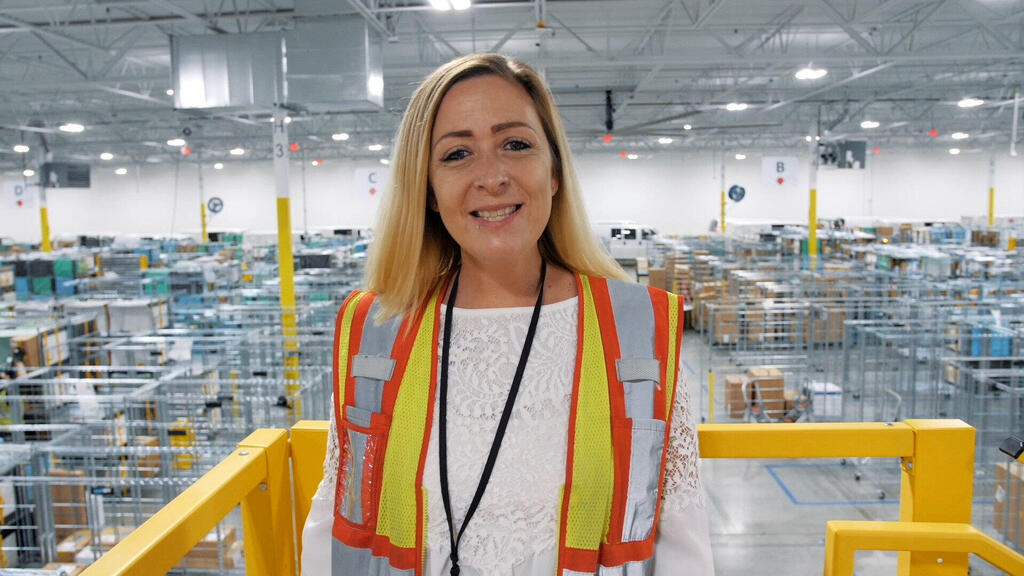
Sarah, an American who grew up in poverty, studied at UoPeople and landed a job at Amazon;
Beyond these fundamental issues, how is it even possible to teach so many people all over the world?
"We are efficient and focused. Few degree programs, lots of technology, we use technology for everything. The courses are asynchronous, and the material is available both as lectures and as text-only readings. We have no offices; we work from locations all over the world", the university’s technology development center, for instance, is based in Rawabi, near Ramallah, "and we rely on volunteers."
The university has more than 2,000 lecturers. All are volunteers, although they receive $5 an hour to cover expenses, a respectable sum for lecturers living in developing countries. The rector, dean, board members, and Reshef himself also serve on a voluntary basis.
All of this allows the university to operate on relatively little money. Last year, with 170,000 students, its budget was $25 million.
"It’s a joke," says Reshef.
About a third of that budget came from donations, including from organizations and companies such as the Gates Foundation, Coca-Cola, Intel, HP, SAP, and Pfizer.
And how do you ensure that students in difficult regions or war zones have the opportunity to study and access basic infrastructure?
"To study with us, you need the internet. If you don't have the internet, you can't study, but it turns out there is internet access in far more places than people realize. In Afghanistan, we have 7,000 female students, all of whom have internet access. How? I don't know. I just know that we tell them: 'Don't leave your homes; study from home. No one needs to know you're studying; as far as we're concerned, you can even use pseudonyms.' If a student appears in class as 'Jane from California,' no one knows, not even the teacher, though we know she is from Afghanistan."
One of the issues currently occupying academia worldwide is AI, which is affecting almost every aspect of learning, examinations, and certification. At a university based entirely on technology, there is naturally a risk that students might rely heavily on artificial intelligence. Yet Reshef, with that characteristic spark of enthusiasm in his eyes, makes it clear that he sees AI as a solution rather than a problem.
"I am a firm believer in artificial intelligence, and we use it extensively. It saves us a fortune that can be invested in the students. We’ve introduced an AI teaching assistant into our classrooms, one specifically trained for the role, and we rely on AI for everything related to plagiarism prevention.
"I hope that within a year, we’ll also be able to teach in multiple languages using it. Once the AI technology is ready, there’s no reason I couldn’t teach an Israeli student in English while they learn in Hebrew, with the lecturer asking questions in English and the student answering in Hebrew.
"We encourage students to use AI, telling them: 'Here’s the question, go to the AI for the answer, but we want you to be able to explain why it’s the correct answer and cite its sources.' I don’t think you can ask for more than that.
"Trying to ban students from using AI is a lost cause, a battle that cannot be won. The key is simply using it correctly."
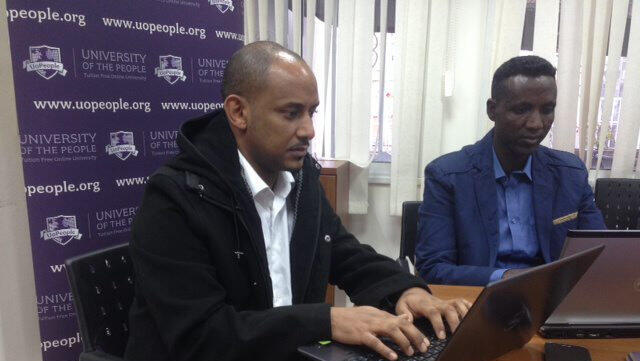
"I didn't understand why people wanted to help, and for free."
Few Israeli entrepreneurs have achieved an exit in the education sector; Reshef has had two.
He earned a bachelor’s degree in political science from Tel Aviv University and went on to pursue a master’s degree in Chinese politics at the University of Michigan in Ann Arbor. In 1989, he returned to Israel and entered the field of education almost by chance.
He had managed Arnon Yekutieli’s campaign for the Jerusalem municipal elections. When Yekutieli was appointed deputy to Mayor Teddy Kollek, he left the company he had founded with his wife, Liora. Reshef stepped in as CEO.
The company was called Kidum, and it provided preparation courses for the Psychometric Entrance Test.
"I had no business background," says Reshef, "but fortunately, I was good at it before I even knew I was, and the company flourished incredibly."
"We became the biggest in the country."
Kidum’s revenues grew from approximately NIS 450,000 in 1988 to more than NIS 100 million in 2004. Over the years, Reshef became the company’s sole owner and expanded its operations to include matriculation exam preparation, language studies, and enrichment courses, while also taking the business into Europe.
In 2001, he moved to Amsterdam, where he established, as a Kidum subsidiary, his first online university, which was also the first of its kind outside the United States. K.I.T. eLearning offered master’s degrees from the University of Liverpool and opened branches in the Netherlands, China, England, and Singapore.
Very quickly, in 2004, it was sold to Laureate, then the world’s largest for-profit education company. It was his first exit: $9.4 million in cash, plus up to $10 million based on future performance.
That same year, Reshef and his family, his wife Rotem, an artist, and their four children, now aged 27 to 35, moved to New York.
"The idea was to bring Kidum to the United States."
"I thought I knew how to do it."
Things moved quickly again, and within a year, Reshef sold Kidum to the massive American education corporation Kaplan, part of The Washington Post Company, for an estimated $30 million.
A second exit.
But Reshef did not slow down.
"I’m hyperactive, a workaholic; I can’t sit still," he explains.
That remains true to this day. He is 71, though he looks much younger, partly because of the sparkle in his eyes and partly because he arrives at meetings by bicycle.
"I work hard, and I enjoy it. I travel all over the world, but I’m not sightseeing, I’m flying from meeting to meeting."
You didn't slow down even after two exits?
"I can't just sit at home, and traveling isn't for me. So, I drove my family crazy. Friends told me, 'Invest in companies, sit on boards of directors,' but that didn't suit me. I wanted to be active, and it was important for me to give something back, and if I was going to give back, it had to be in education."
Why education?
"I got into the field by accident, but while working I learned it and began to believe in it. I saw that it worked, really worked. We improved people's grades, improved their lives. It was an amazing thing to see how education improves people's lives.
"Then, at KIT, I saw what it was to make distance education accessible to people who couldn't. Even before, in studies about China, I realized that changing people's worldview is just education. Not that I'm comparing myself, yes?"
With that motivation, he began setting his sights on his next move.
"I was looking for something to do when three entrepreneurs reached out and said, 'We have a company that helps people with their homework, and we’re looking for investment.'"
The company was called Cramster, a play on "crammer," a student who studies intensely, and a nod to Napster.
"I asked, 'What do you actually do?' and they explained: 'Students come to the site with homework assignments, and tutors go online to help them, on a volunteer basis. In return, the students rate them using "karma points." One point means "I would have been better off without you," while five means "You changed my life."'
"I asked why the tutors did it for free, and they explained that they simply loved helping people. It struck me as odd, why would they do it for free? Their reply was, 'You don't understand the Internet.' And indeed, I didn't understand the Internet."
But the moment Reshef saw the site, he became its first investor and later its chairman. More importantly, he discovered a whole new world.
"Suddenly, I learned about collaboration, open source, lecturers creating content and posting it online, and teachers volunteering for the sake of personal fulfillment and the joy of the activity. The realization hit me: all I had to do was put it all together, and you’d have a university that was free, or virtually free. I decided to go for it."
It was the end of 2008.
"I told Yossi Verdi about the matter, who told me to announce it at his conference, and that's what I did in January 2009. The next day, the New York Times wrote a whole page about it, and very quickly I had hundreds of emails from lecturers who said, 'We want to help.'
"One of the things I discovered that surprised me the most from then to this day is the kindness in the world. And we built the university."
"One morning, we will wake up knowing we have provided a solution for every student in the world."
I have been following his journey more or less since then. I watched the university grow from 177 students in its inaugural 2009 cohort to 270,000 today. I witnessed the expansion of its curriculum and the growing recognition of the institution, and of Reshef himself.
There is no Nobel Prize for education, even though it is often described as one of the most important fields. But there are two global awards widely regarded as among the field’s most prestigious.
The Yidan Prize, initiated by Chinese entrepreneur and philanthropist Charles Chen Yidan, is the largest in the field in terms of monetary value, at $4 million. Reshef and the university received it in September 2023. "Reshef’s model," the judges wrote in their citation, "reimagines higher education and opens the door to those previously excluded from it."
Reshef is set to receive the second award, the McGraw Prize, the field's oldest and most prestigious, next month.
In the meantime, he has been featured on influential lists by Wired, Foreign Policy, and Fast Company; received an honorary doctorate from Brandeis University and an award from the Prince of Monaco; met two popes; recruited Simone Biles as an ambassador for the initiative; and became a UN advisor on establishing an online university for less developed nations.
"What does 'advisor' mean? It means I tell them what to do, and they don't listen."
He enjoys the honor and recognition, he says, "but that isn't the point or the driving force. The driving force is the students."
In September 2010, following the earthquake in Haiti, the university decided to take in several hundred students at its own expense.
"I went there, I remember the journey, passing decomposing bodies in the street that no one was clearing away. During a meeting with students there, one of them asked me, 'What are your plans for the future?' I didn't recall exactly what I’d said, but I was filmed. I had said: 'We will keep growing and growing, until one morning we wake up knowing we can provide a solution for every student in the world. And then we’ll go to sleep and wake up with a new dream.'"
Throughout the years I’ve known him, Reshef has always refused to be interviewed. Only now, with the university having become a major institution in the United States, did he agree.
"What do I need that for?" he would reply whenever I suggested it.
"I don't make a big show of being Israeli, nor am I ashamed of it. I was born here and I’m proud of that, but beyond my being Israeli, we are an American university."
Reshef, who divides his time between New York and Tel Aviv, says he has never personally encountered antisemitism or anti-Israel sentiment, certainly not from the students.
"The people who come to me have no alternative; for them, it’s me or nothing. They are grateful. Even among donors, foundations, and award committees, no one has ever said a word against me.
"Right now, I don’t feel that Israel is hindering us, but I want nothing to do with the state, and I certainly don’t want to give it any credit. What I do isn't affiliated with the state, nor is it done thanks to or on behalf of Israel; rather, it happens despite Israel.
"Israel doesn't like outsiders, and it doesn't like the crossing of boundaries. Unfortunately, Israel would only hold me back rather than propel me forward.
"When we helped refugees in Israel study while they were in the detention camp set up for them, and the story was covered internationally, Israeli commenters called me a traitor.
"But my work is aimed at the entire world. I have 40,000 Arab students; I’m proud of that and believe it’s my contribution to peace in the Middle East and the world at large.
"That’s why I work in Gaza. I believe they deserve an education, regardless of what others might think. If you look at global research on education, there is a clear correlation between education levels and a nation's aspiration for peace.
"I want to make an impact on the world and leave it a little better than I found it, and thanks to my exit, I have the privilege of doing just that."



