











Growth+
"The real goal of a startup is to build something once and sell it many times"
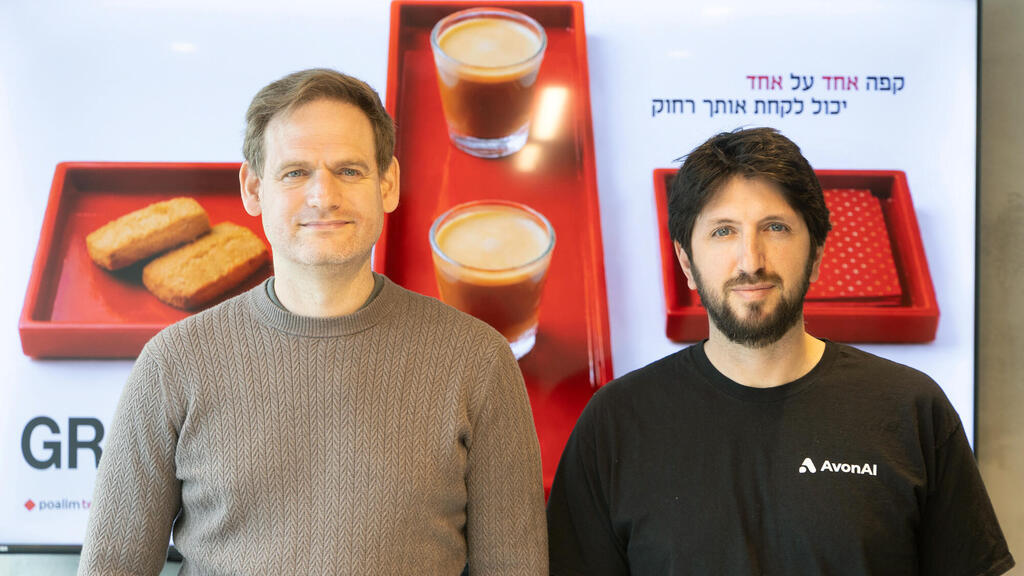
As part of the Growth+ project of Calcalist and Poalim Tech, Ofir Ehrlich, co-founder and CEO of Eon, met with Chen Markman, CEO of Avon AI: "You need to build a deep, wide, and defensible moat, one that makes it very difficult for competitors to cross."
As part of the Growth+ project of Calcalist and Poalim Tech, Ofir Ehrlich, co-founder and CEO of Eon, met with Chen Markman, CEO of Avon AI, which develops a platform for managing and controlling AI agents in sensitive organizations.
The conversation was held as part of the Growth+ project by Calcalist and Poalim Tech, now in its third year, a series of one-on-one meetings between founders of leading tech companies in Israel and entrepreneurs of promising startups. The goal is to provide advice, support, and practical tools on entrepreneurship, creativity, startup management, and building companies for growth.
Ofir, tell us about a crisis or challenge you encountered early on and what you learned from it that could help entrepreneurs at the beginning of their journey?
"The worst advice I received at the beginning of my journey as an entrepreneur was, ‘Build a big business, and the money will come.’ The question is: who defines what ‘big’ is, and who is going to measure me? The answer is that you must constantly understand how you will be measured at the next stage, and derive your goals accordingly.
“A first-time entrepreneur often thinks the goal is to bring in every possible customer. But investors, the ones expected to provide the next round of funding, are interested in building a repeatable sales mechanism. If you know how to sell once, you need to know how to replicate it. In my previous companies, I made this mistake and didn’t emphasize it early enough. We came to investors and said, ‘We have excellent customers,’ but the real goal of a startup is to build something once and sell it many times.
“Another mistake relates to customer selection. In one of my early companies, we sold to Israeli companies such as Zap, Walla, and Nana. When we approached American investors, they told us: ‘We don’t know these companies, your customer base carries no weight for us.’ The conclusion is that you must bring in someone with strong business orientation from day one."
Chen, what was the biggest challenge you encountered this year?
"Selling to large enterprises as a small startup. These are long, complex processes, and trust is a critical factor. Large organizations that want to implement products at a core and sensitive level prefer to buy from companies they believe will still exist in ten years, companies that won’t be sold or pivot unexpectedly.
“This challenge, combined with the ambition to sell internationally, is what we are dealing with most right now."
Ofir, what advice did you give Chen?
"I advised him to focus on the next milestone, usually the next funding round, and work backwards from how investors will evaluate the company. It’s important to look at the ‘metadata’: who the investors are, which market you’re targeting, how much runway you have left. These factors are no less important than the technology itself.
“We also discussed the need to clearly articulate why the business will remain differentiated not only today and tomorrow, but also two or three years ahead. In such a fast-moving environment, this is a major challenge. That’s why you need to build a deep, wide, and defensible moat, one that makes it very difficult for competitors to cross."
What did you learn from each other?
Chen: "Ofir brings deep experience from building multiple companies, while this is my first. His perspective on managing processes over time and working strategically with investors is something I can learn a great deal from."
Ofir: "I learned from Chen a thoughtful approach to building a company in today’s environment. He and his team are operating under tight budget constraints in a market that is still emerging. Seeing such a strong team adapt quickly and position itself to lead in a complex and crowded space within a short time is very impressive."
Anything surprising that you discovered about each other?
Chen: "It’s always striking how small Israel is. We quickly discovered that we share many mutual connections from our military service circles. That’s one of the strengths of Israeli high-tech, people know each other and are willing to help."
Ofir: "This dynamic is quite unique to Israel, and it’s one of the reasons we can compete with Silicon Valley. There, people are more siloed, they don’t necessarily know or help each other. In Israel, everyone is connected in some way, whether through military service, school, or mutual acquaintances. That network is a significant advantage."
Ofir Ehrlich's Golden Advice
“Persistence is often more powerful than both the idea and the business plan. Anyone entering this path must understand the level of personal sacrifice required to succeed. Otherwise, it remains just a game.”



