









Israeli P-Cure partners with MD Anderson to develop next-generation cancer treatment system
The collaboration aims to combine proton and helium-ion therapy in a compact platform that could make advanced particle treatments more accessible. Helium-ion therapy is currently available to patients at only one center worldwide, in Germany.
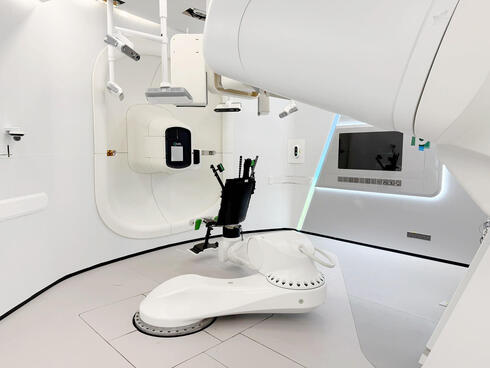
Israeli company P-Cure has announced a strategic collaboration with The University of Texas MD Anderson Cancer Center to develop a next-generation particle-based cancer treatment system. The partners aim to create a compact upright platform capable of delivering both proton and helium-ion treatments from a single system, potentially allowing physicians to select the type of particle best suited to each patient's disease.
Currently, the only center in the world offering helium-ion therapy to patients is the Heidelberg Ion-Beam Therapy Center (HIT) in Germany, which operates a particularly large facility. If the joint development succeeds, the system would represent the first helium-particle therapy platform in North America.
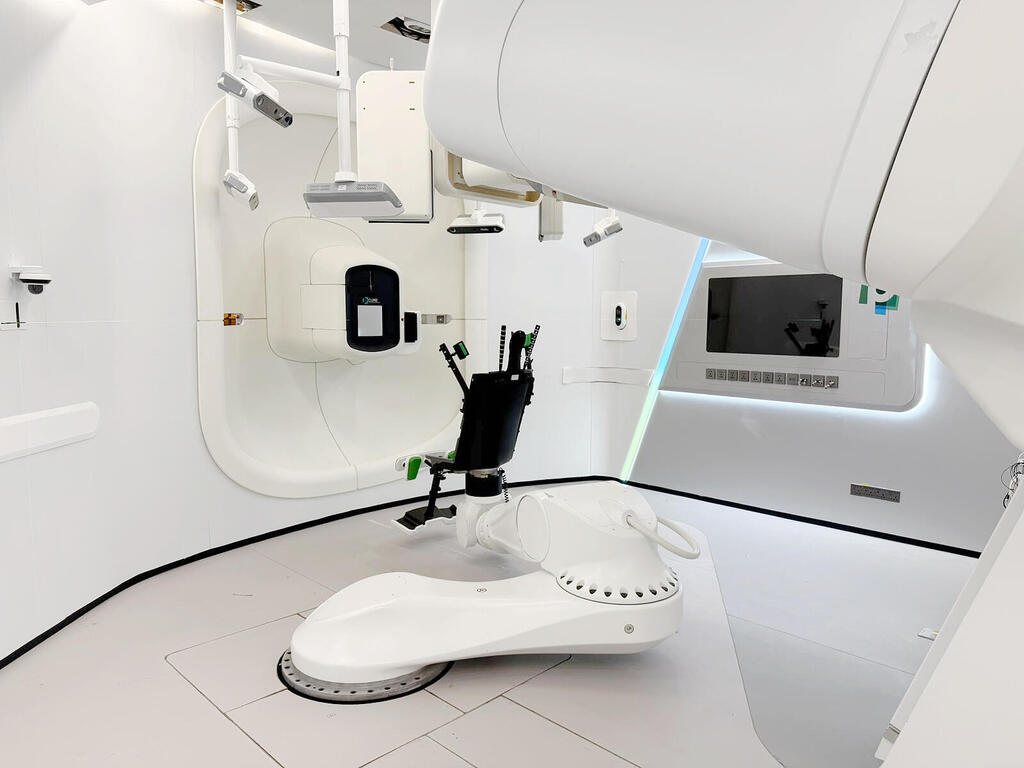
The agreement combines MD Anderson's expertise in radiation oncology, particle therapy and cancer research with P-Cure's technology. The Israeli company has developed a compact proton therapy system that has received FDA clearance. In the initial phase, the partners will evaluate the clinical value, potential patient benefits and operational advantages of P-Cure's existing upright proton therapy system. They will then conduct preclinical and clinical studies to investigate helium-ion therapy, establish its therapeutic potential and generate the evidence needed to support future clinical adoption, regulatory approvals and reimbursement.
Proton therapy is considered one of the most advanced forms of radiation treatment because it allows tumors to be targeted precisely while limiting damage to surrounding healthy tissue. Helium ions may offer additional advantages, including improved dose conformity, less lateral radiation scattering and greater biological effectiveness. The research will examine whether these properties can translate into better treatment outcomes for patients.
The long-term vision is to give physicians the flexibility to choose between proton and helium-ion therapy using the same platform, based on tumor location, disease characteristics and treatment objectives. P-Cure's system is distinguished by its compact design and vertical treatment technology, which are intended to reduce the space, cost and infrastructure required to operate particle therapy systems. Existing systems typically require substantial investment and extensive facilities, limiting the number of medical centers able to offer such treatments.
Steven J. Frank, executive director of technology and innovation in radiation oncology at MD Anderson, said the collaboration would provide an opportunity to evaluate an innovative particle therapy platform while advancing research into the potential role of helium-ion treatment. The agreement also includes payments to MD Anderson tied to the achievement of certain clinical milestones and commercial sales.
In 2023, Hadassah Medical Center became the first hospital in Israel to offer proton therapy to cancer patients. Until then, Israelis requiring this treatment had to travel abroad for several weeks of therapy, at a cost that could exceed $100,000. Since the treatment was introduced in Israel, nearly 200 patients, including more than 30 children, have been treated using P-Cure's system. The company employs 100 people, approximately half of them in Israel.
Michael Marash, P-Cure's CEO, said the company aims to establish clinical evidence for the effectiveness of helium-ion treatment and develop a practical approach to making both proton and helium therapy accessible to a much larger number of patients worldwide. “Helium therapy has the potential to become the next major advancement in particle therapy,” he said.



