









Boarding Pass
"Catch cancer earlier": PinkStar's AI for breast MRI hopes to relieve overwhelmed sector
Gearing up for a $3 million raise, PinkStar Technologies was founded in collaboration with Sheba Medical Center to help radiologists leverage AI to read breast MRI.
“MRI is only as good as the person reading it, and reading it well requires time, training, and consistency that the healthcare system does not have enough of,” says Sivan Sadan, Co-Founder and CEO of PinkStar Technologies. “PinkStar exists to close that gap, helping radiologists read breast MRI faster, more consistently, and catch cancer earlier.”
PinkStar, which was founded in collaboration with Sheba Medical Center in August 2025, is developing an AI-powered decision support platform for breast MRI to help radiologists detect breast cancer earlier and with greater confidence.
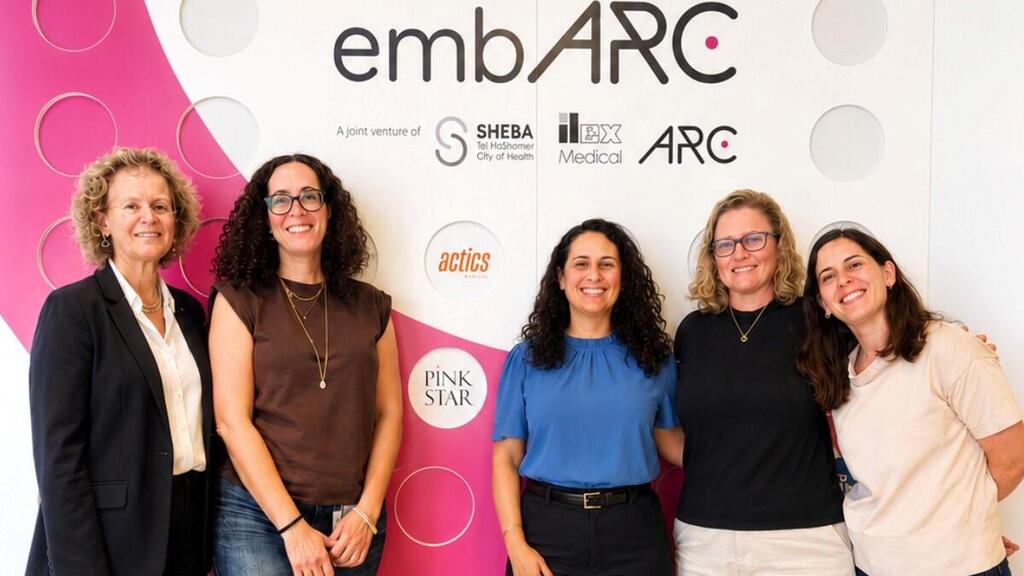
The startup is currently gearing up for a $3 million raise which, as Sadan explains, will go toward “completing our R&D and regulatory approval process through FDA clearance, growing our team, and preparing for our US market launch.”
You can learn more about the company below.
Company Name: PinkStar Technologies
Sector: Healthcare
Product/Service description:
Breast MRI is one of the most sensitive tools available for breast cancer detection, particularly for women with dense breasts and those at elevated risk. However, interpretation is complex and requires significant expertise. PinkStar aims to address this challenge by providing radiologists with an AI-based assistant that can improve early detection, reduce missed findings, and support more efficient workflows.
The company’s technology analyzes breast MRI scans to identify subtle patterns that may be difficult to detect during routine interpretation, supporting radiologists in making more informed diagnostic decisions.
The company’s technology is currently under development and has not yet received regulatory approval. PinkStar is advancing clinical validation and regulatory preparation, in collaboration with leading healthcare institutions.
Founder Bios:
Sivan Sadan (Co-Founder and CEO): An entrepreneur and healthcare technology executive with nearly 30 years of experience in investments, innovation, and company building. Over the past decade, Sadan has focused on women’s health technology, working with and building companies that address unmet needs in women’s healthcare. She previously served as CFO and Executive VP of HeraMED (ASX:HMD) and was recognized among the 200 leaders in women’s health by Women of Wearables (2023).
Prof. Miri Sklair (Co-Founder and CMO): A senior breast radiologist and clinical leader at Sheba Medical Center. Throughout her career, Prof. Sklair has been dedicated to improving breast cancer diagnosis and patient outcomes through the integration of advanced imaging, clinical expertise, and data-driven approaches. At PinkStar, she leads the clinical vision, ensuring that the company’s AI technology addresses real-world challenges faced by radiologists and patients while maintaining the highest standards of clinical relevance and safety.
Dr. Debbie Anaby (Co-Founder and CTO): Dr. Anaby heads PinkStar’s artificial intelligence and technology development, leading the creation of the company’s AI platform. She brings expertise in medical imaging, computer vision, and the application of AI to healthcare challenges. Her work focuses on developing advanced algorithms capable of extracting insights from complex medical data and translating them into practical clinical decision-support tools.
Year of Founding: 2025
Last Investment Round: $1 million
Last Investment Stage: Pre-Seed
Date of Last Investment: 04/01/2026
Total investment to date: $1 million in SAFEs and 1.65 million NIS from the IIA
Investors: embARC Ventures
Current number of employees: 9
Open positions: PinkStar is expanding its team and is currently seeking talent in medical imaging
Website: www.pinkstar.life
Social Media: LinkedIn
How was the idea born?
The idea was not born in one dramatic moment. It grew out of ongoing work at Sheba Medical Center's Breast Imaging Center, rooted in a principle we believe in strongly: the best health technology starts with a real clinical need, not a clever algorithm looking for a problem. Prof. Sklair and Dr. Anaby lived that need every day, reading MRI scans for women at high risk of breast cancer. Bringing that clinical reality together with the data science and business experience needed to build a company is how PinkStar came to be.
What is the need for the product?
Nearly half of women have dense breast tissue, and mammograms can miss a large percentage of cancers in the densest breasts, even though those women are at the highest risk. New regulations in the US and Europe are now pushing more women toward MRI, the one screening method proven to catch what mammograms miss. But MRI is only as good as the person reading it, and reading it well requires time, training, and consistency that the healthcare system does not have enough of. PinkStar exists to close that gap, helping radiologists read breast MRI faster, more consistently, and catch cancer earlier.
How is it changing the market?
We are not trying to replace radiologists. We are giving them a decision support system. Our AI supports the radiologist's read, built directly into their existing workflow, with the goal of catching smaller lesions earlier and reducing unnecessary biopsies. As far as we know, no commercial AI decision support software for breast MRI is currently available in the US, and only one player in Europe has released a product, just last month.
How big is the market for the product and who are its main customers?
We estimate the global market for our initial products at about $6 billion. Our first priority is the US, where we estimate the opportunity at roughly $2.5 billion. Our customers are the hospitals and imaging centers that perform breast MRI.
Does the product exist already?
PinkStar is currently in the R&D stage. Our core technology exists and is built on a unique, longitudinal dataset from Sheba Medical Center of women who undergo MRI screening every year.
The hardest part of this work is getting access to high-quality, real-world US clinical data, and that is why we signed a Data and Collaboration Agreement with Mount Sinai Health System. Working with a team of this caliber, at one of the largest academic medical systems in the country, gives us confidence that our technology will be validated against the real complexity of clinical practice, not just a dataset.
Who are the main competitors in this sector and how big are they?
Most existing AI players in breast imaging, companies like ScreenPoint Medical and RadNet (through its iCAD acquisition), focus on mammography, not MRI. The competitor closest to what we do is Quibim, a Spanish company that recently received European regulatory clearance for an AI tool that detects breast cancer via MRI. As far as we know, no one has yet brought a commercial AI decision support tool for breast MRI to the US market, and that is what we are building toward.
What is the added value that the founders bring to the company and the product?
Our three co-founders cover the three things a company like this needs. I bring finance and business experience. Prof. Sklair, one of Israel's leading breast imaging experts, brings clinical experience. Dr. Debbie Anaby brings the imaging science behind the technology itself. We are also backed by Sheba, ranked among the world's top ten hospitals by Newsweek, alongside embARC Ventures, a healthcare-focused fund founded by industry leaders.
What will the money coming in from the round be used for?
We are currently preparing for a $3 million round. The funds will go toward three things: completing our R&D and regulatory approval process through FDA clearance, growing our team, and preparing for our US market launch.
In the "Startup Boarding Pass" section, CTech will cover the (relatively) small investments made in companies during the early stages of their existence - and the entrepreneurs and startups who have not yet had the opportunity to reveal their stories to the world. Please use the linked form and fill it out according to the guidelines. This form is intended for startups raising between $500,000 and $3 million from venture capital funds, angels, or official grants from Israeli and foreign institutions. If relevant, someone at CTech will be in touch for follow-up questions.



