









“I lost something that was never truly mine”: The rise and fall of a billionaire
Ilan Ben-Dov reflects on Israel’s tycoon era, and the economic threat he now sees in Iran.
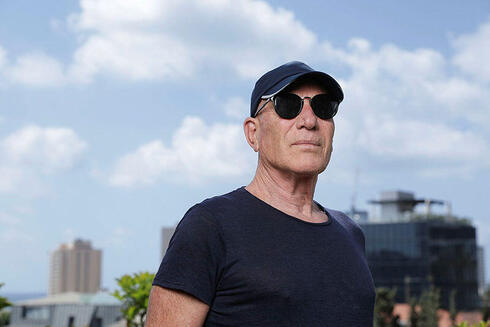
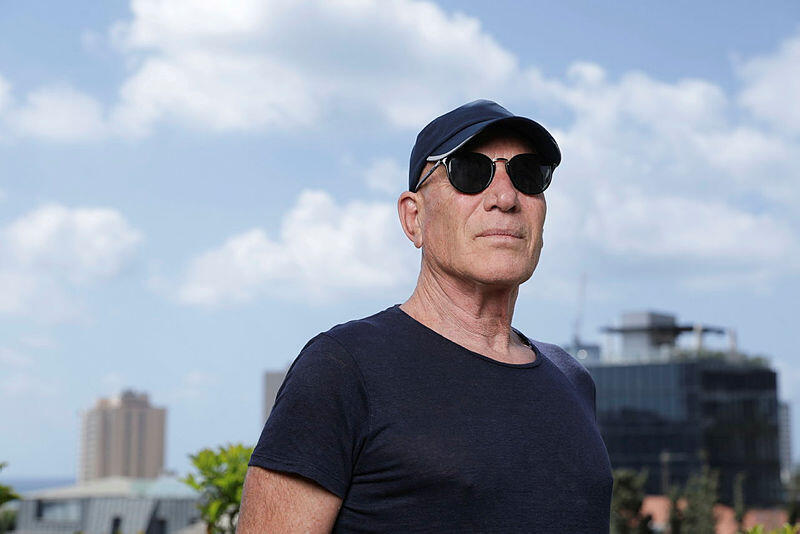
Meeting Ilan Ben-Dov feels like stepping back in time, and not only because 12 years have passed since his last interview. Sitting in his office in the building he owns on Yehuda Halevi Street in Tel Aviv inevitably evokes a different era, when Israeli tycoons were seen as human unicorns, almost mythical figures. They were powerful, deeply embedded in the fabric of the economy, and wealthier than most could imagine. During the first decade of the millennium, they were widely admired.
Their stories, business moves, beliefs, and even spiritual worldviews were covered across every media platform. They moved freely among prime ministers and Knesset members, forged alliances with influential rabbis, donated millions, often indirectly at the public’s expense, took control of media outlets, and relied on lobbyists who promised them protection.
But as time passed, and especially as global economic crises took hold, the damage these tycoons inflicted on the public, under a culture of aggressive leverage that had reached its peak, became increasingly clear. Almost overnight, admiration turned into hostility. They became symbols of excess and recklessness, figures who were publicly denounced and, eventually, watched as their empires collapsed.
Nochi Dankner, perhaps their most prominent representative, fell from grace, served time in prison, and became entangled in complex personal and public debt arrangements. Just last week, a request was filed to declare him bankrupt. Lev Leviev became embroiled in massive debt restructurings that wiped out billions in public funds, lost control of his companies, and largely disappeared from public view. Eliezer Fishman went from billionaire status, with a vast real estate and media empire, to bankruptcy before his death. Yitzhak Tshuva, once known for ambitious global real estate ventures, underwent a major debt restructuring and survived largely due to gas discoveries; he has since continued to expand his business quietly, far from the public spotlight. Shaul Elovitch lost control of Eurocom and Bezeq and is still fighting legal battles over allegations related to bribery involving Prime Minister Benjamin Netanyahu.
And then there is Ben-Dov. The former tycoon, known for his affinity for Zen, yachts, and prominent rabbis, who once drew headlines for his high-profile marriage to a model 22 years his junior, followed by an equally publicized divorce. At the height of his career, he controlled Suny and Partner, one a lucrative importer of Samsung phones, the other a fast-growing cellular company once valued at 15 billion shekels. By 2014, both were no longer under his control, nor was the investment firm Tao Tsuot, as much of the empire he built through heavy leverage unraveled.
Yet compared with his peers, his fate was relatively favorable. He lost billions but remained wealthy, primarily through real estate holdings. He did not declare bankruptcy, nor was he left with significant personal debt. Perhaps it was this relatively intact landing that led him to withdraw from public view for more than a decade - until now.
What prompted Ben-Dov to speak again is the war with Iran, or, more precisely, his concern over Iran’s growing economic power. Ahead of the interview, he sent a position paper titled “Iran: An Economic Terror Empire,” underscoring that his intention is not self-promotion but raising awareness.
“I’m not a politician, but I understand trading,” Ben-Dov says. “I trade in securities, commodities, and oil. Energy is only part of my portfolio, but by observing global oil markets, I realized that Iran has gained significant influence over the global energy market through the Strait of Hormuz.”
What concerns you most now?
“Since Iran effectively has the power to influence who passes through key routes, when, and at what cost, I realized that nuclear weapons are not the only threat posed by extremists who seek to harm us. There is an economic threat of comparable magnitude, and the world is largely silent.”
Is Iran’s rise as an economic power truly comparable to the nuclear threat?
“I ask myself what will happen to my children and grandchildren if Iran becomes an economic empire. I’ve come to the conclusion that this could be even more dangerous than a nuclear threat. It poses an existential risk, and we must bring this understanding to the forefront.”
What should be done?
“I don’t claim to have solutions or offer military advice. I trust leadership to address these challenges. But we’ve already seen what Hamas was able to build with external funding. If Iran allocates hundreds of millions of dollars to different fronts, whether in Judea and Samaria, Gaza, or through Hezbollah, funded by what I estimate to be roughly a billion dollars a day in revenues linked to the Strait of Hormuz, and combines that with financial systems like cryptocurrency, then we are facing a serious strategic threat. This level of funding could destabilize Israel, and I want to highlight the scale of that danger.”
“A rich Iran is a second Holocaust”
Ben-Dov is no expert on Iran, oil, or international relations. But that doesn’t stop him from speaking about them with passion and striking confidence, backed by a four-page document he authored titled “Economic Empire = Second Holocaust.” He still sees himself as someone who can - and, more importantly, is obligated to - change reality.
“You didn’t ask anything about dentistry,” he notes later, referring to the “Lotus Path” project he founded, which subsidized dental care for children in Israel’s periphery. “Through the project, I treated 250,000 patients a year for free, and that’s what led to the change in the law and the inclusion of dental care in the health basket,” says Ben-Dov (though at least some of the funding came from Scailex, the public company he controlled, meaning it also came from public funds).
What does this have to do with Iran?
“I have confidence in my ability to shed light on issues I believe in and make them happen. The dental law would not have passed if Rabbi Firer, Yaakov Litzman, and I hadn’t been involved. Today, children receive free dental care, that wasn’t the case before my initiative. That’s why I now believe in shedding light on the Iranian threat. I’m certain I will succeed.”
5 View gallery
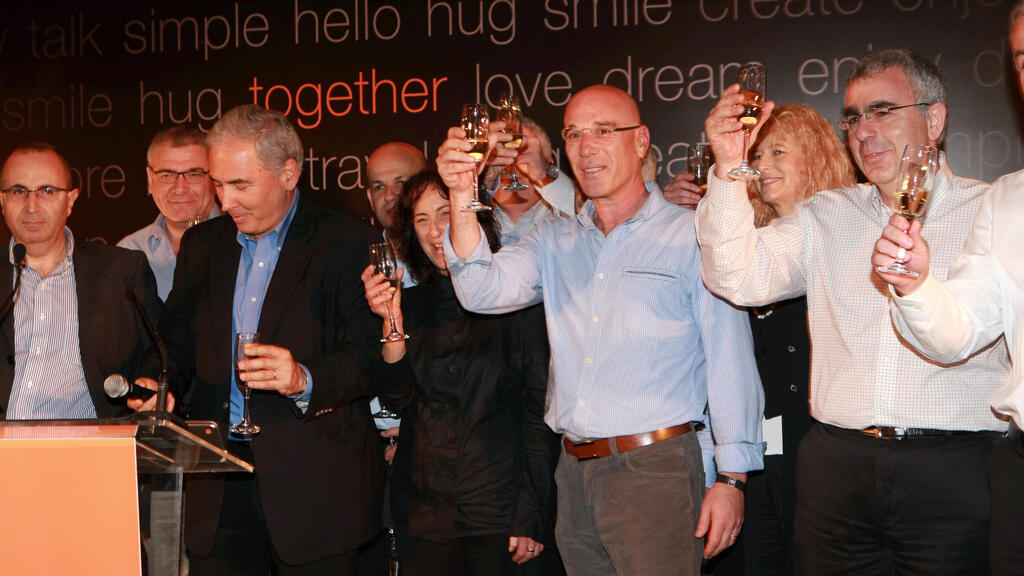
Ben Dov in announcing the completion of the acquisition of Partner
(Gil Hadani, Allpix)
What do you think should be done?
“They said there will be no nuclear Iran, no Iran with missiles. Now we must also say there will be no Iran as an economic empire. Period. This must be elevated to a formal war objective. Because once sanctions are lifted and global banks begin working with them, the situation will only worsen.”
And in concrete terms?
“Wherever Iran shows nuclear activity - strike. And wherever it builds economic power - strike there too.”
Strike because Iran will become wealthy? Israel is not the United States. It won’t block the Strait of Hormuz, and in any case Donald Trump is setting the tone.
“Israel must differentiate itself from the United States. It can declare that it will not allow Iran to become either a nuclear power or an economic empire.”
Does preventing Iran from becoming an economic power sound like a legitimate war goal?
“People will accuse Israel of war no matter what. Even in the 1940s, we had no legitimacy, and we were sent to the crematoriums. We have no other country. The world needs to understand that Israel will not allow this to happen, and Israel must say so clearly. It may not be popular, but it’s far less popular to wake up and find 100,000 Toyotas entering Israel from all directions, another October 7 scenario. That’s what Iranian money could enable.
“The public does not grasp the magnitude of the danger, but everyone I explain it to understands. I thank the Americans and President Trump for fighting alongside us, as well as the prime minister and the soldiers. I’m not criticizing, I’m speaking as a concerned citizen with children and grandchildren in Israel. An Iran that becomes an economic empire will bring about a second Holocaust. And I feel that no one is paying attention to this danger.”
“The collapse improved my life”
Ben-Dov made his fortune in the communications market in the late 1990s and early 2000s. In 1994, he founded the Dynamica Cellular network as a subsidiary of Suny Communications. In 1998, Suny secured the exclusive franchise to import and market Samsung mobile phones in Israel to the country’s three cellular operators. For nearly a decade, until Apple launched the first iPhone in 2007, this franchise generated billions of shekels. Even afterward, Samsung devices continued to produce substantial profits.
He weathered the subprime crisis, which devastated many of his peers, relatively well, partly because he was not heavily exposed to real estate. But in 2009, Ben-Dov made a pivotal move: he outbid Shaul Elovitch and acquired a controlling stake in Partner Communications, then a fast-growing and highly profitable cellular company, from Hong Kong-based Hutchison.
5 View gallery
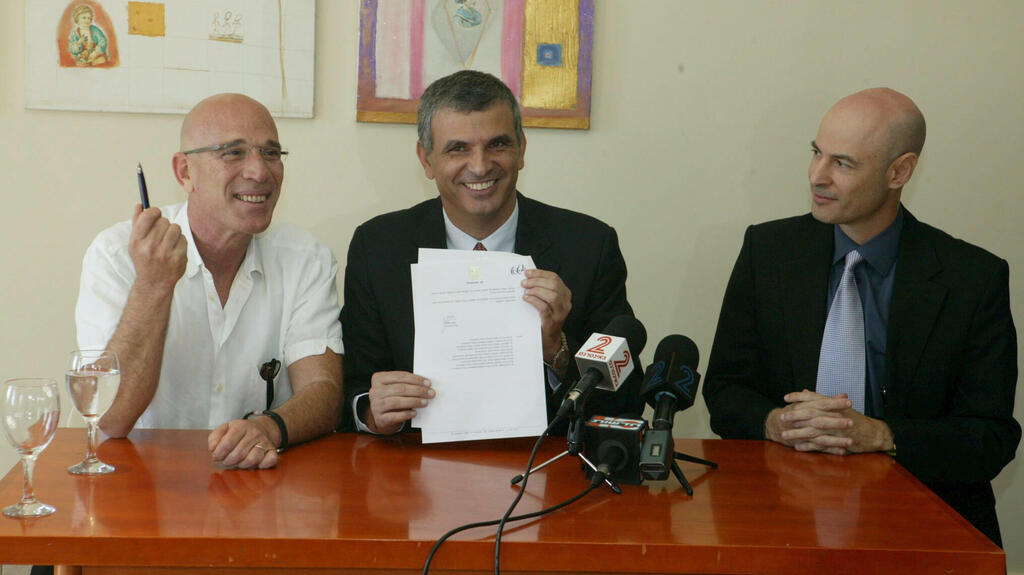
Kahlon (center) and Ben-Dov (left) sign approval for Partner acquisition, 2009
(Gil Hadani, Allpix)
He financed most of the deal, NIS 5.3 billion for 51% of the company, through bank loans and bond issuances via Scailex.
Then came Moshe Kahlon.
As communications minister, Kahlon launched a sweeping reform: eliminating exit fees, slashing interconnection charges, and opening the market to new competitors using existing infrastructure. The result was a seismic shift. Profits at Partner, and across the industry, collapsed. Valuations followed.
Scailex struggled to service its debt. In 2012, just three years after acquiring Partner, Ben-Dov was forced to sell most of his stake to Haim Saban at roughly half the purchase price, in a deal that imposed debt restructurings on bondholders. Soon after, he also lost the Samsung distribution franchise. The collapse was complete.
What did the breakup with Partner do to you?
“Forget Partner, that was nothing. Giving up Samsung was much harder. That was my baby. I built it over 18 years. Israel was Samsung’s first export market, presidents of the company came here every month to see what we built. Losing that was far more painful.
“When I sit in a restaurant and see everyone glued to their phones, I sometimes think, that’s on me,” he says with a laugh. “So Partner was actually the least important chapter.”
“Compared to Samsung, Partner wasn’t the real difficulty. That period was about survival, protecting employees, managing collapse. In the end, Saban bought the business. He later lost his entire investment, but he could absorb it.
“For me, the separation was liberating. It turned me from a ‘tycoon’ into an anonymous person. No lawyers, no regulators, no pressure. My quality of life improved dramatically. I retired 12 years ago. Since then, I haven’t built new businesses, only sold existing assets.
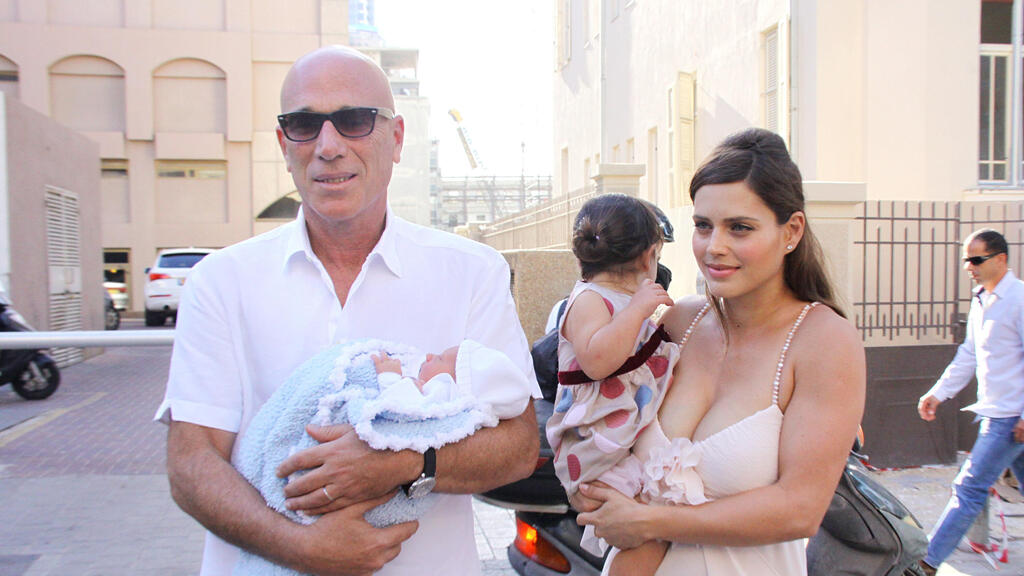
“It allowed me to become a full-time father, something I hadn’t done with my older children. That experience is priceless. Not the loss of billions, but fatherhood. That’s something I recommend to everyone.”
Who is to blame for the collapse?
“The cellular market here was effectively nationalized, something that still seems absurd to me. But from a consumer perspective, it was a positive move. The public benefited enormously.”
Do you credit Kahlon, even though his reform led to your collapse?
“He collapsed something that wasn’t truly mine. Personally, I came out better. Sometimes you don’t know whether events are good or bad when they happen. The reform wasn’t balanced, some players weren’t hurt at all, but today, a monthly phone bill costs as much as coffee and cake. For that, I tip my hat to him.”
“I did what they do in monasteries”
Ben-Dov, who once described himself as a “street cat,” was born in the Yad Eliyahu neighborhood of Tel Aviv and grew up in a lower-middle-class family.
“I sold sabras and copper wires that I found on the street, burning them until the plastic casing peeled off,” he recalls. “My father founded the Defense Ministry’s rehabilitation department, my mother was a housewife, and I was an entrepreneur from the age of seven. I knew every house in Tel Aviv, because every day after school I made bicycle deliveries to flower shops, like today’s Wolt. Later, I even had workers of my own.
“Living with my parents and two siblings in a 50-square-meter apartment, with the living room doubling as a bedroom, would be considered a hardship today. But at the time, I felt I lacked nothing.”
“I built the Dynamica chain with my own hands and was already very wealthy even before I took on Samsung’s representation in Israel. I won that contract because I was good, professional, experienced, with a network of stores and labs, and a clear vision and ambition. Many large players wanted it in the late 1990s, and I succeeded. Then, somewhere around 2003, I took a step back and entered the spiritual world.”
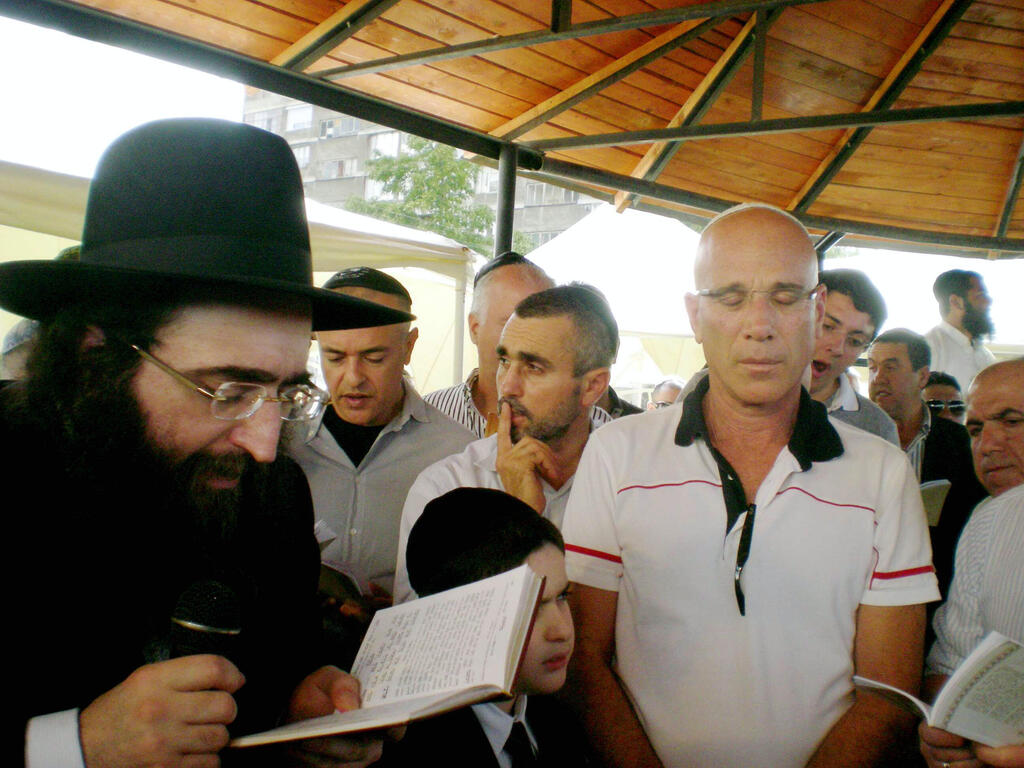
That “spiritual world” was something Ben-Dov spoke openly about at the time. It included studying Eastern teachings, learning with Zen master Nissim Amon, and financing the mystical book We Are Not Alone, in which he described his spiritual journey. At the same time, like many businessmen of that era, he consulted “celebrity rabbis” such as Yoshiyahu Pinto and Yaakov Ifargan, “The X-Ray.”
“I had a very intense life, and the spiritual world gave me peace,” he says now. “Often, it also comes from difficultym you start asking, ‘Who am I? What am I? Why am I?’”
The “I” in question is Ilan Ben-Dov, a leveraged tycoon who rose quickly and lost almost everything.
“I never felt it was truly mine,” he says. “And when something isn’t yours, you can’t really lose it. I always felt that being a ‘tycoon’ wasn’t who I was. So when I lost it, I understood I had lost something that was never truly mine.”
What does ‘wasn’t mine’ mean?
“I did something similar to what they do in monasteries: you kneel down and build a sandcastle. Sometimes it takes weeks, even months. And then, one day, you take a plank and flatten it. That’s the philosophy, that nothing is truly yours.
“In Judaism, everything belongs to God, He gives and He takes. I live in a house, I bought it, I paid for it, but it’s only mine for as long as I live in it. If you believe material things belong to you forever, then when they’re taken away, the pain is immense. But I see everything as being on loan.
“At my core, I’m still Ilan from Yad Eliyahu, selling sabras and copper wire. Everything beyond that always felt like a bonus.”
Come on, you built a pyramid structure that couldn’t support its debts, and it collapsed.
“Yes, that was the structure. A wave came that turned a company worth 15 billion shekels into one worth 2 billion. IDB collapsed, Bezeq’s holding structure unraveled, I wasn’t alone. But I was the only one who stayed on his feet, because I saw it early and exited before the end. Selling to Saban halfway through saved me. I could have crashed completely if I hadn’t.”
Institutional investors, the public, were hurt.
“Look, there was damage, but there was also significant benefit to consumers.”
Doesn’t the damage to bondholders trouble you?
“I’m not sure everyone lost. In Scailex, those who held on to the shares they received instead of bonds ultimately got their money back, and more. In public companies, some people gain over time and others lose.
“In 2014, I stepped down from Scailex, gave up all my personal holdings, and moved on. In the end, all the money was repaid. I’d say I had a 99% success rate, and that’s still success.”
So where do you admit you were wrong?
“Buying Partner was a mistake. Financially, I could afford it, and I thought I understood the cellular market best. But I didn’t understand regulation or politics. I didn’t realize a minister could come in and upend everything.”
Politics?
“Kahlon’s goal wasn’t to hurt us, it was to help consumers, and he succeeded. But along the way, he crushed us. He imposed policies that forced us to sell at half the price we planned. It was after the social protests, the country was in turmoil, and he had strong public backing.
“It’s no coincidence this kind of reform happened only once. You can’t repeat it. There’s been nothing like it before or since.”
“In hindsight, it was a business mistake. If I hadn’t bought Partner, I’d probably be a real estate tycoon today like some of my peers. But I gained something far more valuable, time with my children. That’s priceless. In the end, it was good for the public, and for my family.”
“I’m less social - and that suits me”
In 2008, at age 51, Ben-Dov married model Keren Michaeli, 22 years his junior, in a high-profile wedding that dominated gossip columns. They divorced in 2015, drawing similar attention. The couple has three children together, now aged 17, 15, and 13, and Ben-Dov has three additional adult children (41, 36, and 32) from his first marriage.
You haven’t been in a relationship since the divorce. Why?
“I’ve been single for a decade, and I’m fine with it.”
How do you spend your time?
“With my children, traveling to remote places, family, self-development, and longevity, extending life expectancy. I have a gym at home; if you want to look like this, you have to work at it.
“I’m not active on social media, and I’m not very accessible. I’m less social, I’m aware of that. But I’m surrounded by family, I lack nothing, and I’m comfortable on my own. I’m not looking for a relationship, though I’m not opposed to one. I enjoy the freedom of solitude. People change, I’m not the same Ilan I was at 28.”
Do you regret marrying someone 22 years younger?
“No. In general, as you get older, it’s good to be around younger people. I deal with my daughter’s TikTok issues, with Boy Scouts trips, I don’t need to be young, I feel young. These days, I prefer the gym or a bike ride to meditation.”
Are you still involved in business?
“I’ve returned to the business world through a new venture that combines cyber and AI, as an entrepreneur and investor with partners. It’s operating under the radar for now, so I won’t go into details.
“I’ve been part of major technological revolutions, mobile phones, the internet, mobile internet, even early smartphones in Israel years before Apple. What we’re building now is a new kind of infrastructure, potentially larger than anything before. And I’m eager to be part of it, even in a small way.”
Looking back, what would you have done differently?
“I live in the present. I don’t dwell much on the past.”
Do you miss the intensity of your old business life?
“It happened, and it was good that it did.”



