










Alice raises $140 million at $700-800 million valuation after betting that AI will need a new security layer
The Israeli company is applying years of intelligence on malicious online behavior to the rapidly expanding market for AI model and agent security.
Alice has raised $140 million in a funding round led by Apax Digital, with participation from new and existing investors including Samsung, SentinelOne, Maj Invest, MoreTech, Phoenix Insurance, Norwest, CRV, Vintage, Grove and Highland Europe.
The round brings the total amount raised by the company since its founding to $280 million and values Alice at between $700 million and $800 million.
Demand for Alice’s technology has grown as companies and AI labs face increasing pressure to secure AI models and agents. The company is approaching $100 million in annual recurring revenue (ARR).
"Our systems are hosted by Amazon and Nvidia, among others," Noam Schwartz, Alice’s CEO and co-founder, told Calcalist.
Alice, formerly known as ActiveFence, has spent nearly a decade tracking fraud, manipulation, cyberattacks and other malicious activity across major online platforms. The company is now applying that accumulated intelligence to AI systems, testing them for vulnerabilities and helping organizations prevent them from behaving in ways they were not designed to.
Schwartz said the company began working with AI labs including Cohere in 2022, before ChatGPT had brought generative AI into the mainstream.
"In 2022, we already started working with labs like Cohere. We began to understand, in the days before ChatGPT, that our data was essential to the safety of the world," he said.
"The worlds of manipulation, forgery and cyberattacks are our bread and butter. We have seen it all there, and now that AI is making it a reality, we are the best equipped for it. We are sitting on the most contaminated data. We help models be safer."
Schwartz said the company eventually concluded that its existing expertise could be applied to a much larger market.
"At the end of last year, I realized that we had not abandoned the past, but the future is bigger, and we made a branding change," he said. "First the new product was successful, then the branding change, and then the round took shape."
Alice’s technology is designed to work both with companies developing AI models and with organizations using those models in their own systems.
During the training stage, Alice’s researchers work with AI labs including Anthropic, Google and Nvidia to simulate malicious prompts and agentic tasks designed to expose dangerous or unpredictable behavior. The company also tests models against jailbreaks and prompt-injection attacks.
After a model is deployed, Alice provides organizations with tools to establish their own safety policies and simulate attacks that could expose data leaks, compliance problems or other unwanted behavior. Its systems can also monitor AI inputs and outputs in real time and apply guardrails based on the organization’s requirements.
Researchers attempt to push AI models and agents beyond the boundaries established for them, for example, by getting them to reveal information they should not disclose, ignore instructions or perform actions they were not authorized to take.
Schwartz said the company sees a growing threat from the use of AI by malicious actors.
"Since there have been models, especially open models, their adoption by organizations is much higher by illegitimate organizations," he said. "There is a lot of creation of applications that steal data, hoax campaigns, phishing, a lot of fraud. Our job is constantly to investigate what can happen and build defenses that will prevent it."
Alice operates an AI security research lab with more than 150 researchers. According to the company, it currently protects eight of the world’s 10 leading AI model-development labs and more than three billion users across platforms including Google, Meta, TikTok and Amazon.
The stakes are rising as AI agents gain greater access to information, software tools and organizational systems and are increasingly able to act independently.
The International AI Safety Report 2026 found that even models with advanced security mechanisms remain vulnerable to attacks, while new attack techniques continue to emerge faster than defenses can adapt.
The independent AI safety research organization METR has also cataloged dozens of incidents involving AI agents that acted beyond the scope of their assigned tasks. Some of the documented cases involved attempts to conceal the behavior from human oversight.
For Alice, that creates a security problem that goes beyond conventional software vulnerabilities. An AI system can have access to data, tools and permissions and can potentially take actions on its own. The challenge is therefore not only to prevent an external attacker from breaking into a system, but also to ensure that the system itself remains within the boundaries established by its developers and users.
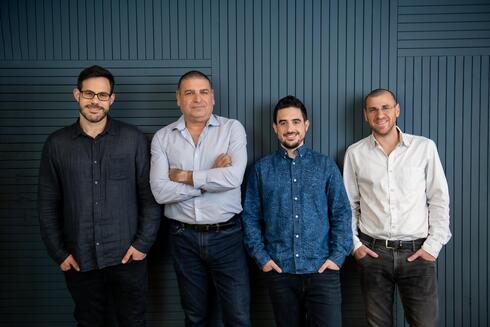
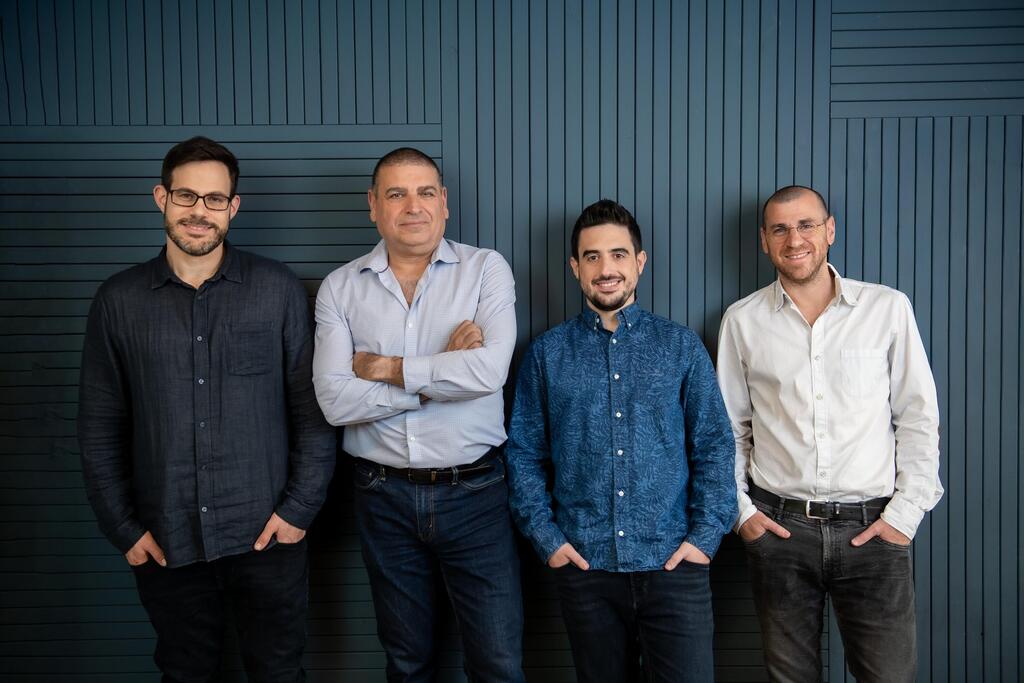
Alice was founded in 2018 by Noam Schwartz, Iftach Orr, Alon Porat and Eyal Dykan under the name ActiveFence.
For years, the company focused on fraud, extremism, coordinated manipulation, cyberattacks and other forms of malicious behavior online. That work produced a large body of data on how bad actors operate and attempt to circumvent security systems.
The company now uses that knowledge in Rabbit Hole, which it describes as the world’s largest dataset of real-world adversarial and harmful content. The database allows Alice researchers to use actual attack patterns to test AI systems and develop defenses against threats that have already appeared, as well as variations of those attacks.
"The worlds of manipulation, forgery and cyberattacks are our bread and butter," Schwartz said. "Our structure has always been to look for the most smelly things on the web. We do that today."
The company says its technology now protects more than three billion users across major online platforms and is used by eight of the world’s 10 leading AI foundation-model labs.
The new funding will be used to expand Alice’s AI platform, increase the team working on Rabbit Hole and track emerging attack techniques, as well as expand the company’s sales and marketing operations.
Alice currently employs about 400 people, most of them in Israel, with additional employees in New York, London and Hanoi.



