










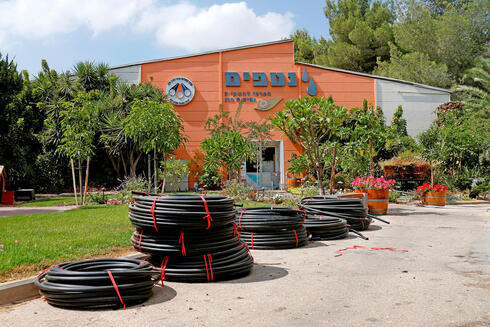
Orbia’s $1.2 billion Netafim sale tilts toward a Chinese offer after Fortissimo talks freeze
Debt and cash-flow disputes derail hopes of a return to Israeli ownership.
The possibility that control of drip-irrigation and irrigation-solutions manufacturer Netafim will return to Israeli hands is appearing increasingly unlikely. Instead, Netafim may ultimately pass into Chinese ownership.
Calcalist has learned that talks between Mexico-based Orbia, which controls 80% of Netafim, and the Israeli private-equity fund Fortissimo have been frozen after Fortissimo demanded a price reduction. That demand followed findings from Fortissimo’s due-diligence review of Netafim’s financial data, which, according to the fund, did not align with expectations set during the initial phase of talks. Those expectations were based on information presented by the investment bank advising on the transaction.
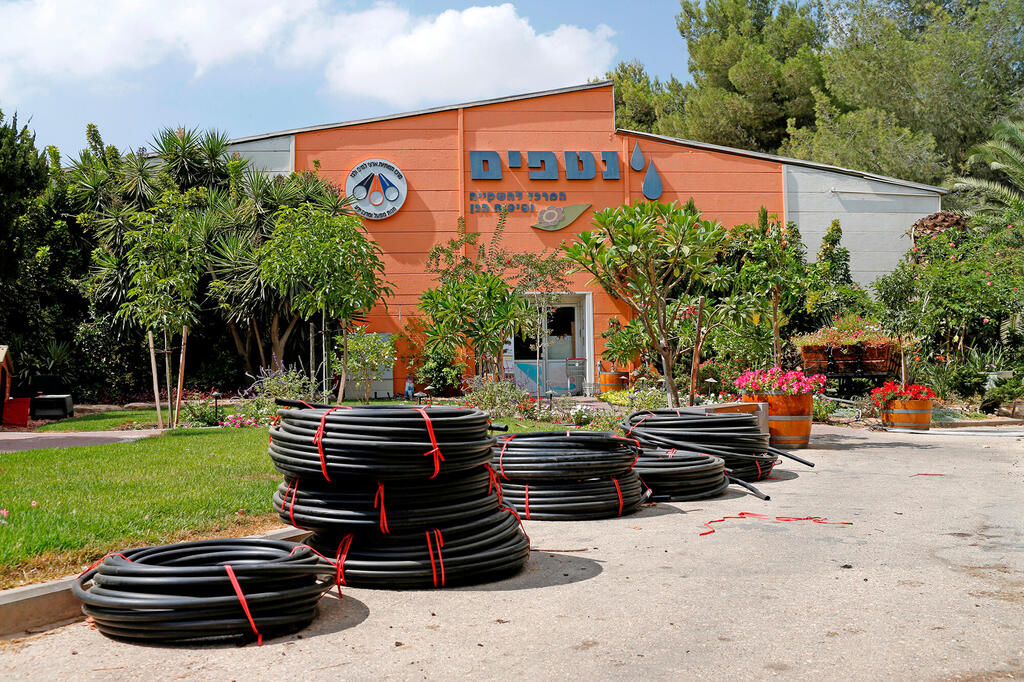
The disputes between the parties reportedly center on several key financial metrics, including EBITDA (operating profit), net profit, cash flow, and the company’s debt, which stands at roughly $400 million, about 15% higher than Fortissimo’s initial understanding of its size. Orbia has refused to lower its asking price of $1.2 billion and continues to advance the sale process through the investment bank Evercore, which it hired to find a buyer.
A source close to Netafim said that “as far as we know, Fortissimo has concluded that the company is not generating sufficient cash, that the debt has increased since the beginning of the examination, and that ultimately Netafim is not worth the price demanded, therefore, at this stage, the fund has withdrawn from the deal.”
Following Fortissimo’s expected exit, the leading candidate to acquire Netafim is a Chinese company, believed to be privately held, that is willing to meet Orbia’s valuation.
As Calcalist revealed in October, Orbia hired Evercore to seek a buyer for Netafim based on an enterprise value of approximately $1.2 billion, consisting of $800 million in cash while leaving the buyer with roughly $400 million in debt. This valuation is unacceptable to Fortissimo and may also prove unacceptable to a European fund and a U.S. fund that are examining the transaction, though both are currently doing so at low intensity.
A sale of control in Netafim to a Chinese company could introduce additional complexity. Kibbutz Hatzerim holds 20% of Netafim’s shares and has veto rights over a transfer of control, but only in the event of a sale to an entity from a country defined as hostile to Israel. China is not classified as such, meaning the kibbutz would not be able to formally block the transaction. However, industry sources say Hatzerim could still exert informal influence over the identity of the buyer if it chooses to press the issue with Orbia and the prospective acquirer.
In any case, should Orbia succeed in selling Netafim, it would do so with limited satisfaction. The Mexican group has struggled to extract value from its investment and has failed to materially improve Netafim’s performance. While Netafim was acquired at a valuation of approximately $1.8 billion in a deal signed in August 2017 and completed in 2018, the current sale is expected to be completed at a significantly lower valuation.
Orbia paid about $1.5 billion for control of Netafim: approximately $241 million was paid to Kibbutzim Hatzerim and Magal for part of their holdings, while the remainder went to the Permira fund, which had acquired control of Netafim from the Tene fund in 2011 at a valuation of about $850 million. Earlier still, in 2006, the Tene and Markstone funds acquired 30% of Netafim at a valuation of roughly $150 million.
One of the drivers behind Orbia’s desire to sell Netafim is its own heavy debt burden, which stood at $8.6 billion at the end of September, including $2.6 billion in current debt due within the next 12 months. This compares with cash and cash equivalents of just $990 million. While Orbia’s financial pressure has eased somewhat following a refinancing, leverage remains a central concern.
Prior to Calcalist’s report on the potential sale, Orbia’s shares on the Mexican stock exchange had lost around 60% of their value over five years, trading at a market capitalization of approximately $1.7 billion, down from about $7 billion at the time of Netafim’s acquisition. The steep decline, and the sale process itself, largely reflects the company’s high debt levels, which have been difficult to service given annual revenues of about $7.5 billion and EBITDA of roughly $1.25 billion. In recent filings, Orbia signaled its intention to sell assets, without explicitly naming Netafim. Although the stock briefly jumped following the Calcalist report, it has since returned to its prior level.
Orbia’s acquisition of Netafim marked its entry into a new line of business, but the company was unable to expand Netafim meaningfully on the global stage, and an industry downturn further weighed on performance. Netafim’s results are reported within Orbia’s “Precision Agriculture” segment. In 2024, segment revenues totaled $1.038 billion, down about 3% from $1.063 billion in 2023. Revenues have declined for three consecutive years, accompanied by erosion in gross and operating profit. Operating profit fell to just $6 million in 2024, compared with $13 million in 2023 and $19 million in 2022. EBITDA remained relatively stable at around $120-125 million annually.
The downturn began during the Covid period and intensified amid the global rise in interest rates. In the first nine months of 2025, Netafim reported revenues of $816 million, a 5.7% increase year-on-year, while EBITDA rose 12% to $103 million, still reflecting a slower pace than in earlier years.
Founded six decades ago, Netafim was the world’s first company to develop drip irrigation and has since grown into the global leader in precision irrigation. Its annual sales exceed $1 billion, compared with roughly $700 million for its nearest competitor, Rivulis. Netafim is led by CEO Gaby Miodownik, a company veteran who oversaw its integration with Maxichem following the acquisition. The company employs about 5,500 people and operates in roughly 40 countries through 20 manufacturing facilities.



