










Israel’s gas rigs resume operations under the shadow of war
After costly shutdowns, the return to activity highlights both economic urgency and lingering security vulnerabilities.
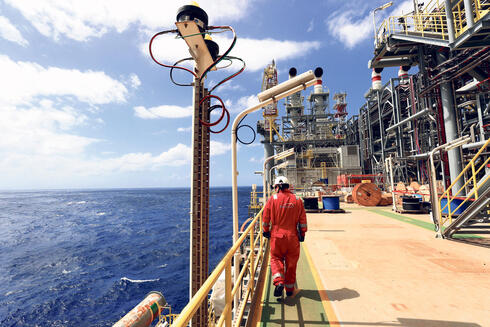
After 40 days of war, and under the cover of a fragile ceasefire that could collapse at any moment, the energy sector is returning to a temporary sense of normality. On Thursday, the Energy Ministry allowed Energean to resume operations at its natural gas rig, Karish, located near the maritime border with Lebanon, after it was shut down at the start of the war with Iran. A week earlier, it allowed the Chevron-NewMed-Ratio partnership to operate the Leviathan field and resume gas exports to Egypt and Jordan.
These shutdowns have had a heavy economic impact: halting operations at Karish cost Energean NIS 2.3 million per day, while shutting down Leviathan cost Chevron, NewMed, and Ratio approximately NIS 5.2 million per day.

The shutdown of the rigs was an extreme step, justified by the need to manage risk and reduce, as much as possible, the likelihood of their destruction in the event of an attack. A missile strike on an active rig could cause billions of dollars in damage and cast doubt on the feasibility of restoring operations. In contrast, a hit on a “cold” rig would likely result in damage amounting to millions of dollars, but would be reversible and recoverable.
Over the past decade, Israel has invested approximately NIS 3 billion in protecting offshore rigs and strategic infrastructure in its economic waters. This investment includes the purchase of four German-made defense ships equipped with multi-purpose air defense systems, unmanned aerial vehicles, and advanced classified electronic systems developed by Israeli defense industries. These are designed to provide perimeter defense for the rigs within a radius of tens of kilometers.
However, the recent war has raised serious doubts about the ability of these systems to protect the rigs in the event of sustained and intensive attacks, including repeated and targeted strike attempts.
This realization may shape the IDF’s procurement plans in the coming years, as lessons from the past two and a half years of conflict are incorporated. The defense establishment is already discussing the urgent need to strengthen the Navy’s defensive and offensive capabilities in the face of evolving threats.
A year and a half ago, the Ministry of Defense ordered five new “Reshef”-class warships from Israel Shipyards in a deal worth NIS 2.8 billion. These vessels are expected to be delivered in the coming years.
The growing number of maritime security challenges could lead to further expansion of the fleet. Among the options under consideration is an additional purchase of Sa’ar 6-class corvettes, which would join the four already delivered and deployed operationally around the time of the October 7 war.
The rigs are considered critical national infrastructure operating within Israel’s sovereign waters, and the IDF is expected to provide them with protection comparable to that afforded to other strategic assets, including seaports, airports, refineries, power plants, fuel depots, petrochemical facilities, and other sensitive installations.
When thousands of Hamas militants breached the Gaza border barrier on October 7, despite an investment of more than NIS 3.5 billion, the failure was attributed by the IDF and the Ministry of Defense to planning based on limited, localized threat scenarios.
Similar explanations have been offered in recent weeks by senior military and defense officials during the war involving Iran, Hezbollah in Lebanon, and the Houthis in Yemen. All of this underscores the need for a fundamental reassessment of how Israel protects its offshore energy infrastructure.
Against this backdrop, the Ministry of Energy had launched a fifth competitive bidding process for natural gas exploration in six new offshore blocks in the Mediterranean, aiming to strengthen Israel’s position as an energy exporter and increase competition in the domestic gas market.
However, the outbreak of the second Iran war shortly afterward disrupted the process. A planned “roadshow” in the United States, intended to attract international investors and energy companies, was canceled.
The broader regional instability now casts a heavy shadow over the future of the exploration effort, particularly given that previous rounds struggled to attract strong participation, even during periods of relative calm.
Following the ceasefire with Hezbollah in November 2024, Israel portrayed the outcome as a significant achievement. In June 2025, it similarly highlighted its successes in the first confrontation with Iran. Yet the latest round of fighting, which could resume at any moment, has exposed a more complex and uncertain reality.
Executives at major global energy companies are unlikely to overlook these risks. When billions of dollars are at stake, investment decisions are made cautiously. The continued presence of Hezbollah in Lebanon, ongoing missile and drone attacks by Iran on energy infrastructure across the region, and the broader instability all contribute to a challenging outlook.
For international companies considering large-scale investments in Israeli waters, the prospect of having operations abruptly halted for weeks, without warning or clear resolution, is a significant deterrent. The likely result is that capital will be directed elsewhere.



