










“Losing one gas rig would mean billions in damage”
Missile threats from Iran and Hezbollah force Israel to halt offshore gas production for the third time since the Gaza war.
The government’s efforts to keep Israel’s economy functioning as missile launches from Iran and precision rockets from Lebanon continue have largely bypassed the natural gas sector. More than two weeks into what officials are calling the second war with Iran, activity at Israel’s offshore gas platforms in the Mediterranean has been shut down once again.
It is the third shutdown of gas platforms since the outbreak of the October 7 war. As a result, the energy sector has once again been forced to rely on more expensive and polluting fuels such as coal and diesel.
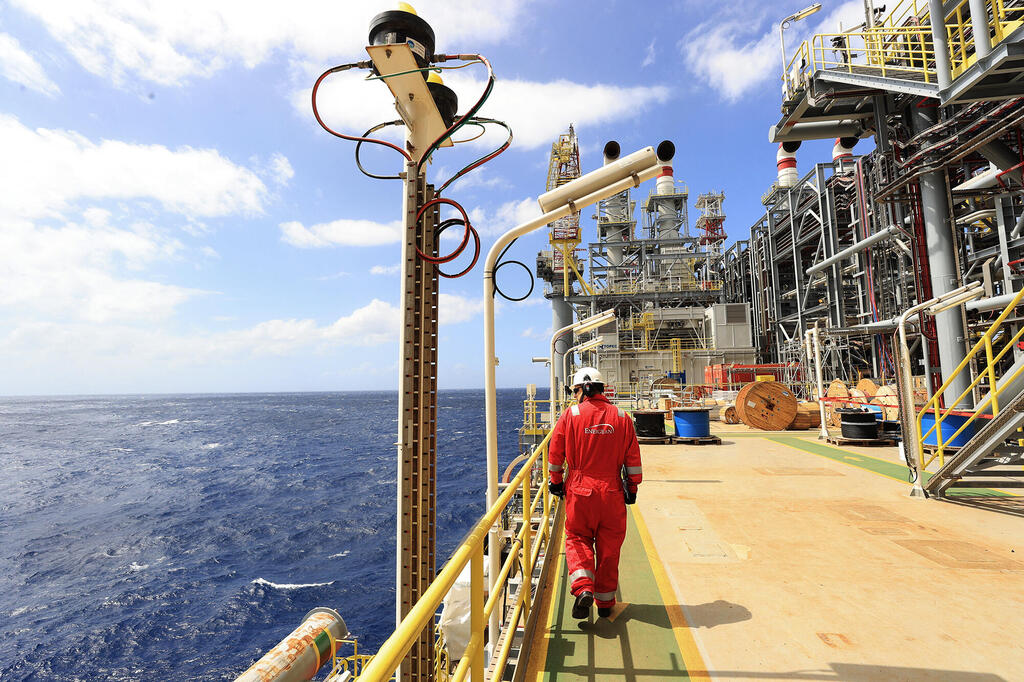
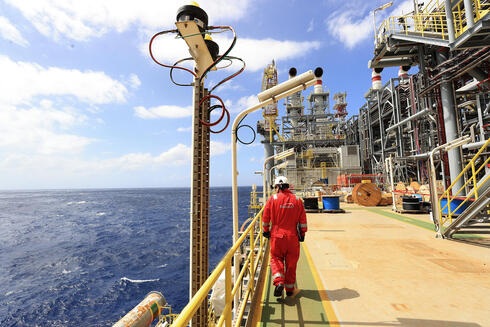
Since the beginning of the current confrontation with Iran, the Karish platform operated by Energean and the Leviathan platform operated by a partnership between Chevron, NewMed Energy and Ratio Energies have been shut down by order of Energy Minister Eli Cohen. Last week the minister extended the order until the night of March 25-26. Until that date, unless the decision is revised earlier, the platforms remain prohibited from operating.
Under normal conditions, natural gas accounts for more than 70% of Israel’s electricity generation fuel mix. The remainder comes from coal, renewable energy sources and diesel. Since the start of the war and the shutdown of the platforms, the Ministry of Energy and the electricity system operator Noga - Israel’s Electricity System Management Company have stopped publishing the composition of the fuel mix used by power producers, citing security restrictions.
The assessments and intelligence on which the minister bases decisions to shut down the platforms are also classified. According to the Ministry of Energy and the defense establishment, suspending operations reduces risk in light of the threats facing offshore energy infrastructure as the war escalates.
Despite the damage it sustained during the previous conflict, Hezbollah has recovered quickly and retains capabilities that could threaten the platforms. These include Russian-made Yakhont coastal missiles, Chinese-made C-802 missiles, as well as hundreds of drones and other attack systems.
An attack by a missile or unmanned aerial vehicle while a platform is active could have catastrophic consequences, potentially destroying it and putting workers’ lives at immediate risk. If a platform is struck while shut down, however, the damage would likely be less severe and repairs could allow operations to resume.
A single offshore gas platform is estimated to cost between $1.5 billion and $2 billion. According to a senior official in the Ministry of Energy, “These are the most expensive infrastructure facilities in Israel. Losing one entirely would mean billions of shekels in damage, while damage to an inactive platform might amount to tens of millions. That is the risk calculation.”
From the perspective of the defense establishment, the current economic losses to the gas companies are acceptable compared with the potential scenario in which an active platform is destroyed and international companies refuse to rebuild it because of the enormous costs and risks involved. Such a scenario could set Israel’s natural gas industry back by years.
The vulnerability of offshore platforms to attack is not new. Hezbollah’s naval warfare capabilities have long been known to Israeli defense planners. In response, the Israeli Navy acquired four Sa’ar-6 class defense ships at a cost of roughly NIS 2 billion. Built by ThyssenKrupp in Germany, the ships became operational shortly after the outbreak of the October 7 war.
2 View gallery
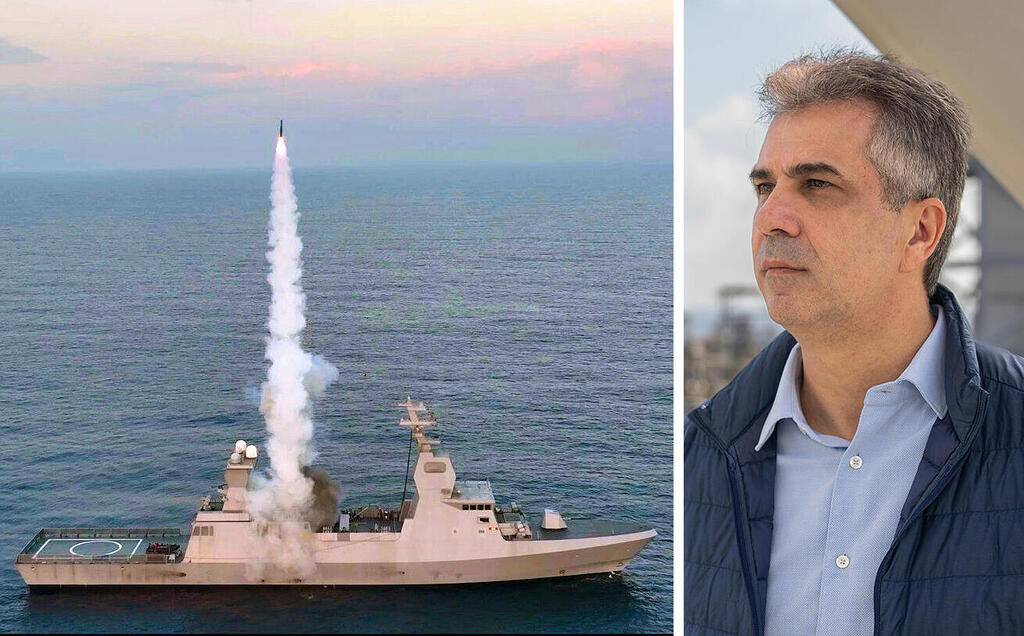
Energy Minister Eli Cohen alongside the Barak MX system.
(Photos: Calcalist, Asaf Magal)
The vessels were specifically designed to protect Israel’s economic waters and offshore gas infrastructure. They are equipped with advanced radar systems and air-defense capabilities, including the Barak MX interceptor developed by Israel Aerospace Industries and the naval version of the Iron Dome system developed by Rafael Advanced Defense Systems.
Their role is central to the operational concept of the Israeli Navy, whose crews train to respond to threats to offshore infrastructure. The Israel Defense Forces said the vessels operate continuously “to protect the strategic assets of the State of Israel.”
However, the ships are also remembered in Israel for the corruption allegations surrounding their procurement, known as the Israeli submarine affair. Among the senior officials warned by the state commission of inquiry are Prime Minister Benjamin Netanyahu and former Mossad chief Yossi Cohen.
Critics argue that despite the massive investment in naval defenses, the government is still choosing the safest possible approach by shutting down the platforms.
“If we bought such advanced ships and yet in real time the gas companies are forbidden from operating the platforms, what exactly did we achieve?” said a senior energy industry official. “It’s like evacuating communities along the northern border because the state cannot protect them from Hezbollah’s fire.”
Others defend the cautious approach. A senior security official familiar with the threat assessments said that because Israel has targeted Iranian energy infrastructure during the war, the risk of retaliation against Israeli energy assets has increased.
“Israel is systematically damaging Iran’s infrastructure,” he said. “That means we are living in a glass house. Even if we can provide 99.9% protection for the platforms, it is still better to minimize risks.”
While the defense establishment focuses on reducing risk, the gas companies are losing revenue. Chen Herzog, chief economist at BDO, estimates that shutting down the Karish and Leviathan reservoirs costs the Israeli economy about NIS 300 million per week. After two weeks, the loss amounts to roughly NIS 600 million.
The damage stems from halted gas exports as well as lost government revenue from royalties and taxes. The broader economic impact is even greater due to the higher cost of electricity production when coal and diesel are used instead of natural gas.
The government has made clear that it does not intend to compensate the gas companies. Even after the Tamar platform was shut down for about a month at the start of the October 7 war, and during a previous shutdown of Karish and Leviathan during last year’s tensions with Iran, the state provided no compensation.
From the government’s perspective, the gas remains in the reservoirs and can be extracted later, meaning the losses are temporary.
Nevertheless, the shutdowns are creating frustration within the natural gas industry. A senior energy sector official said the situation is so unusual that the agreements governing relations between the gas companies and the state contain no provisions addressing such circumstances.
“Every discussion about security threats always included the assumption that protection ships would provide strong defense for the platforms,” he said.
Meanwhile, the shutdowns send troubling signals to international investors. Just one week before the war with Iran erupted, the Ministry of Energy launched a fifth exploration tender in the Mediterranean, offering six exploration clusters covering 8,600 square kilometers.
The ministry hopes the tender will attract international energy companies to invest in Israel’s offshore gas sector. But the war has already disrupted those plans. A promotional “roadshow” scheduled in Houston has been postponed, and other efforts to attract investors have been frozen.
Some industry analysts warn that the repeated shutdowns may deter foreign investors.
“This sends a problematic signal to the market,” Herzog said. “Investors see that even when the electricity system is functioning, gas production is halted due to extreme caution.”
Officials at the Ministry of Energy reject the criticism and argue that the concerns are overstated. According to a senior ministry official, the Tamar reservoir continues to supply gas for the needs of the Israeli economy and, during certain periods when surplus production is available, also supports exports.
The official added that Israel’s electricity sector has not been affected so far by the shutdown of the northern gas platforms. Relatively mild weather conditions have prevented unusually high electricity demand that could strain the system, whose production units are geographically dispersed and have continued to function properly since the start of the war.
During the prolonged tensions that preceded the current confrontation between Israel, the United States and Iran, electricity producers also built up large reserves of alternative fuels. According to the senior official, “fortunately for us, the impact of the war on gas prices is not being felt in the Israeli economy.”
He added that companies considering investment in natural gas projects typically evaluate opportunities over a horizon of about 25 years. “A war in Israel is something that, from their perspective, has happened before,” he said.
At the same time, it remains unclear whether the current war with Iran and Hezbollah will prove to be the last such confrontation or the beginning of a new era marked by frequent cycles of escalation and exchanges of strikes between Israel and Tehran and Beirut.
In an official response, the Ministry of Energy said:
“The natural gas sector in Israel is considered attractive thanks to a stable regulatory environment, advanced development infrastructure and growing regional demand. Against this background, we estimate that the fifth competitive exploration process will continue to generate interest among international companies.
“The regional campaign currently underway may lead to a reduction, or even the removal, of some of the threats that have until now posed risks to Israel’s natural gas sector and contributed to the uncertainty in the Middle East. Such developments could further strengthen the willingness of international companies to invest in the region in general and in Israel in particular.”



