











“We may have to get down on our knees”: Israel fears U.S. arms restrictions
A senior Israeli defense official warns that changing political dynamics in Washington could make weapons purchases far more difficult, even for systems the IDF urgently needs. With the future of American aid under negotiation, Israel faces a growing dilemma over how quickly it can reduce its dependence on its most important military ally.
Within Israel’s defense establishment and the IDF, concern is growing that the upcoming elections in Israel and the United States could trigger a crisis in the strategic relationship between the two countries. Senior officials warn that a Democratic victory in either chamber of Congress, coinciding with the formation of another far-right government in Israel, could lead to restrictions on arms supplies to the IDF, particularly in light of the war in Gaza and settler violence in the West Bank.
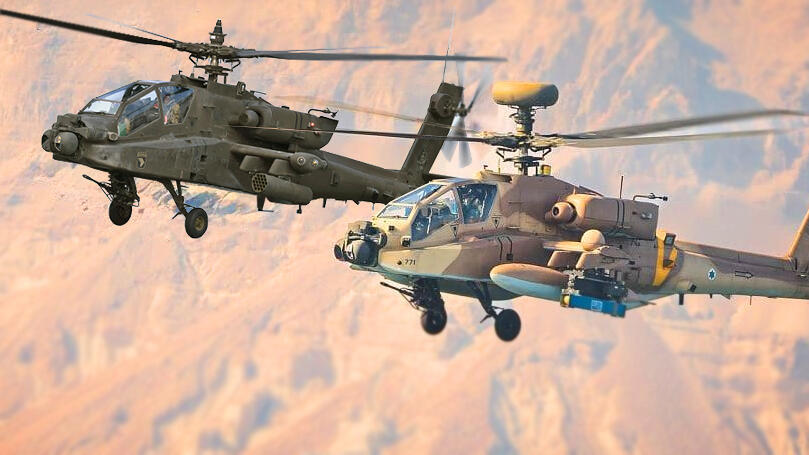
A senior defense official familiar with the bilateral relationship warned Calcalist that such a scenario “would accelerate unprecedented initiatives for sanctions and fundamentally alter the status quo we have grown accustomed to over decades of alliance and close ties with the United States. If, for instance, we need to order an Apache helicopter, an offensive platform the IDF requires, it won’t just be a matter of a heated dispute with the Ministry of Finance over funding. It will become a drawn-out ordeal involving the various power centers within Congress.”
He added, “We may find ourselves having to get down on our knees and beg for something that, just last week, was within reach, requiring only a signature to finalize. The Americans are constantly observing and monitoring events in the West Bank, asking why they should be funding and arming this.”
Behind these concerns lies a profound erosion of the bipartisan support that once served as a key asset in Israel’s relationship with the United States. That support has fallen to unprecedented lows as American public opinion grows increasingly critical of the Israeli government and the perceived failure of the IDF and police to curb settler violence in the West Bank, alongside the destruction and killing in Gaza.
In recent weeks, the U.S. administration has been developing targeted measures against individual officers, as well as restrictions that could include prohibiting specific IDF and police units from using American-supplied weapons. These steps are a response to what officials see as the forces’ indifference toward violence committed by Jews against Palestinians in the West Bank and their failure to prevent systematic human rights violations.
Although such measures may initially be limited in scope, they could pave the way for broader restrictions that would threaten the core of the IDF’s force-building capabilities. According to the senior defense official, “Two years pass quickly. In defense procurement and military force buildup, that is effectively ‘tomorrow morning.’ We do not know who will succeed President Trump in the White House, but we fully understand that pressure will mount, particularly under a Democratic administration.
“Such an administration would likely increase pressure on Israel precisely where it is most vulnerable, including its reliance on American weaponry, using that dependence as leverage to advance initiatives regarding the Palestinians and push for an Israeli withdrawal from areas currently held by the IDF in Gaza, Lebanon and Syria. We are not doing enough to avert this crisis, which could escalate into a complete cutoff of essential munitions, spare parts and weapons systems, potentially forcing us to seek solutions in China.”
Discussions that began last summer on a new framework for U.S. security assistance to Israel have yet to produce a final agreement. The Israeli team is led by Ministry of Defense Director-General Amir Baram, while the American side includes U.S. Ambassador Mike Huckabee and State Department adviser Dan Holler. The talks are expected to resume after the U.S. midterm elections, and the results of elections in both countries could influence the terms of the agreement.
The emerging framework is expected to differ from aid packages negotiated in previous decades. Those agreements provided Israel’s defense establishment with an annual dollar-denominated budget to purchase weapons and equipment from American manufacturers, primarily major platforms for the Air Force, including fighter jets, helicopters, transport aircraft and refueling planes.
The current agreement, signed toward the end of former President Barack Obama’s term, expires in September 2028. Under its terms, Israel receives $3.8 billion annually over 10 years.
The new framework could include a smaller direct dollar-denominated component, placing greater emphasis on cooperation between Israeli and American defense industries to develop future technologies and capabilities. From Israel’s perspective, the shift reflects an acknowledgment of its declining standing in American public opinion, amid growing calls to end the aid altogether. It may also be an attempt to accommodate President Trump, who has expressed opposition to spending billions of dollars on the security of other countries.
In private discussions, however, senior Israeli defense officials acknowledge that although the country needs to reduce its dependence on American funding, this is the worst possible time to relinquish billions of dollars in annual assistance that are essential to its military buildup, particularly while it remains engaged in a protracted regional conflict spanning multiple fronts.
“Israel must leverage the fact that a sympathetic president occupies the White House to formulate an updated framework for the multiyear aid agreement that underpins the strategic relationship between the two nations,” Dr. Shay Har-Zvi, a senior researcher and head of the International Program at Reichman University’s Institute for Policy and Strategy, told Calcalist. “A heavy cloud hangs over this alliance, yet in Israel, there is still a failure to fully grasp just how real this threat is. I am more concerned about the emerging developments in our relations with the U.S. than I am about the Iranian threat, which we will know how to handle. A weakening of our ties with the U.S. would be a dramatic situation.”
According to Har-Zvi, “Unlike past midterm elections, which focused on domestic issues and reflected public sentiment toward the ruling party, it is evident that support for Israel is playing a role in certain states and districts in these elections. Consequently, the results may serve as a litmus test for Israel’s standing among the American public.”
Israel’s efforts to strengthen its self-reliance in munitions and the components needed to manufacture them domestically are not intended to replace American arms. Between 2021 and 2025, the United States supplied 68% of Israel’s major weapons systems. Expanding local production therefore cannot provide a substitute for fighter jets, helicopters and other platforms sourced from the American defense industry.
In recent months, the Ministry of Defense has ordered two new fighter squadrons for the Israeli Air Force through the U.S. Department of Defense: a fourth squadron of F-35 aircraft from Lockheed Martin and a squadron of F-15IA aircraft from Boeing. The aircraft are scheduled for delivery over the coming decade. Israel has also ordered 12 helicopters, including Apache helicopters whose purchase was finalized at the last minute last week.
Israel’s procurement plans extend further, encompassing refueling aircraft, transport helicopters and armored all-terrain vehicles for the IDF, as well as platforms needed to strengthen the Navy’s capabilities against a range of complex maritime threats.
“Now is the time to strengthen partnerships”
Meanwhile, amid concerns about possible U.S. restrictions and punitive measures by other countries, including the UK, France and Canada, the IDF and the U.S. military are tightening coordination and enhancing readiness for a potential resumption of conflict involving Iran.
At the same time, Israel’s defense industries continue to operate largely as usual. Weapons systems used by the IDF in conflicts involving Iran, Lebanon and Gaza attracted international attention at the AUSA defense exhibition in Washington last week, which drew approximately 25 Israeli defense companies.
Unlike the exclusion and boycotts Israeli defense companies have faced at international arms exhibitions in recent years, particularly in France, Washington offered a welcoming environment for Israeli industry representatives and officials from the Ministry of Defense.
Just days earlier, Rafael and U.S. defense company Raytheon announced the completion of production and assembly of the first Iron Dome interceptor missile on American soil. Meanwhile, the first Bradley armored personnel carriers equipped with Elbit Systems’ Iron Fist active protection system began delivery to the U.S. Army.
These developments form part of a Ministry of Defense initiative to expand Israeli arms exports to the United States and North America. In 2025, the region accounted for just 13% of Israel’s total defense exports, which reached a record $19.2 billion.
Among those attending the exhibition were Yair Kulas, head of the Defense Ministry's SIBAT directorate (The International Defense Cooperation Directorate), and Major General Nadav Lotan, commander of the IDF Ground Forces. Lotan helped promote Israeli systems to potential customers.
The U.S. defense budget is the world’s largest, currently standing at approximately $1 trillion. It is projected to rise to $1.5 trillion by 2027. According to Kulas, “Now is the time for our industries to strengthen partnerships with American firms that export according to NATO standards, a move that will also facilitate our expansion into other global markets.”
The warm reception in Washington and orders placed with defense companies help Israel maintain a sense of business as usual. As long as weapons continue to arrive by airlift and aboard large cargo ships docking at Israeli ports, officials in Jerusalem may be tempted to dismiss warnings about the future of the alliance as background noise.
But if those warnings materialize into delays in shipments of bombs, spare parts and other essential equipment, Washington’s goodwill may prove less dependable. The consequences would be felt most directly by the IDF and Israel’s broader defense establishment.



