










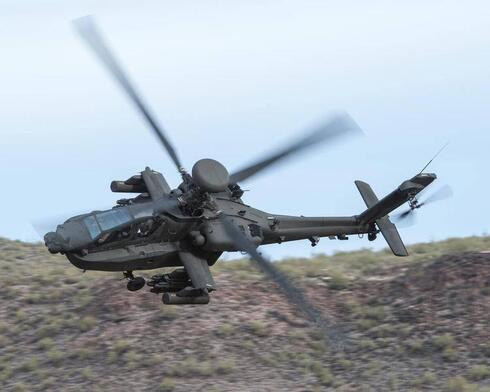
The Apache deal exposes the chaos in Israel’s defense budget
The government has approved a cut to the Arab sector’s five-year development plan to fund 12 helicopters, even as the defense establishment’s long-term commitments exceed the figures in the government’s budget plan. The dispute raises questions about spending priorities and fiscal discipline.
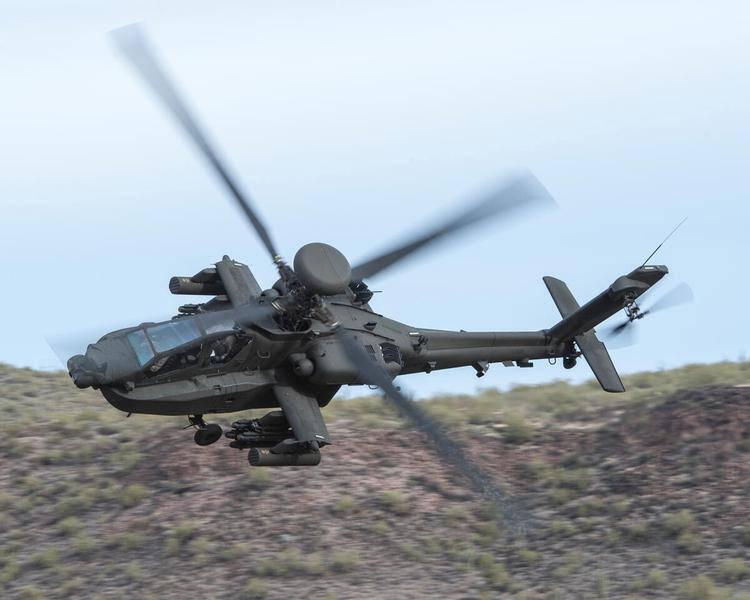
The Israeli government approved on Wednesday a budget cut of more than NIS 1 billion to fund the purchase of 12 Apache helicopters from Boeing. The deal was signed on Wednesday night. Although the helicopters will not arrive for several years, payments begin now.
In early August, the Ministerial Committee on Procurement approved the purchase and identified a budgetary source to cover its cost. However, the Ministry of Defense encountered complications in negotiations with Boeing over payment terms. About two weeks ago, in the midst of the holiday season, the defense establishment announced that a revised payment schedule was needed, increasing expenditures by approximately NIS 1 billion over the next four years.
At the time, the Ministry of Defense signaled that the Apache deal was off the table, blaming the Ministry of Finance. Yet the budget cut ultimately approved is designed precisely to meet Boeing’s revised payment requirements.
The cut totals approximately NIS 1 billion over four years, with the bulk coming from the five-year development plan for the Arab sector: NIS 169 million in 2027, NIS 342 million in 2028 and NIS 453 million in 2029. The budgets for 2027 through 2029 have not yet been approved. No one knows which government will be in power then or what its priorities will be. How, then, can the government cut a budget that does not yet exist?
The answer lies in a 2015 law requiring the government to present a three-year budget plan, known as the “numerator.” The plan projects government expenditure and revenue over the coming years and assesses whether the commitments the government undertakes will remain within budgetary limits.
The mechanism does more than provide a forecast. If the government’s commitments exceed the limits set by deficit and expenditure rules, it cannot take on additional obligations for future years without identifying a specific budgetary source to fund them.
As a result, the government’s ability to make commitments for future years is constrained, even though the budgets themselves have not yet been approved and the budgetary rules could change in the meantime. According to the numerator published in June 2026, the projected deviation from budgetary frameworks stands at NIS 100 million in 2027, NIS 300 million in 2028 and NIS 15.7 billion in 2029. The bulk of the projected deviation is therefore concentrated in 2029, meaning that any additional commitment for that year requires an identified funding source.
Commitments missing from the numerator
This brings us to the question of why the Ministry of Finance rejected the Ministry of Defense’s proposal to defer other deals and use the resulting savings to fund the helicopters.
The problem is that the figures in the numerator, which tracks the government’s long-term budgetary commitments, do not capture the full extent of the defense establishment’s obligations. According to the document, government spending on defense and public order is projected to reach NIS 150 billion in 2027, NIS 156 billion in 2028 and approximately NIS 165 billion in 2029. However, the document clarifies that these figures exclude force-buildup programs, expanded routine security operations, reconstruction costs and other expenditures on which the government has not yet formally decided.
At first glance, these might appear to be programs that have not yet been approved and therefore do not constitute government commitments. In practice, however, the Ministry of Defense has already entered into agreements and assumed obligations that exceed the budget figures presented in the numerator.
This creates a gap. While the budget plan assumes defense spending of approximately NIS 165 billion in 2029, the defense establishment has already committed to expenditures that could require a significantly larger allocation.
The Ministry of Defense proposed canceling a different procurement deal and using the resulting savings to fund the Apache helicopters. The Ministry of Finance rejected the proposal. The Finance Ministry’s legal counsel, Dudi Koppel, ruled that as long as the Ministry of Defense is exceeding its budget, cuts elsewhere in its budget cannot be considered a valid funding source.
The government was therefore required to identify an alternative source of funding. In this case, it chose the five-year development plan for the Arab sector.
A genuine cut or an accounting ruse?
Officials at the Ministry of Defense described the move to Calcalist as “a Treasury-orchestrated sham, a political spin.”
That assessment is partly justified. Finance Minister Bezalel Smotrich stands to gain politically from announcing cuts to the budget allocated to the Arab sector. Moreover, it is far from certain that the planned cuts for the coming years will be fully implemented. The government responsible for drafting the 2027 budget could set different priorities.
However, the Ministry of Finance insisted on identifying a specific budget line rather than accepting a theoretical, across-the-board cut for a reason: it wanted to preserve the credibility of the numerator mechanism. If the government could announce vague future cuts and present them as a funding source for any new commitment, the mechanism would lose its meaning. Given that theoretical, across-the-board cuts to future budgets have already been used, the ministry demanded a concrete funding source this time.
Some senior government officials with extensive experience in budgetary matters argue that it is absurd for the defense establishment to have to fight to carry out procurement it considers essential, only to be constrained by limits on future budgets that have not even been approved. This criticism could lead to proposals to abolish the numerator mechanism altogether.
Yet the benefits of the mechanism outweigh its drawbacks. It serves as a reminder of a simple truth: resources are finite, and not every commitment can be funded. In the absence of a better alternative, the numerator remains the “least bad” solution.
That does not, however, absolve the government of responsibility for the chaos surrounding the defense budget. The dysfunction undermines the management of the state budget, affects government ministries and the public, and may even compromise national security.
The struggle between the Ministry of Finance and the Ministry of Defense has dragged on for far too long. Decisions about the scale of defense spending and how to fund it must ultimately be made by elected officials. Professional staff cannot resolve disputes that also involve questions of policy and national priorities.
So far, Prime Minister Benjamin Netanyahu and Smotrich have avoided making a comprehensive decision on the defense budget. Time is running out, and the task will likely be left to the next government. In the meantime, the public will continue to pay the price for this lack of leadership.



