










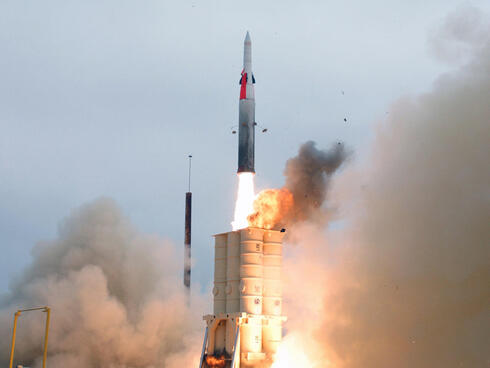
Missile shortages are pushing Israel toward defense privatization
As wars consume interceptors faster than manufacturers can replace them, policymakers are increasingly looking to capital markets to finance production.
Rocket engine manufacturer Tomer has emerged as the latest name in Israel's growing discussion over defense industry IPOs, joining Rafael and Israel Aerospace Industries (IAI). The development reflects mounting pressure on defense manufacturers to rapidly expand production capacity as prolonged wars drive unprecedented demand for missiles, interceptors and precision-guided weapons.
Unlike Rafael and IAI, however, Tomer occupies a uniquely sensitive position within Israel's defense establishment.
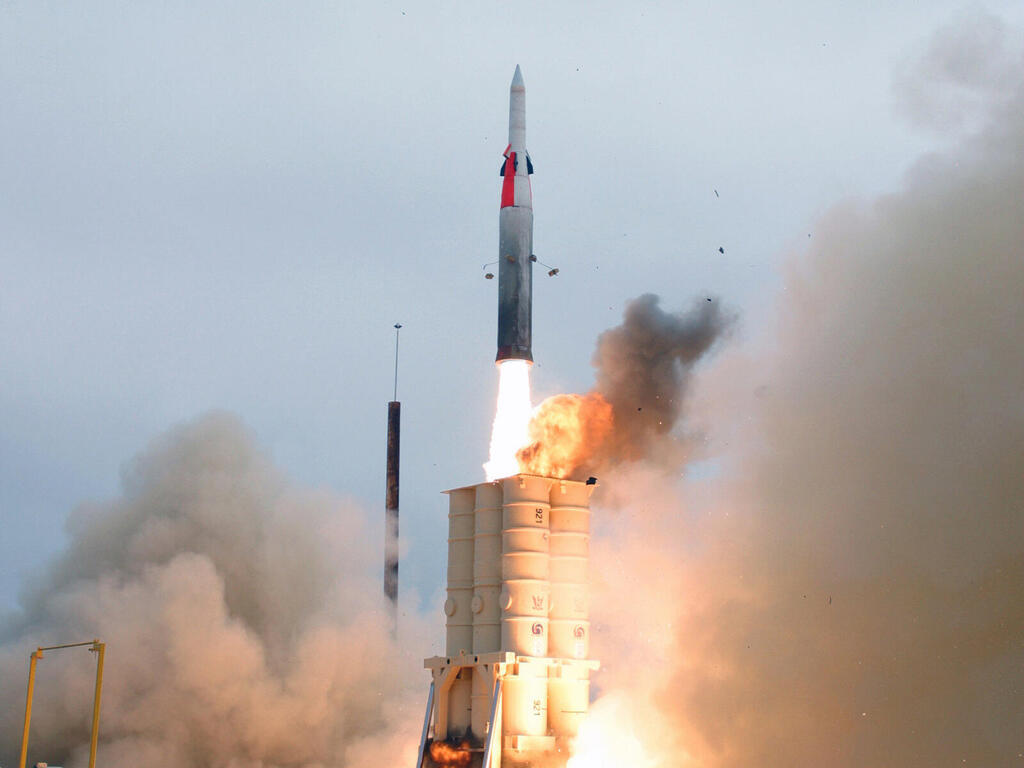
Most of the company's activities remain classified. It manufactures propulsion systems for IAI's Arrow 3 and Barak MX air defense missiles, engines for Elbit Systems' precision artillery rockets, and propulsion systems for IAI's Shavit launch vehicle used to place the Ofek series of reconnaissance satellites into orbit.
Tomer has operated as a wholly government-owned company for roughly a decade after being separated from Israel Military Industries (IMI). When the government privatized IMI in 2018, selling most of the company to Elbit Systems, it deliberately retained the heavy propulsion and rocket engine business under state ownership.
The reasoning was straightforward: the technologies concentrated within Tomer were considered strategic national assets whose expertise the government was unwilling to relinquish.
At the time, the idea of subjecting such a company to the transparency and reporting requirements of public markets would have seemed almost unimaginable.
That thinking has begun to change.
Over the past year, discussions surrounding a potential Tomer IPO have gathered momentum within both the Government Companies Authority and the company's management, reflecting a new reality shaped by wars of attrition in both Europe and the Middle East.
Unlike shorter conflicts of previous decades, today's wars require nations to replenish missile inventories continuously. That has fundamentally altered the economics of defense manufacturing, forcing companies to shift from producing relatively small numbers of highly sophisticated systems toward industrial-scale manufacturing capable of sustaining years of combat.
In that environment, policymakers increasingly see the capital markets as a potential source of financing for expanding production.
"If in the past we focused primarily on developing highly sophisticated weapons, even at very high cost, today the challenge is different," a senior Israeli defense industry executive told Calcalist.
"'Boutique' weapons are no longer enough. Countries still want advanced systems, but now they need them in large quantities. Missile propulsion systems, both offensive and defensive, have become one of the world's most sought-after defense products, and the response has to be a dramatic expansion of production capacity."
While production figures remain classified, Tomer's growth since October 7 illustrates the scale of the transformation.
The company has doubled its workforce from roughly 500 employees to around 1,000, expanded its manufacturing facilities and become one of the key bottlenecks in Israel's missile production chain.
Its factories are working to support both Israel's operational requirements and growing international demand.
IAI is producing Arrow 3 interceptors for Germany while supplying Barak MX systems to multiple international customers. Elbit Systems is manufacturing long-range precision artillery rockets for several European armies rapidly expanding their arsenals amid concerns over Russia.
The result is unprecedented pressure throughout the missile supply chain.
That challenge extends well beyond Israel.
The possibility of renewed military confrontation involving Iran has further underscored concerns over interceptor inventories. During the most recent conflict with Iran, both Israel and the United States consumed significant numbers of expensive interceptor missiles defending against repeated ballistic missile attacks.
The shortages are particularly acute in Patriot PAC-3 interceptors, THAAD missiles and SM-3 interceptors used by the United States to reinforce Israel's missile defenses alongside Arrow 3 and David's Sling.
David's Sling itself has been adapted to intercept threats at higher altitudes than originally envisioned, further increasing operational demand.
Replacing those inventories is neither quick nor inexpensive.
An Arrow 3 interceptor is estimated to cost between $3 million and $4 million. A THAAD interceptor costs approximately $12 million to $15 million, while the latest SM-3 interceptors can cost significantly more.
More importantly, production cycles typically span two to three years.
"In today's market, price is becoming almost secondary," former Israeli Air Force Air Defense Commander Brig. Gen. (res.) Ran Kochav told Calcalist.
"When countries negotiate purchases of air defense systems, the discussion quickly shifts from cost to delivery schedules. Governments are willing to pay almost any price if someone can deliver interceptors quickly enough."
According to Kochav, the defining principle of modern defense manufacturing has become what he describes by the Hebrew acronym KAPAZH: small, simple, inexpensive and mass-produced.
"The solution is industrialization," he said. "This applies to interceptor missiles, offensive weapons, radars and detection systems alike. No country has unlimited inventories, and every government going to war now understands that production capacity is becoming as important as technological superiority."
Despite the growing momentum, Tomer remains far from becoming a public company.
Among Israel's major defense manufacturers, IAI is the only company for which the government has formally approved a partial privatization.
Over recent months, substantial progress has been made toward listing a minority stake while resolving complex issues surrounding classified activities and disclosure requirements.
Rafael, meanwhile, continues to push for its own IPO.
Company executives argue that allowing only IAI to access public capital would create an uneven competitive landscape. Yet Rafael's flotation remains considerably further away. The government has not approved such a move, the company has yet to undergo a formal valuation, and both the Defense and Finance ministries have expressed reservations about proposals currently under consideration.
Yet the broader financial challenge facing Israel's defense industry is becoming increasingly difficult to ignore.
Even after Israel's defense budget roughly tripled following the October 7 attacks, government spending alone may not be sufficient to finance both the rebuilding of depleted military inventories and the expansion of industrial capacity required for future conflicts.
That leaves policymakers confronting a trade-off they have long sought to avoid.
For decades, the Ministry of Defense resisted exposing strategically important defense companies to public markets because of concerns over secrecy and national security.
Today, however, financing large-scale production is itself becoming a strategic imperative.
Budgetary constraints, growing export demand and the IDF's need to rapidly replenish missile stockpiles are forcing the ministry to reconsider where those red lines should be drawn.
"The traditional opposition within the defense establishment to selling stakes in defense companies was driven largely by security concerns, and perhaps also by institutional conservatism," one senior defense market analyst familiar with the industry's evolution told Calcalist.
"I remember how unsettling even the idea of privatizing Tomer or selling shares in IAI once seemed because these companies develop missile systems and highly classified technologies.
"But the nature of the challenge has changed. In the past, the primary obstacle was technological, developing systems capable of intercepting ballistic missiles at extraordinary speeds and altitudes. Today, the challenge is increasingly found on the factory floor."
In an era of prolonged wars, industrial capacity may prove just as strategically important as technological innovation.
First published: 09:48, 02.08.26



