










Iron Dome and Iron Beam maker Rafael takes on the drone threat with upgraded Spyder system
The company demonstrated new capabilities against low-signature UAVs as militaries rethink how to protect forces and critical infrastructure.
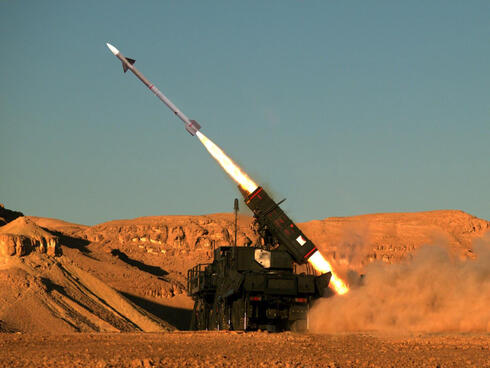
Rafael Advanced Defense Systems has successfully completed a test of an upgraded version of its Spyder air defense system, demonstrating the system’s ability to intercept multiple aerial threats in complex scenarios, including unmanned aerial vehicles with low radar signatures.
The test, conducted in Israel, involved the Spyder system equipped with Rafael’s I-DERBY ER and I-DERBY LR missiles and simulated both current and future battlefield threats. According to Rafael, the system achieved direct “hit-to-kill” interceptions, striking targets precisely rather than relying solely on proximity-based warheads.

The demonstration comes as militaries around the world are reassessing air defense capabilities following the rapid proliferation of drones, cruise missiles and other low-cost aerial threats. Recent conflicts in Ukraine and the Middle East have highlighted the growing challenge of defending critical infrastructure and military forces against increasingly sophisticated and inexpensive airborne systems.
Rafael said the latest test incorporated updates based on operational lessons from the war in Israel and experience gained from other theaters where the system has been deployed.
“Modern battlefields are changing rapidly, and air defense systems must continuously adapt,” Rafael said. The company has been upgrading Spyder’s capabilities as part of an effort to respond to evolving threats, including drones with smaller radar signatures that are more difficult to detect and intercept.
Spyder is a mobile short- to medium-range air defense system designed to protect strategic assets and military forces against a range of aerial threats. The system uses Rafael’s PYTHON and I-DERBY air-to-air missiles and is built around a modular architecture that allows it to be deployed in both stationary and mobile configurations.
Related articles:
Unlike larger air defense systems designed primarily to defend against ballistic missiles or long-range threats, Spyder is intended to provide a flexible layer of protection against aircraft, helicopters, drones and precision-guided weapons.
The system has been adopted by several international customers, including NATO and European Union member states. Romania recently selected Spyder as part of a major effort to strengthen its air defenses, following the Czech Republic, which signed an agreement with Rafael in 2020.
The growing interest from European countries reflects broader concerns over air defense capacity following Russia’s invasion of Ukraine, where drones and missiles have become central components of modern warfare. Countries across Europe have been investing in systems capable of countering both conventional aircraft and newer asymmetric threats.
Rafael CEO Yoav Turgeman said the successful test demonstrates the company’s continued investment in adapting its systems based on operational experience.
“Rafael is a global leader and manufacturer of combat-proven air defense systems that provide a response to complex threats at a variety of ranges,” Turgeman said. “The successful test of the Spyder system reflects our commitment to continue developing advanced capabilities based on operational experience, technological innovation and the implementation of operational lessons.”
Spyder joins Rafael’s broader portfolio of air defense systems, which includes Iron Dome, Iron Beam and David’s Sling.



