










Analysis
Netanyahu is ready to give up the foundations that held the economy together while he handed out money
Netanyahu speaks of a sanctions “bypass economy” built on blockchain. But Israel’s economy did not survive fifteen years of fiscal populism thanks to digital currencies. It survived thanks to three buffers, all anchored in the Western financial system, the very system he proposes that Israel prepare to live without.
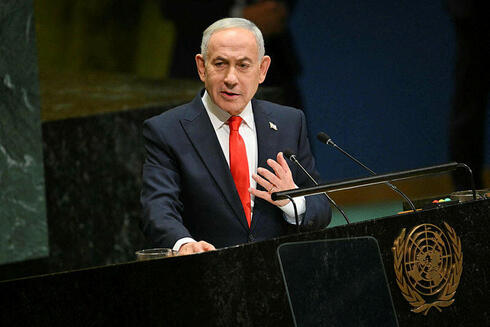
Prime Minister Benjamin Netanyahu said on Friday, in an interview with Channel 10’s economic channel, that he fears banking sanctions against Israel and that the country must “organize itself in a bypass economy”. Asked whether blockchain was the alternative, he replied “one of them, certainly”. But the big story is not crypto. It is what the prime minister admitted along the way: that the foundation on which the Israeli economy has rested for a decade and a half, and which prevented the kind of crisis suffered by almost every populist government in modern history, may be slipping away.
A populist without a crisis
The puzzle dates to 2009. In the classic model of Rudiger Dornbusch and Sebastian Edwards, a government that runs an expansionary fiscal policy and distributes money to its support groups regardless of the business cycle ends in crisis: twin deficits, capital flight, currency collapse and inflation. According to research I have conducted over the past eight months, and the existing literature, the Netanyahu governments meet the criteria. Between 2009 and 2019, a decade of uninterrupted growth and near-full employment, the structural deficit averaged 3.46% of potential GDP, almost identical to the headline deficit (3.27%), according to IMF data. The deficit was chosen rather than cyclically incurred.
The populism lay not only in the size of the spending but in its destination. The 37th government, formed with the Haredi parties and the far right, committed in 2023-2025 to coalition funds averaging NIS 5.24 billion a year, the highest share ever relative to the budget, more than four times the level of the Bennett-Lapid government. Of every 100 shekels directed to Haredi destinations, 77 moved through discretionary support payments whose criteria the ministry sets itself.
And yet the crisis did not come: growth continued, high-tech thrived, the shekel strengthened, the current account stayed in surplus, inflation expectations never de-anchored, and the debt-to-GDP ratio even fell at times. Netanyahu became one of the few populist leaders whom, against the established pattern, “the economy” did not bring down.
Three buffers
The explanation lies in three buffers that interrupted the chain of transmission to crisis, each at a different link. The first is the knowledge-intensive export sector. In the classic model, a strengthening currency hurts exports and opens a current-account deficit. Not in Israel: its exports of knowledge services, software and multinational R&D centres are bought for their technological uniqueness, not their price. The real exchange rate appreciated by 18.3%, and the current-account surplus grew rather than eroded, from USD 6.1 billion in 2009 to a peak of USD 16.7 billion in 2024, and USD 12.6 billion in 2025, in wartime.
The second is the domestic institutional investor base. Populist economies usually collapse when the foreign financier who pays for the deficit leaves. In Israel the government’s main financier is us: pension and provident funds fed by mandatory saving, whose inflows grow every year. The hard test came with the war. Between 2023 and 2025 the government raised NIS 646 billion, a record NIS 278 billion in 2024 alone. 81% of the 2024 issuance was absorbed in the domestic market, at market prices, without a single failed auction and under five downgrades by the three rating agencies. In an economy dependent on a foreign financier, war plus downgrades ends in a sudden stop. In Israel it was absorbed.
The third is an independent and credible central bank. The last link in the model is printing money to cover the deficit, followed by inflation. Central-bank financing of the deficit has been prohibited since 1985, and the 2010 Bank of Israel Law, enacted under Netanyahu, reinforced the ban. But the bank’s more important role is anchoring expectations. When global inflation peaked at 8.7% in 2022, Israel’s stopped at 4.4%, and through the war the average of inflation expectations peaked at 2.99%, brushing the 3% ceiling without breaking through.
The choice
The Netanyahu governments did not create the three buffers; they inherited them. But they preserved them carefully, and at times reinforced them. The pattern is consistent: institutions that stood on one of the crisis channels were preserved, even when they constrained the government. Institutions that constrained the government but stood on no crisis channel were eroded: the fiscal rules, the numerator (the multi-year expenditure-alert rule) and the professional echelon of the Finance Ministry. This is Functional Selectivity. In Hungary, Fidesz nationalized the private pension funds and ended the central bank’s effective independence; in Turkey, Erdogan dismissed three central-bank governors. The Netanyahu governments touched neither the Bank of Israel nor pension savings, nor high-tech and the foreign investors who finance it.
The Masking Effect
This system had a price that was not seen. Because the buffers blocked the crisis, the markets did not punish the populism, and the warning signals never appeared. This is the Masking Effect: not complacency, but a direct consequence of the buffers themselves. And without a signal, there is no incentive to maintain the foundations on which the buffers rest: human capital, the breadth of the employment and tax base, and institutional credibility. The resilience undermined itself.
Where the model may stop working
The current government has exposed the first cracks. In 2023, during the judicial overhaul, the shekel decoupled from the Nasdaq: the first moment at which a risk generated at home, in politics, was priced in the market. The buffers held, but it became clear that they are sensitive to what happens to institutions. This week more than 60 economists warned against isolation and sanctions. And on Friday the prime minister himself said out loud what had mostly been said by his critics.
Here is the decisive point: the three buffers do not stand on their own. All are anchored in the Western financial system. High-tech lives on access to the American capital market, foreign investment and dollar clearing. The institutional investors hold a large share of their assets abroad. And the Bank of Israel’s foreign-exchange reserves, the anchor of its capacity to stabilize the shekel, sit in the same system that banking sanctions would hit directly. A “bypass economy” is no substitute.
The model that let Netanyahu pursue populist policies without paying for them in a crisis rested on one unstated assumption, unstated because it was obvious: that Israel does not become Sparta and remains part of “the West”. Economies that live by circumventing sanctions have neither credible central banks, nor deep capital markets, nor technology exports built on freedom of thought. On Friday the prime minister did not merely put the buffers at risk. He described a world in which they no longer work, and proposed that Israel prepare to live in it. The question voters will decide the day after tomorrow is whether to prepare for that world, or to prevent it.
The author researches fiscal populism in Israel. The framework presented here is based on the paper “The Crisis That Did Not Come: Explaining Fiscal Populism Without Collapse in Israel, 2009-2025”.



