










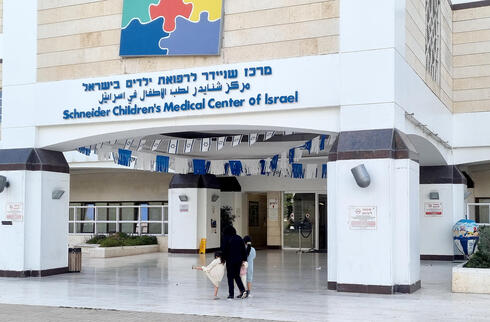
Schneider hospital launches $50 million venture fund focused on children's health
The fund has raised $20 million in its initial closing and has already invested in three companies. Backed by Schneider, Clalit and private investors, it aims to bring technologies developed specifically for children into clinical practice.
Schneider Children's Medical Center, part of the Clalit Health Services group, is establishing Schneider Children's VC (SCVC), an investment fund focused on innovation in pediatric healthcare, Calcalist has learned. The fund has raised approximately $20 million in an initial closing, allowing it to begin making investments, and is targeting a total of around $50 million. It has already invested in three companies, with individual investments ranging from $500,000 to $3 million. Its anchor investors are Schneider and Clalit, the Dor Group, and Ronen Gadot, who serves as the fund's managing partner.
"The fund was born out of a need within the field of pediatrics. We realized there was significant economic potential here and wanted to create a financial vehicle to advance the sector," Gadot tells Calcalist. According to him, SCVC is the first fund in Israel dedicated to pediatric healthcare. Globally, he says, there are only two other comparable funds, one in Boston and the other in Barcelona. "Only a small percentage of life sciences investments is directed toward pediatrics. There is a significant opportunity here, both from a business perspective and in terms of healthcare outcomes."

The fund is also seeking to develop collaborations with major technology companies in data and AI, with the aim of using these technologies, among other things, to enable earlier disease detection.
Gadot, a former pilot, has spent the past several years working in medical innovation. He was part of the founding team of Philips' innovation fund before moving into the startup ecosystem. His personal experience also helped inspire the initiative. "I am the father of a child with a rare genetic disease, and I see firsthand the need for medical innovation in this space. For me, this is a dream come true," he says.
SCVC operates as a separate entity from Schneider, although both the hospital and Clalit are partners in the fund. According to Gadot, this relationship gives it access to clinical settings in which to evaluate technologies, as well as to Clalit's data. Operations began in February, following the signing of an agreement with Clalit. Since then, the fund has evaluated approximately 170 companies and selected three for investment.

The model is designed to allow the fund to assess companies, their teams and their products in a clinical setting before investing. It can then help them advance product development, refine their business models and bring their technologies to market. The fund believes that this close integration with the healthcare system can reduce investment risk while generating medical value and financial returns for both investors and the healthcare system.
The initiative is also based on the premise that early intervention can prevent diseases or reduce their impact later in life. Although children account for approximately 30% of Israel's population, many of the technologies and medications used in pediatric care were originally developed for adults. Schneider aims to promote what it calls "Tech-Ped," an approach focused on developing technologies specifically for children from the outset, rather than adapting solutions initially designed for adults.
The broader ambition is to move gradually from preventive medicine toward proactive medicine: identifying diseases and risk factors before symptoms appear, potentially eliminating or reducing the need for medical intervention later on. This approach considers the continuum from childhood through adolescence and young adulthood, based on the premise that the roots of many physical and mental health conditions that emerge later in life are already present during childhood.



