









Israel’s Communist Party owns 32 properties, including a Tel Aviv building worth $6.5 million
Maki’s real estate portfolio stretches across 24 localities, from offices and apartments to entire buildings. The party says properties acquired decades ago help finance its operations and sustain a year-round political presence.
The Israeli Communist Party (Maki) is the second-wealthiest party in the Knesset, behind only Likud. Despite holding relatively few Knesset seats, it serves as the legal entity behind the Hadash faction and owns 32 properties across Israel, some in unexpected locations.
Its wealth does not come from the massive state funding and membership dues that support Likud, or from the donations and financial guarantees that backed the Yashar party led by Gadi Eisenkot. Instead, Maki’s assets include a portfolio of real estate accumulated over decades.
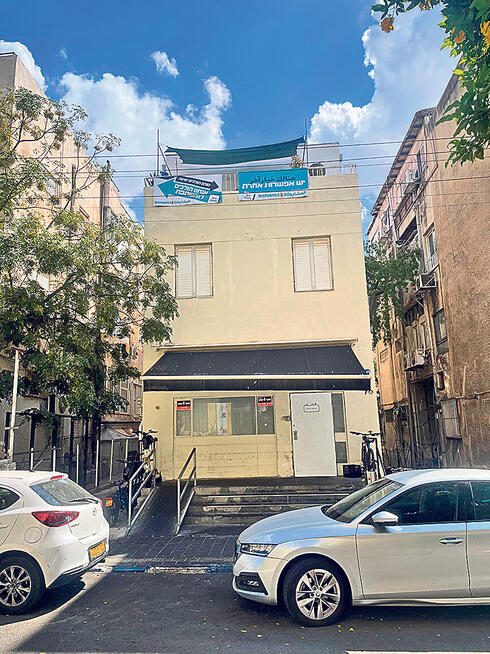
One example stands in the heart of Tel Aviv, on one of Israel’s most expensive streets, named after one of the founders of Zionism. At 70 Ahad Ha’am Street, next to Rothschild Boulevard, a three-story building purchased in its entirety by Maki in 1970 stands as an unlikely outpost of communist anti-Zionism in the heart of the city.
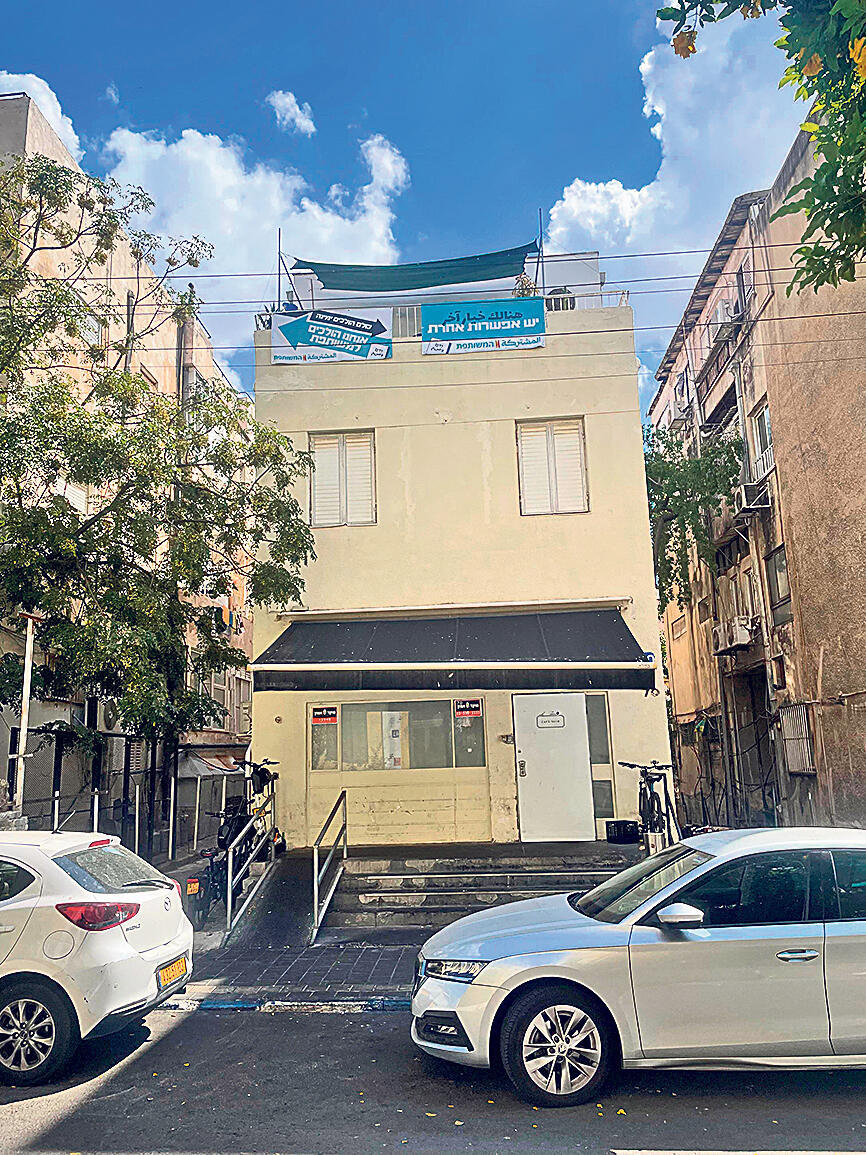
The ground floor is leased as a warehouse to the Café Noir restaurant. The third floor, until recently decorated with two red communist flags, now displays signs for the Joint List. Professional estimates put the building’s value at at least NIS 20 million ($6.5M).
“Many of these properties were purchased during the 1970s or around the time of the state’s founding. But we had the wisdom to hold on to them, unlike many other parties that sold off their assets,” says Fadi Abu Younes, secretary of Maki’s Central Committee.
His remarks take on added significance in light of other parties’ property sales. In July, Calcalist reported that Likud had sold eight properties since 2021, four of them to individuals with close ties to the party. Some of the transactions showed significant discrepancies between the sale prices and appraised values. Sources within Likud said the properties had been sold to the highest bidders.
Maki’s history dates to 1919, when it was founded as the Hebrew Socialist Workers Party. In 1924, it was renamed the Communist Party of Palestine. In 1948, following the War of Independence, Arab communist leaders who remained in Israel, together with the Communist Party of Palestine, established Maki. From 1965 to 1989, the party was known as the New Communist List, or RAKAH.
In its latest report to the Registrar of Political Parties, Maki listed rights in 32 distinct properties across the country. Five are in Haifa. The most prominent is a three-story building on Al-Hariri Street, with a total built-up area of 299 square meters: 49 square meters on the ground floor and two additional floors of 125 square meters each.
According to the report, the ground floor is leased out, the first floor is used by the party, and fees are collected for the use of part of the second floor.
Based on estimated prices of NIS 10,000 to NIS 14,000 per square meter, the building is worth approximately NIS 3 million to NIS 4.2 million. The estimate is based on comparable local market data, including asking prices for properties currently on the market.
Maki also holds rights to 112 square meters of office space at 39 Ben Gurion Boulevard, a 57-square-meter storage unit at 6 Haddad Street, a 101-square-meter apartment at 16 HaMaronitim Street, and another property at 39 Yohanan HaKadosh Street.
The party also owns a substantial complex in Kafr Yasif, near Acre. The listed properties occupy a 1,627-square-meter plot and comprise two structures: a two-story building with a total area of 296 square meters and a single-story building measuring 220 square meters. Together, they provide 516 square meters of built-up space. According to the report, some areas are leased out, while others are used as a party branch.
In Nazareth, the portfolio includes a 200-square-meter apartment and a plot of land measuring 897 square meters. Other properties are spread across the Galilee, the Triangle region and central Israel.
The portfolio extends beyond entire buildings to include apartments, offices and storage units. In Holon, Maki owns a 65-square-meter ground-floor apartment at 129 Sokolov Street, purchased in 1977 and reportedly leased out. A rough estimate puts its value at around NIS 2 million.
In Ramat Gan, the party owns a 28-square-meter apartment at 4 Zohar Street, purchased in 1973. Based on transactions reported in the same building, its estimated value is approximately NIS 1.2 million.
In Tel Aviv, beyond the building on Ahad Ha’am Street, Maki holds a 111-square-meter basement office at 5 Hess Street and another property at 3 HaShikma Street. In Hod HaSharon, the party owns a 16-square-meter apartment purchased in 1977 and reportedly leased out.
The list also includes an apartment on Koresh Street in Jerusalem, an apartment on Yehoshafat Street in Be’er Sheva, and warehouses in Rishon LeZion and Bat Yam.
Maki’s real estate holdings span 24 localities, including Jerusalem, Tel Aviv-Yafo, Haifa, Be’er Sheva, Holon, Ramat Gan, Rishon LeZion, Hod HaSharon, Bat Yam, Lod, Ramla, Acre, Nazareth, Tayibe, Sakhnin, Umm al-Fahm, Arraba, Jadeidi-Makr, Kafr Yasif, Peki’in, Kafr Qara, Ar’ara, Kabul and Jaljulia.
According to Abu Younes, the value of the properties extends beyond their monetary worth. They allow the party to maintain ties with local communities and operate branches throughout the year. While other parties rent offices for their branches only during election periods, he says, Maki uses its properties for ongoing political activity.
Calcalist has learned that some of the properties are leased to tenants including the Hadash faction within the Histadrut, the General Federation of Labor, which uses them for field operations. Abu Younes says the properties are also used by Banki, the Israeli Communist Youth League and Maki’s youth movement. Other tenants include a dance school and a physician.
Properties acquired decades ago thus continue to provide Maki with venues for political activity, meeting spaces and rental income. The building near Rothschild Boulevard is the most prominent asset in the portfolio, but behind it lies a collection of properties spread across 24 localities.



