










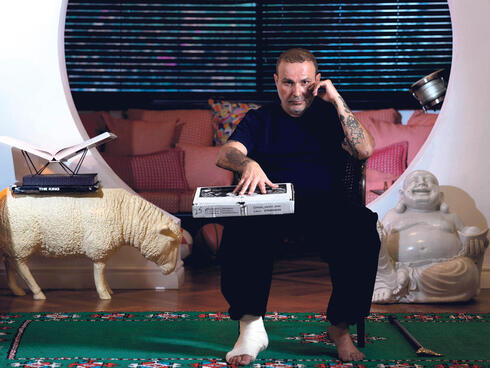
From Tel Aviv nightclubs to a $40 million pizza chain
David Tur opened his first club at 22 and went on to become a major force in Tel Aviv’s restaurant scene. Now, after building three Pizza Har Sinai locations, he is preparing to sell half the business and bet on a national expansion.
David Tur is one of Israel’s most influential restaurant entrepreneurs, although few people outside the industry would recognize his name.
His portfolio stretches from neighborhood pizzerias and burger joints to wine bars, Italian restaurants and ice cream shops. He has been involved in roughly 50 businesses, owns a significant amount of commercial real estate in one of central Tel Aviv’s best-known restaurant districts, and has built a business model that is less about operating individual restaurants than about creating entire food and hospitality ecosystems.
Now, Tur is on the verge of closing one of the biggest deals in Israel’s restaurant industry: selling a 50% stake in Pizza Har Sinai for approximately NIS 60 million ($20.3 million), valuing the young chain at around NIS 120 million ($40.7 million).
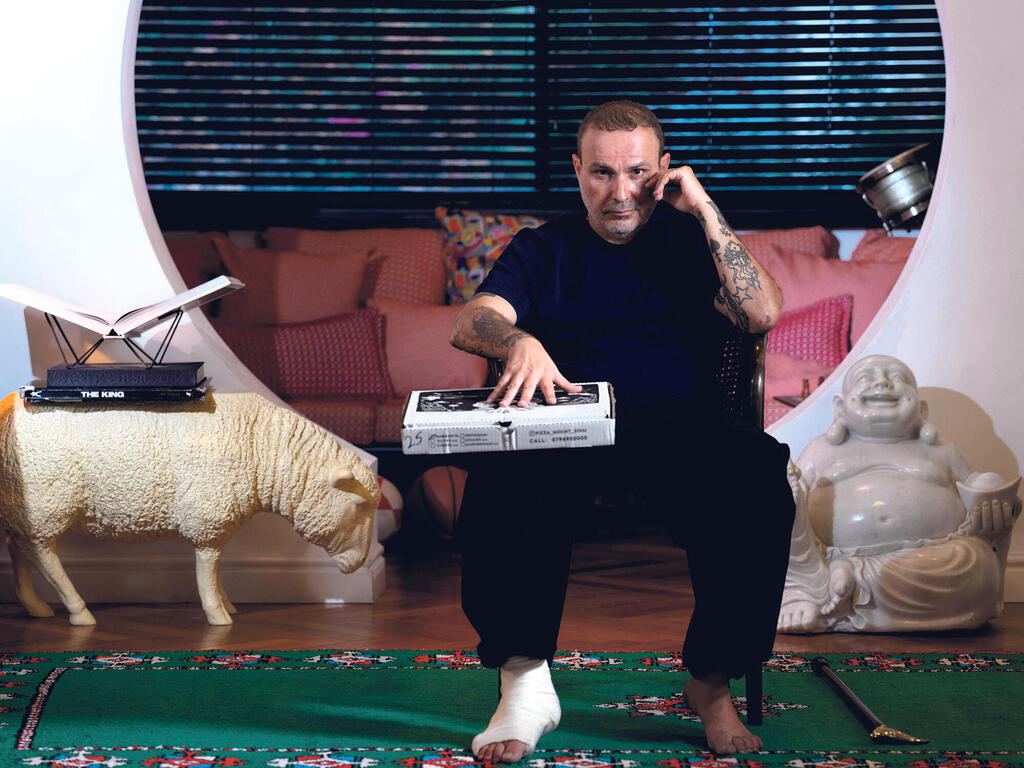
The company currently operates three locations, on Nahalat Binyamin Street in central Tel Aviv, at Glilot and at Sarona Market, with a fourth under construction in Kiryat Ono. Tur says most of the investment will go toward opening additional branches.
“People don’t understand this amount,” he says. “They don’t understand that what they are mainly paying for here is the future potential.”
The identity of the buyer has not yet been disclosed. Tur says the deal is in its final stages.
Unlike some of Israel’s best-known restaurateurs, such as Ruti Broudo and Eyal Shani, Tur is not a celebrity chef. He does not appear on television, rarely gives interviews and has deliberately kept a low public profile. Within the Israeli restaurant industry, however, his name carries considerable weight.
Asked how many businesses he has been involved in over the years, including those in which he remains a partner, he answers simply: “About 50.”
The list includes AKA, the Queens ice cream shop across the street, the long-running Café Europa, Italian restaurant Fifty & One, Local burger restaurants and Trattoria Una in north Tel Aviv. Previous ventures included Da Da and Da, Bar a Vin and Suso & Sons.
His business interests extend beyond restaurants. During the COVID-19 pandemic, when many restaurant and retail businesses were struggling, Tur bought a series of properties on Nahalat Binyamin. He now rents some of them to other restaurateurs, including Barbur, a popular grill restaurant, and Paradiso bar.
Tur lives on Rothschild Boulevard, just minutes away.
“Most of this street belongs to only two or three restaurant groups. During COVID, everyone was afraid and sold their businesses, the old fabric shops and everything. I was a little less afraid. It’s not very sophisticated: when things are cheap, you buy them.”
The economics of the Pizza Har Sinai deal reflect a broader change taking place in Israel’s restaurant industry.
Restaurant businesses that were once viewed primarily as owner-operated establishments are increasingly being treated as scalable consumer brands. Investors are no longer necessarily buying a restaurant for its current cash flow. They are buying the possibility of turning a successful local concept into a national chain.
Similar transactions have taken place recently. In one deal, investors acquired 50% of the GDB burger chain for NIS 32.5 million ($11 million), valuing the two-branch business at NIS 65 million ($22 million). The brand was created through a partnership between George de Boeuf butcher shop and We Like You Too, and was later acquired by Nono Mimi Group, the same buyers who purchased the Mexican Taqueria chain from the Yarzins for NIS 35 million ($11.9 million).
Meanwhile, Leumi Partners, the investment arm of Israel’s Bank Leumi, invested NIS 120 million ($40.7 million) for a 20% stake in Nono Mimi Group. It also acquired 20% of Landora, owned by Barak Abramov and the group behind the Japanese restaurant chain Japanika, for NIS 200 million ($67.8 million), implying a valuation of approximately NIS 1 billion ($339 million).
For Tur, the Pizza Har Sinai valuation is therefore less about the number of pizzas currently being sold than the number of restaurants that could eventually be opened.
He insists that the NIS 60 million ($20.3 million) he is expected to receive for half of the company does not represent a windfall that he plans to pocket.
“People think I’ve suddenly become a millionaire. They don’t understand that most of the money will go into opening more branches.”
In recent years, Tur has begun expanding beyond his traditional territory in central Tel Aviv, opening businesses in north Tel Aviv, at BIG Fashion Glilot and soon in Kiryat Ono.
“I personally don’t leave my neighborhood,” he jokes. “I’ve been to my restaurants in Ramat Aviv four or five times. I know where they are.”
But the expansion is not only about business.
“There are a lot of people living there, and they also want these things, places like Local or Trattoria Uno. Some businesses are meant to be neighborhood businesses, in a quiet neighborhood. People outside Tel Aviv don’t want to sit in traffic and look for parking anymore. They want good food close to home.”
Tur’s deliberately informal approach is reflected in the way he runs his businesses.
“My office is my phone,” he says. “I don’t have a secretary or a whole staff like Ruti Broudo.”
Tur, 51, was born in Sukhumi, the capital of Abkhazia, a breakaway region internationally recognized as part of Georgia. His parents brought him to Israel when he was only a few months old, and he grew up in the country.
He studied architecture in Britain, earning two degrees, and briefly worked at Foster + Partners, one of the world’s leading architecture firms.
“I worked there for two weeks,” he says.
He never really left architecture behind.
“What I do in my places is also architecture. I design them in every sense.”
Before restaurants and real estate, Tur made his name in another part of the hospitality industry: Tel Aviv nightlife. He was once one of the city’s leading club owners, with venues including Breakfast Club and The Cat and the Dog. He opened his first club when he was 22.
Even before that, he says, he was obsessed with nightlife.
“I would go to places from the moment I could take a bus from Holon to Tel Aviv.”
There were also bars, including the mega-bar Lansky.
“Breakfast still exists in some form and under a different name, and obviously it’s no longer mine. It’s at 6 Rothschild.”
“I haven’t had a club for a decade, but I’m considering it. The city is missing it.”
He believes he still has something to contribute.
“It’s something I know how to do, and I want to give it to the city I love, to young people who don’t know it anymore and to older people who miss it.”
But nightlife has changed.
“I saw a post saying that once men drank whiskey and today they drink matcha. I understand this world because when I was involved in it, I was good at it. But the world has changed. You don’t need a club to hear special music anymore. There’s Spotify.”
Pizza Har Sinai opened around five years ago on Nahalat Binyamin. Its concept is deliberately simple: a return to the classic neighborhood pizzeria, with a short list of familiar toppings such as olives, mushrooms and pepperoni.
The difference is in the ingredients. The company uses Italian flour and cheese, a 30-year-old sourdough starter and tomatoes grown specifically for it by a family producer in the San Marzano region of southern Italy.
The concept has already expanded to three locations, with a fourth on the way. Tur has also developed a delivery system that will allow customers to order directly through WhatsApp.
“It only works for very simple fast food,” he says. “It makes the whole business more neighborhood-oriented and simple, and it also frees me a little from Wolt.”
The attraction of the concept is also its simplicity. Pizza is one of the restaurant formats that can travel relatively easily. A neighborhood pizzeria does not necessarily need a destination location, a celebrity chef or an elaborate dining room. It needs a recognizable product, strong branding, efficient operations and, increasingly, the ability to replicate the experience across locations.
That is ultimately what Tur is selling to the new investor.
After decades in Tel Aviv nightlife and hospitality, he appears to have arrived at a simple formula: own the real estate when possible, build businesses that complement one another, let partners run the day-to-day operations and keep looking for the next opportunity.
“I like working close to home,” he says.
And as he walks around Rothschild Boulevard in his flip-flops, keeping an eye on his businesses from a distance, the contrast is striking. Tur has built a sizeable restaurant and real-estate business without adopting the public profile normally associated with it.
Now he is betting that a neighborhood pizza restaurant can become something much bigger.



