










The long fall of Maytronics, from a $3.1 billion star to a potential FIMI takeover
The pool robot maker's market value has collapsed as pandemic-era demand faded, Chinese competition intensified and the company struggled to adapt to online sales.
Maytronics has confirmed in a filing to the Tel Aviv Stock Exchange Calcalist’s report this morning that it is in talks to raise NIS 300 million ($101.7 million) in capital. The company also confirmed that it has held preliminary discussions over the sale of control to FIMI, the investment fund managed by Ishay Davidi.
FIMI has been granted a short period of exclusivity. The fund typically negotiates acquisitions only when it has exclusivity and is not competing with other potential buyers.
As Calcalist reported this morning, Kibbutz Yizre’el has relinquished control of Maytronics after the company’s market value plunged from NIS 9.1 billion ($3.08 billion) to approximately NIS 187 million ($63.4 million).
Maytronics is seeking to raise NIS 300 million ($101.7 million) to reduce its NIS 600 million ($203.4 million) debt to banks and finance the establishment of a new factory in a lower-cost country, replacing some of its more expensive production in Israel. The company lost NIS 222 million ($75.3 million) in 2025.
Maytronics is now headed by Rafi Benami, who took over as CEO at the beginning of the year. Before joining Maytronics, Benami served as director of chip operations at Applied Materials Israel. He replaced Sharon Goldenberg, who announced his retirement at the end of 2025, after Maytronics' market value had fallen sharply during his tenure.
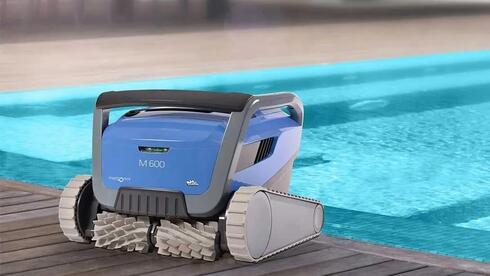
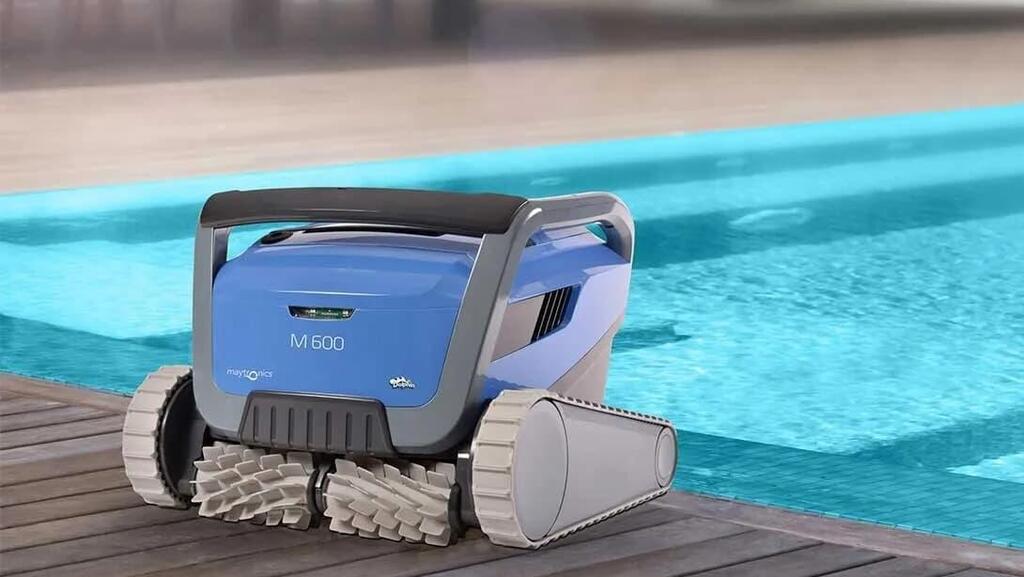
Maytronics specializes in the production and marketing of robotic systems for cleaning private and public swimming pools. Most of its sales are generated in the first half of the year, ahead of the opening of swimming pools in the Northern Hemisphere. The company also produces and markets other pool-related products, including safety and water-monitoring systems.
For years, Maytronics was one of the jewels of Israel’s kibbutz industry. The company became a global market leader in robotic pool cleaning, with its flagship Dolphin robots eventually reaching an estimated 50% share of the worldwide market.
The company's stock rose roughly 800% in the eight years through 2020. Between 2010 and 2019, sales grew at an average annual rate of 15.5%, with relatively stable profitability.
The growth was driven by an increase in Maytronics' market share from 32% to 50%, as well as greater adoption of robotic pool-cleaning systems among private pool owners. During that period, the company maintained a gross profit margin of between 41.4% and 45.4%, while its operating profit margin stabilized at around 17% from 2013 onward.
That decade of growth helped push Maytronics' market value from NIS 382 million ($129.5 million) at the end of 2009 to NIS 3.1 billion ($1.05 billion) at the end of 2019.
The pandemic then accelerated the company's growth. Sales of robotic cleaners for private pools rose 31% in both 2020 and 2021, followed by another 26% increase in 2022. Maytronics ended 2021 with an operating profit of NIS 277.7 million ($94.1 million) and net profit of NIS 224 million ($75.9 million). Its net profit was also boosted by NIS 12.5 million ($4.2 million) in financing income related to exchange-rate movements.
In November 2021, Maytronics reached a market value of NIS 9.1 billion ($3.08 billion) and was added to the TA-35 index. With people spending more time at home, demand for pool-cleaning robots surged, and Maytronics struggled to keep up.
The boom proved temporary.
As the pandemic faded, orders declined and large inventories accumulated. At the same time, Maytronics faced increasingly aggressive competition from low-cost Chinese manufacturers, which sold robotic pool cleaners for around $500, compared with prices of up to $2,400 for a Dolphin robot.
Maytronics' gross profit margin fell to 40% in 2022, affected by higher raw-material costs, the weakening of the euro against the shekel and the consolidation of ECCXI's results.
The company was slow to respond to the changing market. It did not initially develop a lower-priced product to compete with Chinese manufacturers and struggled to adapt to the growing importance of online sales. It launched a lower-cost rechargeable robot only in 2024.
Maytronics had also expanded its direct holdings in distributors and online retailers. In 2020, it acquired BF, a German distributor of pool products, for €13 million. In 2022, it acquired ECCXI, which sells pool products online in the United States, for $32 million.
The decline in sales that began in 2022 has continued. The war also created additional challenges for Maytronics, as employees were called up for reserve duty and production was affected.
The company responded with efficiency measures, including consolidating production into a single factory in Israel instead of two and reducing the number of product lines.
The measures have not yet reversed the company's fortunes.
Maytronics recorded NIS 1.4 billion ($474.6 million) in revenue in 2025, down from NIS 1.62 billion ($549.2 million) in 2024. Sales to private pools fell 18%, as the company faced intensified competition and cut prices sharply to clear excess inventory. The strengthening of the shekel against the dollar also weighed on its results.
Gross profit fell 36% to NIS 375 million ($127.1 million), while the company swung to an operating loss of NIS 133 million ($45.1 million) from an operating profit of NIS 36 million ($12.2 million) in 2024.
Maytronics also recorded a NIS 100 million ($33.9 million) impairment related to its water-monitoring solutions in 2025, following impairments totaling NIS 26.3 million ($8.9 million) over the previous two years.
The company ended 2025 with a net loss of NIS 222 million ($75.3 million), compared with a NIS 31 million ($10.5 million) loss in 2024, while its shareholders' equity fell to NIS 427 million ($144.7 million).
The deterioration continued into 2026. In the first quarter, Maytronics reported a net loss of NIS 26.4 million ($8.9 million), compared with a net profit of NIS 14.3 million ($4.8 million) in the corresponding quarter of 2025. Revenue fell to NIS 309 million ($104.7 million) from NIS 347 million ($117.6 million).
Maytronics' strategic plan now includes moving some production abroad to lower-cost countries, expanding online sales and increasing direct-to-consumer sales rather than relying primarily on distributors.
The company is also considering additional financing options, including potentially issuing its first bond after relying primarily on bank financing.
The proposed NIS 300 million ($101.7 million) capital raise could provide Maytronics with much-needed breathing room as it attempts to restructure its business and reduce its debt burden.



