











"The Arrow was science fiction. Who will build the next generation of systems?"
IAI chairman Boaz Levy says Israel's future military advantage depends on engineers developing technologies for threats that do not yet exist.
Artificial intelligence may be transforming military technology, but it is not replacing the need for engineers capable of imagining entirely new weapons systems, according to Boaz Levy, chairman of Israel Aerospace Industries (IAI) and one of the architects behind Israel's Arrow missile defense system.
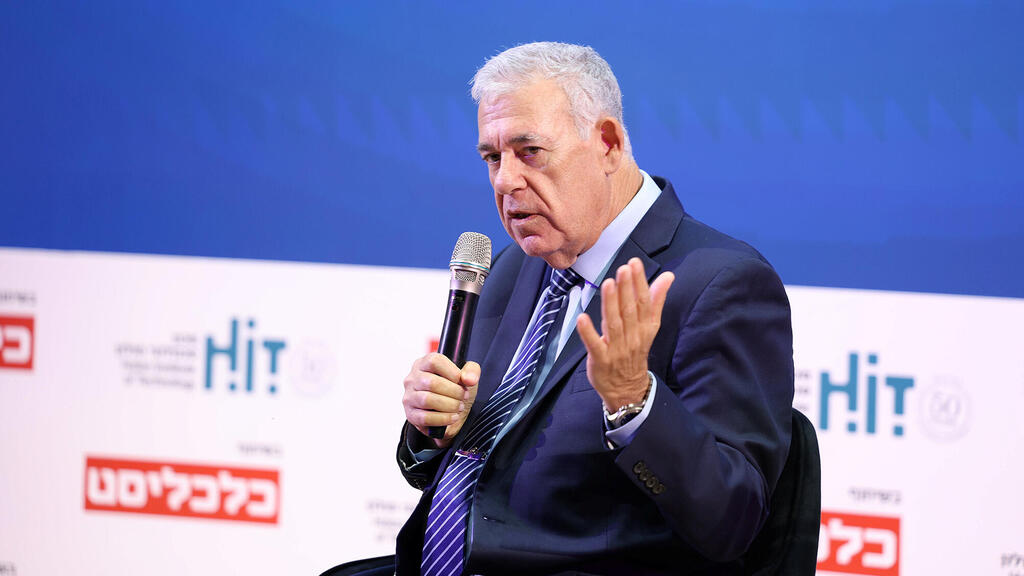
Speaking at the HIT and Calcalist conference on Wednesday, Levy argued that while AI is accelerating development and changing the way militaries analyze information, the decisive advantage on future battlefields will still come from human engineering judgment, long-term technological investment and the ability to solve problems that do not yet exist.
"We are experiencing a war unlike those we have known before," Levy said. "Unfortunately, I don't think it will end anytime soon. That means we need to talk about the technology that is driving the battlefield."
Levy's comments come after almost three years in which Israel's missile defense systems, satellites and intelligence capabilities have been tested repeatedly against attacks from Iran and its regional proxies. Many of the technologies now operating in combat were conceived decades earlier, underscoring what Levy described as one of the central challenges facing Israel's defense industry: preparing engineers to build systems that answer threats that have yet to emerge.
"The systems you have seen on the battlefield were developed by engineers who have been working on them for 20 or 30 years," he said. "Who will develop the next generation of systems? What tools will they have? What kind of thinking will they bring?"
Engineering thinking over "critical thinking"
Rather than emphasizing what universities often describe as critical thinking, Levy called for greater focus on what he termed "engineering thinking."
"In our world, it isn't enough to think about what to do or how to do it," he said. "You have to think about why."
That mindset, he argued, was essential when Israel began developing the Arrow missile defense system years before ballistic missile interception became a global priority.
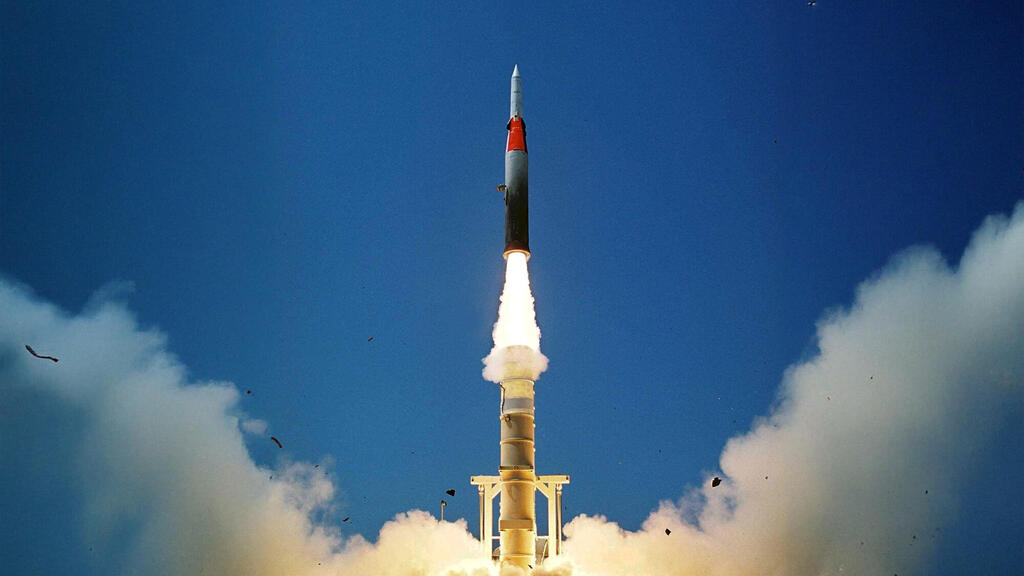
"When we started developing the Arrow many years ago, there was no such need in the world," Levy recalled. "It was science fiction, and in many ways it still is. Hitting one missile with another outside the atmosphere is no simple challenge."
Developing such systems required engineers capable of designing entirely new "systems of systems," he said, rather than merely improving existing technologies.
While AI dominated much of the conference discussion, Levy cautioned against treating it as a technological cure-all.
"I want to put AI in the right proportion and strip away many of the buzzwords," he said.
"In the artificial intelligence we use today, there is very little artificial and a great deal of intelligence."
The real value, Levy argued, lies not in large language models themselves but in the vast data infrastructure that supports them.
"When you don't have data, artificial intelligence won't help you with anything."
Modern defense systems increasingly rely on networks of sensors in space, in the air, on land and at sea. Combined with advanced communications, those sensors generate massive datasets that AI tools can analyze far more quickly than humans.
Levy said he does not view ChatGPT as the defining symbol of this transformation.
"I see behind these systems engineers who define what they want to receive."
AI is compressing development cycles
Levy described AI as affecting every stage of defense manufacturing, from research and development to production and operational deployment.
"In development, yes, we all know how to obtain code more quickly," he said, while noting that defense companies operate under stricter security constraints than commercial software developers.
One example is satellite intelligence.
Rather than simply collecting images from observation satellites, modern systems can automatically analyze imagery, detect changes, prioritize information according to predefined criteria and transmit relevant intelligence almost instantly to operational users.
"A satellite passes over an area of interest," Levy explained. "Within fractions of a second, the system identifies changes, filters them according to predetermined criteria, sends them to a pilot in the cockpit, tells him what his target is, and then tells him whether he hit it."
He described this capability as already operational.
AI is also beginning to shorten development timelines for entirely new military platforms.
Aircraft development has traditionally required hundreds of wind-tunnel experiments to build aerodynamic models. Levy said the growing availability of sensor data could significantly reduce that process.
"You will probably be able to build most of the model from the data already available in your databases and only validate it in the wind tunnel," he said.
"The result is time, and today the most important concept in industry is time to market."
Levy praised universities for teaching students how to approach complex engineering problems rather than simply mastering specific technologies.
"I studied engineering many years ago," he said. "Today I can still use tools that were invented yesterday because I was taught how to think like an engineer."
That foundation, combined with mentoring by experienced engineers after graduation, remains central to building the next generation of defense innovators.
Still, Levy believes engineering education itself should evolve.
"I would devote more time to engineering thinking and less time to solving second-order differential equations," he said. "Today, systems can solve those very easily."
Levy also defended continued investment in Israel's defense sector as the country confronts a prolonged security environment.
"There is no doubt that Israel is at war, and this war is not going to end tomorrow," he said.
Maintaining technological superiority requires sustained investment in both human capital and industrial infrastructure, he argued.
"Israel needs to invest more in domestic capabilities," Levy said. "Infrastructure is not only human capital. It is also the infrastructure that allows us to develop the independence that every country in the world is now seeking."
Ultimately, Levy said, the purpose of those investments extends beyond industrial policy or technological leadership.
"We need to create a budget that allows us to be secure in our own country," he said. "That is the essence of everything."



