










Secret budget approved to expand Israel’s Arrow missile program
Defense Ministry to sign new deal with IAI as war with Iran depletes interceptor supplies.
Amid the ongoing war with Iran, the Ministerial Committee on Procurement has approved the transfer of a classified budget to accelerate and expand production of the Arrow missile system by Israel Aerospace Industries (IAI). The decision comes after the committee had not convened for several months.
In a statement released on Monday, the Ministry of Defense said it will soon sign a new agreement with IAI to procure additional interceptor missiles. The deal is intended to increase both the production rate and the stockpile available to Israel’s air defense systems. According to the ministry, the move is “part of preparations for the continuation of the campaign,” with defense industries already working to implement the expansion.
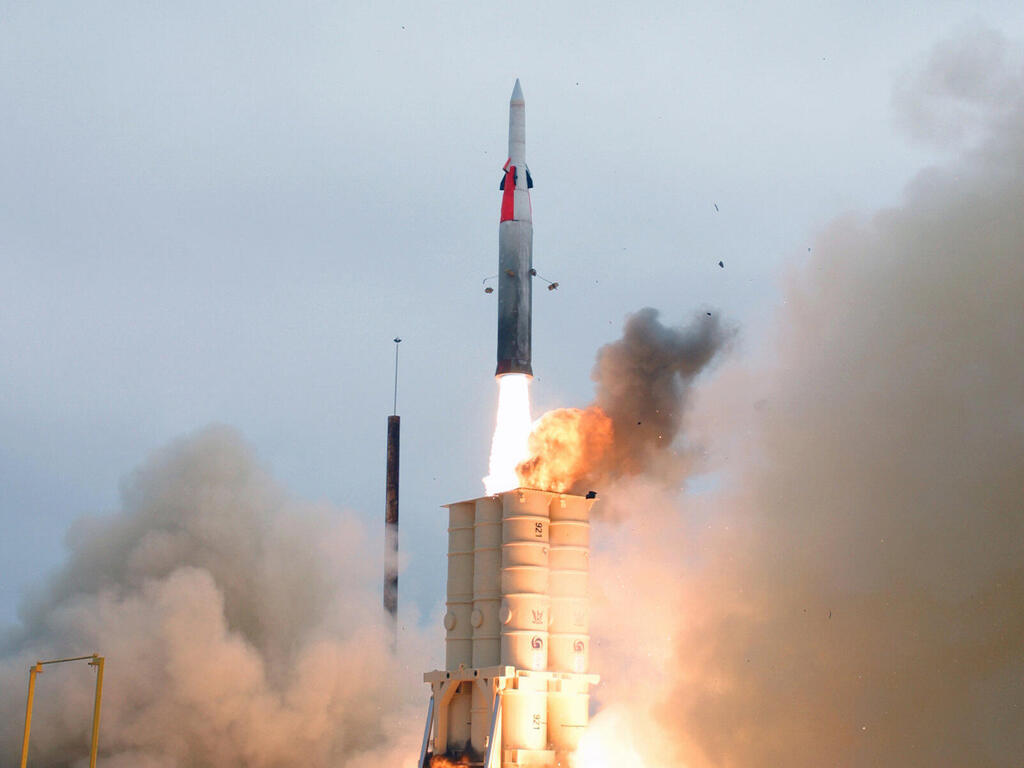
The Arrow 3 system, developed by IAI, is designed to intercept ballistic missiles outside the atmosphere, providing a high-altitude defensive layer against threats launched from Iran and Yemen.
Since the outbreak of the October 7 war more than two and a half years ago, Israel has faced sustained missile threats. In the weeks leading up to the current escalation with Iran, the defense establishment announced plans to expand the use of additional systems, including Rafael’s David’s Sling, alongside U.S.-supplied THAAD and Aegis systems deployed in the region.
Unlike the Arrow system, David’s Sling operates within the atmosphere. Its interceptions can result in a wider dispersal of debris and submunitions, particularly when dealing with ballistic missiles equipped with cluster warheads. This has fueled criticism in recent weeks regarding the preparedness of Israel’s defense systems and raised concerns about interceptor stockpiles in both Israel and the United States.
Defense Minister Israel Katz sought to reassure the public, stating: “The State of Israel has sufficient interceptors to protect its citizens. The current move is intended to ensure continued operational freedom and necessary breathing space.” He added that the acceleration of production is already increasing the monthly output of interceptors and strengthening Israel’s top defensive layer against ballistic threats.
Ministry of Defense Director General Amir Baram noted that prior steps taken with defense manufacturers have already contributed to operational readiness. “The committee’s approval will allow us to finance actions already undertaken and improve preparedness for the months ahead,” he said.
The ramp-up in production comes as IAI is also working to fulfill major international commitments. Germany has purchased the Arrow 3 system in deals totaling approximately $6.5 billion, agreements that are expected to help finance expanded production capacity. These efforts are aimed at enabling IAI to meet demand from both Israel and international customers simultaneously.
IAI CEO Boaz Levy said the current security environment underscores the growing importance of the system: “The need for Arrow 3 missiles, which enable high-altitude interception with precise, advanced, and reliable technology, is becoming increasingly acute.”



